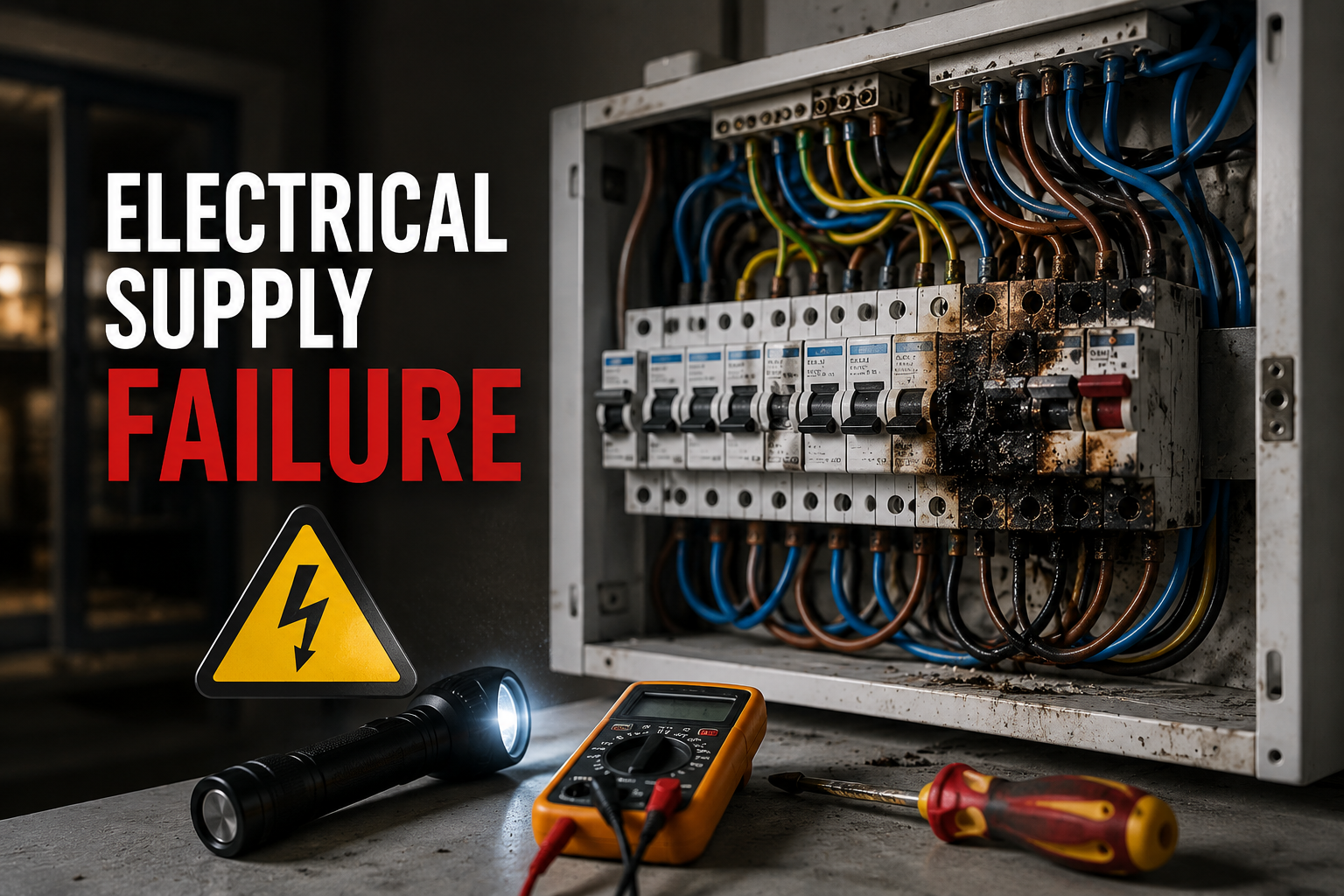
Electrical supply failure can affect homes, businesses, and industrial properties, causing power loss, safety risks, and costly disruption. Whether the issue is caused by faulty wiring, overloaded circuits, damaged equipment, or problems with the electricity network, identifying the cause quickly is essential to restoring power safely.
Common warning signs include flickering lights, tripping circuit breakers, burning smells, buzzing sockets, and unexpected power outages. Ignoring these symptoms can increase the risk of electrical fires, equipment damage, and expensive repairs.
This guide explains the common causes of electrical supply failure, how to recognise the warning signs, practical safety measures to take, and answers frequently asked questions to help keep your electrical system safe and reliable.
What is an electrical supply failure?
An electrical supply failure occurs when electricity can no longer be delivered safely or consistently to part or all of a property. The failure may affect a single socket, one circuit, an individual room, or the entire building depending on the cause of the problem.
Electrical supply failure can happen suddenly or develop gradually over time. Some failures are caused by damaged wiring or faulty electrical equipment within the property, while others result from faults on the local electricity distribution network.
Common symptoms include complete power loss, flickering lights, sockets that stop working, repeatedly tripping circuit breakers, unusual buzzing noises, or electrical burning smells. In commercial buildings, machinery may stop operating, emergency systems may activate, and business operations can be interrupted.
Although some electrical supply failures are relatively simple to repair, others require detailed fault diagnosis by a qualified electrician. Identifying the root cause quickly helps restore power safely while reducing the risk of further damage.
What are the most common causes of electrical supply failure?
Several different problems can lead to electrical supply failure, and some are more common than others.
Faulty wiring is one of the leading causes, particularly in older properties where electrical installations have deteriorated over time. Loose electrical connections, damaged insulation, and ageing cables can all interrupt the electrical supply.
Overloaded circuits are another frequent cause. When too many appliances operate from a single circuit, excessive electrical demand may cause protective devices to disconnect the power to prevent overheating.
Consumer unit faults, damaged circuit breakers, defective RCDs, failed electrical accessories, water ingress, accidental cable damage, and faulty appliances can also contribute to electrical supply failure.
External factors should not be overlooked. Severe weather, fallen trees, vehicle accidents involving electrical infrastructure, or faults within the local electricity network can all interrupt the power supply.
Regular inspections help identify these problems before they develop into more serious electrical faults.
How can I tell if I have an electrical supply failure?
Electrical supply failure often produces warning signs before complete power loss occurs.
You may notice lights flickering unexpectedly, sockets stopping intermittently, electrical equipment switching off without warning, or circuit breakers that repeatedly trip after being reset. Some people also hear buzzing sounds coming from consumer units or electrical outlets.
Other signs include burning smells, discoloured sockets, overheating switches, or appliances that suddenly lose power while neighbouring properties continue to have electricity.
Businesses may experience interruptions to machinery, IT systems, security equipment, refrigeration units, or production lines. Even brief interruptions can indicate an underlying electrical problem that requires investigation.
If these symptoms continue, avoid repeatedly resetting circuit breakers without understanding the cause. Contact a qualified electrician who can safely diagnose the electrical supply failure using professional testing equipment.
Can a power outage cause an electrical supply failure?
Yes. A power outage can sometimes contribute to electrical supply failure, although the two are not always the same thing.
A power outage usually originates from the electricity network outside your property. Storm damage, maintenance work, damaged overhead cables, or faults at local substations can interrupt electricity supplied by the network operator.
However, when power returns, underlying faults inside the property may become apparent. Weak electrical connections, damaged circuit breakers, ageing wiring, or faulty electrical equipment can fail during voltage fluctuations or when power is restored.
If neighbouring properties regain electricity but your building remains without power, the fault is likely to be within your own electrical installation rather than the local electricity network.
A professional inspection will determine whether the electrical supply failure originates internally or externally.
Is electrical supply failure dangerous?
Electrical supply failure can become dangerous depending on the cause of the problem.
While some failures simply interrupt the power supply, others may indicate serious electrical faults capable of causing overheating, electric shock, or electrical fires. Damaged wiring, loose terminals, overloaded circuits, and defective consumer units should never be ignored.
In commercial buildings, electrical supply failure may also affect emergency lighting, fire alarm systems, access control, security equipment, refrigeration systems, or essential business operations. These failures can create additional health and safety risks.
Attempting DIY repairs without suitable training increases the likelihood of injury and may make the problem worse. Instead, isolate any obviously damaged electrical equipment if it is safe to do so and arrange for a qualified electrician to inspect the installation.
Prompt diagnosis and professional repairs help restore power safely while protecting both people and property.
Does electrical supply failure increase the risk of electrical fires?
Yes. Electrical supply failure can increase the risk of electrical fires when it is caused by damaged wiring, loose electrical connections, overloaded circuits, or faulty electrical equipment. These problems can generate excessive heat, damage cable insulation, and create electrical arcing, which may ignite nearby combustible materials.
Warning signs often appear before a fire develops. Burning smells, flickering lights, buzzing sockets, warm switches, discoloured outlets, or repeatedly tripping circuit breakers should never be ignored. These symptoms usually indicate that part of the electrical installation is under stress.
Commercial premises are particularly vulnerable because many businesses rely on high-powered machinery, lighting systems, and specialist equipment throughout the day. Without regular inspections, hidden electrical faults may remain unnoticed until they become serious.
Routine electrical testing, scheduled maintenance, and prompt repairs significantly reduce the likelihood of electrical fires and help ensure the installation continues to comply with current UK electrical regulations.
Can electrical supply failure damage appliances and equipment?
Yes. Electrical supply failure can damage household appliances, office equipment, computers, servers, refrigeration units, manufacturing machinery, and other sensitive electrical devices.
Although a complete loss of power may not always cause damage, sudden voltage fluctuations when electricity fails or returns can affect electronic components. Repeated interruptions may shorten the lifespan of expensive equipment or cause unexpected failures.
Businesses often experience additional costs through lost productivity, interrupted services, corrupted data, or damaged stock if refrigeration or processing equipment stops operating.
Installing surge protection devices, maintaining electrical systems, and arranging regular inspections all help reduce the risk of equipment damage caused by electrical supply failure.
How can businesses reduce the risk of electrical supply failure?
Businesses can significantly reduce the risk of electrical supply failure through proactive maintenance and regular inspections. Waiting until a fault develops often results in greater disruption and higher repair costs.
Planned electrical maintenance should include routine testing, visual inspections, thermal imaging where appropriate, distribution board checks, emergency lighting inspections, and prompt replacement of worn electrical components.
Employers should also avoid overloading circuits, ensure electrical equipment is correctly installed, and encourage staff to report unusual electrical problems immediately.
An up-to-date maintenance programme combined with regular EICR inspections helps identify potential faults before they affect business operations, improving safety while reducing downtime.
How often should commercial electrical systems be inspected?
The recommended inspection interval depends on the type of commercial premises, the condition of the electrical installation, and how the building is used.
Many commercial properties require periodic Electrical Installation Condition Reports (EICRs), while higher-risk environments such as factories, workshops, industrial facilities, and construction sites often require more frequent inspections due to increased electrical demand.
Routine visual inspections between formal EICRs are equally important. Identifying damaged sockets, worn cables, overloaded circuits, or loose electrical fittings early helps prevent more serious electrical supply failure later.
A qualified electrician can recommend the most suitable inspection schedule based on your property’s specific electrical installation and operational requirements.
Can regular electrical maintenance prevent electrical supply failure?
In many cases, yes. Regular electrical maintenance is one of the most effective ways to reduce the likelihood of electrical supply failure.
During planned maintenance visits, electricians inspect electrical circuits, test protective devices, tighten loose connections, examine distribution boards, check emergency lighting systems, and identify worn or damaged components before they fail.
Preventative maintenance also allows small faults to be repaired before they develop into expensive breakdowns or safety hazards. This approach reduces unexpected interruptions while extending the lifespan of the entire electrical installation.
Whether the property is a home, office, warehouse, retail unit, or industrial facility, investing in regular maintenance provides greater reliability, improved safety, and long-term cost savings.
Can old electrical installations increase the risk of electrical supply failure?
Yes. Older electrical installations are far more likely to experience electrical supply failure because components naturally deteriorate over time. Wiring insulation can become brittle, electrical connections may loosen, and outdated consumer units may no longer provide adequate protection for modern electrical demands.
Many older properties were never designed to support today’s electrical appliances, heating systems, computers, or commercial equipment. As power requirements increase, ageing installations become more vulnerable to faults, overheating, and unexpected power interruptions.
Regular electrical inspections can identify worn cables, ageing accessories, and obsolete protective devices before they become serious safety hazards. Upgrading older electrical systems improves reliability while helping properties comply with current UK electrical regulations.
Can loose electrical connections cause electrical supply failure?
Yes. Loose electrical connections are one of the most common causes of electrical supply failure. Even a slightly loose terminal can interrupt the flow of electricity, create excessive heat, and lead to intermittent power loss.
Typical warning signs include flickering lights, buzzing sounds, warm switches, burning smells, or circuit breakers that trip without an obvious reason. Over time, loose connections may create electrical arcing, increasing the risk of equipment damage and electrical fires.
Because loose connections are often hidden inside consumer units, junction boxes, or electrical accessories, they should only be inspected and repaired by a qualified electrician using appropriate testing equipment.
What is the difference between a power cut and an electrical supply failure?
Although people often use these terms interchangeably, they are not always the same. A power cut usually refers to an interruption affecting multiple properties and is normally caused by a fault or planned work on the local electricity distribution network.
Electrical supply failure, however, may occur entirely within your own property. Problems such as faulty wiring, damaged cables, overloaded circuits, defective consumer units, or failed electrical equipment can interrupt the electrical supply even when neighbouring buildings still have power.
If surrounding properties have electricity but yours does not, it is likely that the electrical supply failure originates within your own electrical installation and requires professional investigation.
Can three-phase electrical systems experience electrical supply failure?
Yes. Although three-phase electrical systems are designed for reliability and higher electrical loads, they can still experience electrical supply failure. Faulty switchgear, damaged cables, overloaded equipment, loose connections, or problems with one phase can interrupt the electrical supply.
In commercial and industrial premises, even a partial phase loss can affect machinery, motors, lifts, refrigeration systems, production equipment, and HVAC installations. Continuing to operate equipment under these conditions may cause additional damage.
Routine testing and planned maintenance help identify developing faults before they lead to unexpected electrical supply failure and costly business disruption.
How can businesses minimise downtime caused by electrical supply failure?
Businesses can reduce downtime by adopting a proactive approach to electrical maintenance. Regular inspections, scheduled servicing, and prompt repairs help identify faults before they interrupt daily operations.
Critical systems such as emergency lighting, fire alarms, security equipment, servers, refrigeration units, and manufacturing machinery should be inspected regularly to ensure reliable performance.
Many organisations also benefit from emergency response arrangements with qualified electricians, allowing faults to be diagnosed and repaired quickly whenever electrical supply failure occurs. Combined with preventative maintenance, this approach helps protect productivity, reduce financial losses, and improve overall electrical safety.
Why should I choose a NAPIT-approved electrician for electrical supply failure?
Choosing a NAPIT-approved electrician ensures your electrical supply failure is diagnosed and repaired by a qualified professional who works to recognised UK safety standards. Whether the issue involves faulty wiring, a consumer unit, damaged circuits, or an intermittent power fault, a NAPIT-approved electrician can carry out repairs safely and in compliance with current electrical regulations, helping protect your property and reduce the risk of future problems.
Learn more about NAPIT and its approved electricians at NAPIT.
Conclusion
Electrical supply failure can often be prevented through regular inspections, routine maintenance, and prompt repairs. By recognising early warning signs and acting quickly, you can reduce safety risks, prevent costly damage, and keep your electrical system operating safely. If you experience an electrical supply failure, contact a qualified electrician to diagnose and resolve the problem in compliance with current UK electrical regulations.
Leave a Reply