Introduction
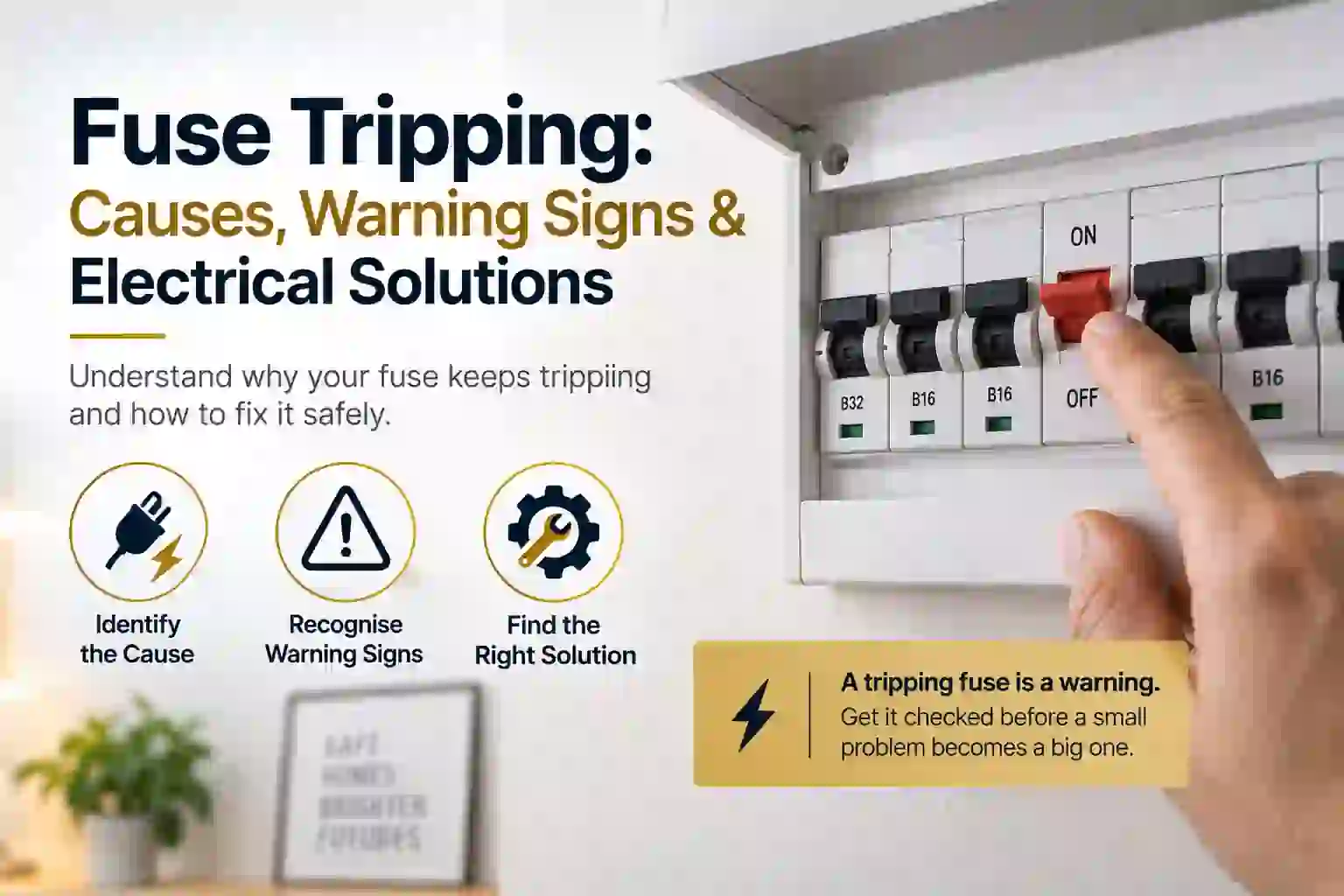
Fuse Tripping can interrupt power without warning and may leave part of your home or business without electricity. While a protective device may trip because of a temporary overload, repeated trips usually indicate an underlying electrical issue.
Common causes include overloaded circuits, faulty appliances, damaged wiring, short circuits, loose connections and moisture. Understanding why a fuse or circuit breaker trips can help you respond safely and avoid further electrical damage.
What Causes Fuse Tripping?
Fuse Tripping can occur when an electrical circuit detects a condition that exceeds its safe operating limits. Common causes include:
- Overloaded circuits
- Faulty appliances
- Damaged wiring
- Short circuits
- Loose connections
- Water or moisture ingress
- Faulty switches, sockets or fittings
- Consumer unit problems
The protective device is designed to disconnect the supply when it detects a potentially unsafe condition. Repeatedly resetting it without finding the cause is not recommended.
Why Does My Fuse Trip When I Turn On an Appliance?
If the circuit trips whenever a particular appliance is switched on, the appliance may have an internal electrical fault.
Possible causes include:
- Damaged cables or plugs
- Internal component failure
- Moisture damage
- Motor faults
- Excessive electrical demand
Disconnect the appliance and avoid using it until the cause has been established. If the circuit continues to trip without the appliance connected, the problem may be elsewhere in the installation.
Can an Overloaded Circuit Cause Fuse Tripping?
Yes. An overloaded circuit is one of the common reasons for a protective device to disconnect power.
Overloading can occur when several high-power appliances operate on the same circuit. Warning signs can include:
- Repeated breaker trips
- Warm sockets
- Flickering lights
- Power interruptions
- Frequent use of extension leads
If the same circuit becomes overloaded regularly, an electrician can assess the electrical load and determine whether the circuit requires redistribution, upgrading or further testing.
For commercial premises where electrical demand has increased, a commercial electrical load upgrade can help assess whether additional capacity or circuit changes are required.
Fuse vs Circuit Breaker: What’s the Difference?
A traditional fuse protects a circuit by melting when excessive current flows through it. Once it has operated, the fuse normally needs replacing.
A circuit breaker switches the circuit off when it detects an abnormal electrical condition and can usually be reset after the fault has been addressed.
Modern consumer units generally use circuit breakers and other protective devices rather than traditional rewireable fuses.
Why Does My Fuse Keep Tripping After I Reset It?
If the breaker trips again shortly after being reset, the underlying problem may still be present.
Possible causes include:
- Faulty appliances
- Short circuits
- Damaged wiring
- Loose connections
- Water ingress
- Faulty electrical components
If the fault continues or affects a commercial electrical installation, professional commercial electrical repairs can help identify and resolve the underlying problem.
Avoid repeatedly resetting the device. Persistent tripping should be investigated through appropriate electrical fault finding.
Can Faulty Wiring Cause Fuse Tripping?
Yes. Faulty wiring can cause protective devices to operate, particularly where insulation has deteriorated, connections are loose or cables have been damaged.
Older installations may also have wiring that has deteriorated over time or is no longer well suited to modern electrical demands.
If you notice flickering, burning smells, buzzing or repeated circuit trips, professional inspection is recommended.
Can a Faulty Appliance Cause a Fuse to Trip?
A faulty appliance can cause a circuit breaker or fuse to operate when it develops an internal fault.
Common warning signs include:
- Damaged cables
- Burning smells
- Unusual noises
- Overheating
- Visible damage
- The circuit trips whenever the appliance is used
Disconnect suspicious equipment and avoid continuing to use it until it has been checked.
Why Does My Fuse Trip When Several Appliances Are Running?
When several high-power appliances operate simultaneously, the combined electrical demand can exceed the circuit’s capacity.
This is particularly relevant in kitchens, workshops and commercial premises where equipment such as:
- Ovens
- Heaters
- Kettles
- Microwaves
- Washing machines
- Power tools
may operate at the same time.
Repeated overloads may require an electrical load assessment rather than simply resetting the breaker.
Can a Short Circuit Cause Fuse Tripping?
Yes. A short circuit creates an unintended low-resistance path for electrical current, causing a rapid increase in current flow.
The protective device should disconnect the circuit to limit the risk of overheating and damage.
Short circuits can result from:
- Damaged cables
- Faulty appliances
- Water ingress
- Damaged electrical components
- Deteriorated insulation
Because short circuits can present serious safety risks, they should be investigated by a qualified electrician.
Can Loose Electrical Connections Cause a Fuse to Trip?
Yes. Loose connections can increase electrical resistance and generate heat, potentially causing protective devices to operate.
They may also produce:
- Flickering lights
- Buzzing sounds
- Warm sockets
- Intermittent power
- Burning smells
Loose electrical connections should be professionally inspected rather than tightened without proper electrical knowledge.
Why Does My Fuse Trip During Rain or Bad Weather?
Moisture can cause electrical faults, particularly in outdoor installations.
Potential problem areas include:
- Outdoor sockets
- Garden lighting
- Security lighting
- External junction boxes
- Electric gates
- Other exposed equipment
If Fuse Tripping happens mainly during wet weather, water ingress should be investigated before the affected equipment is used again.
Why Does My Fuse Trip at Night?
Night-time tripping can sometimes be associated with equipment that operates during the evening, such as:
- Outdoor lighting
- Electric heating
- Security systems
- Timed appliances
- Storage heaters
Note when the circuit trips and identify which equipment is operating at the time. This information can help an electrician narrow down the fault.
Why Does My Fuse Trip Immediately After Resetting?
An immediate trip usually suggests that an active fault remains on the circuit.
Possible causes include:
- Short circuit
- Faulty appliance
- Damaged cable
- Moisture
- Faulty electrical component
Do not continue resetting the breaker. If it trips immediately again, leave the affected circuit off and arrange professional fault finding.
Can an Old Electrical System Cause Frequent Fuse Tripping?
Older electrical installations may struggle with modern electrical demand, particularly where the system has not been upgraded for many years.
Signs that an installation may need assessment include:
- Frequent circuit trips
- Outdated fuse box
- Warm sockets
- Flickering lights
- Deteriorated cables
- Insufficient circuits for modern equipment
An electrical inspection can assess the condition and capacity of the installation.
Can a Faulty Consumer Unit Cause Fuse Tripping?
Yes. Although appliances, wiring and overloads are common causes, faults within the consumer unit can also affect circuit protection.
Warning signs include:
- Breakers that will not reset
- Unusual sounds
- Heat around the unit
- Burning smells
- Repeated unexplained trips
If the consumer unit or distribution equipment is outdated or showing signs of damage, professional power distribution and consumer unit services may be required.
A qualified electrician can test the consumer unit and determine whether repair or replacement is appropriate.
What Should I Do When a Fuse Trips?
If a fuse or breaker trips unexpectedly:
- Switch off or unplug recently used appliances.
- Check for obvious signs of damage.
- Reset the protective device once if it is safe to do so.
- Monitor the circuit.
- If it trips again, stop using the affected circuit.
- Arrange professional electrical fault finding.
Never touch exposed wiring or damaged electrical equipment.
How Can I Find Which Appliance Is Causing the Problem?
Where it is safe to do so, disconnect appliances from the affected circuit and reset the protective device once.
Reconnect equipment individually and observe whether the circuit trips when a particular appliance is used.
If the circuit trips with appliances disconnected, the fault may be within the wiring, accessories or fixed electrical installation and should be professionally investigated.
Can Outdoor Electrical Equipment Cause Fuse Tripping?
Yes. Outdoor electrical equipment is particularly vulnerable to moisture and physical damage.
Common examples include:
- Garden lighting
- Outdoor sockets
- Security lighting
- Electric gates
- Water features
Where trips occur after rain, the affected equipment should remain unused until the cause has been identified.
Are Tripping Fuses Dangerous?
The protective device itself is designed to improve electrical safety. However, repeated Fuse Tripping can indicate an underlying problem.
A simple overload may require load management, while damaged wiring or a short circuit may require urgent professional attention.
Pay particular attention to:
- Burning smells
- Sparks
- Scorch marks
- Hot sockets
- Buzzing
- Electric shocks
- Repeated trips
These signs should not be ignored.
How Do Electricians Diagnose Fuse Tripping?
Professional electrical fault finding can involve:
- Circuit inspection
- Appliance isolation
- Wiring checks
- Connection testing
- Protective-device checks
- Electrical measurements
- Insulation and continuity testing where appropriate
- Identifying the source of repeated trips
Testing helps determine whether the problem is caused by an appliance, circuit, wiring, accessory or consumer unit.
Can Faulty Sockets or Switches Cause Fuse Tripping?
Yes. Damaged sockets and switches can develop internal faults or loose connections that affect circuit operation.
Look for:
- Burning smells
- Buzzing
- Heat
- Cracks
- Scorch marks
- Intermittent operation
Damaged accessories should be assessed and replaced where necessary.
Can Water Damage Cause Fuse Tripping?
Yes. Water entering electrical equipment can create unintended current paths and cause protective devices to operate.
Possible sources include:
- Roof leaks
- Flooding
- Condensation
- Outdoor equipment
- Damaged enclosures
Where water has entered an electrical installation, keep the affected equipment or circuit isolated and arrange professional inspection.
Can Regular Electrical Testing Help Prevent Fuse Tripping?
Regular electrical testing and compliance can identify conditions that may contribute to repeated circuit trips, including deteriorated wiring, loose connections, overloaded circuits and defective components.
For commercial properties, planned electrical maintenance and appropriate testing can help identify problems before they cause repeated disruption.
How Can Businesses Reduce Fuse Tripping?
Commercial properties often have higher and more varied electrical loads. Businesses can reduce avoidable Fuse Tripping by:
- Managing electrical loads
- Maintaining appliances
- Inspecting wiring and accessories
- Testing electrical equipment
- Investigating repeated trips
- Planning upgrades where demand has increased
Where equipment or occupancy has changed significantly, an electrical load assessment can help determine whether the existing installation remains suitable.
When Should I Call an Electrician for Fuse Tripping?
Professional help is recommended when:
- The breaker repeatedly trips
- It will not reset
- The cause is unclear
- Wiring may be damaged
- Appliances are overheating
- Burning smells or sparks are present
- Trips occur after water ingress
- A commercial circuit is regularly overloaded
Repeated Fuse Tripping should be investigated rather than repeatedly reset.
Can an EICR Identify Problems Linked to Fuse Tripping?
An EICR can identify defects such as deteriorated wiring, loose connections, overloaded circuits and other issues that may contribute to repeated tripping. A Commercial EICR Manchester can provide a more detailed assessment for business premises.
An EICR is particularly useful when there are concerns about the overall condition of an older installation, although individual intermittent faults may also require separate fault-finding work.
How Much Does It Cost to Fix Fuse Tripping?
The cost depends on the underlying fault.
A simple appliance or accessory problem may require limited work, while damaged wiring, circuit alterations or a consumer-unit upgrade can require more extensive investigation and repair.
The safest approach is to diagnose the cause first and then provide a clear quotation for the required work.
How Can a NAPIT Approved Contractor Help With Fuse Tripping?
A NAPIT Approved Contractor can investigate recurring Fuse Tripping through appropriate electrical inspection, testing and fault-finding procedures. Depending on the cause, this may involve checking circuits, wiring, protective devices, connections or connected equipment.
Professional diagnosis helps ensure that the underlying fault is addressed rather than repeatedly resetting the protective device. NAPIT Approved Contractor
Conclusion
Fuse Tripping is often a sign that an electrical circuit has detected an abnormal condition. The cause may be an overloaded circuit, faulty appliance, damaged wiring, moisture, a short circuit or another electrical fault.
Occasional operation can be part of normal circuit protection, but repeated Fuse Tripping should be investigated. Identifying the underlying problem early can help protect electrical equipment, reduce disruption and maintain a safer electrical installation.
Leave a Reply