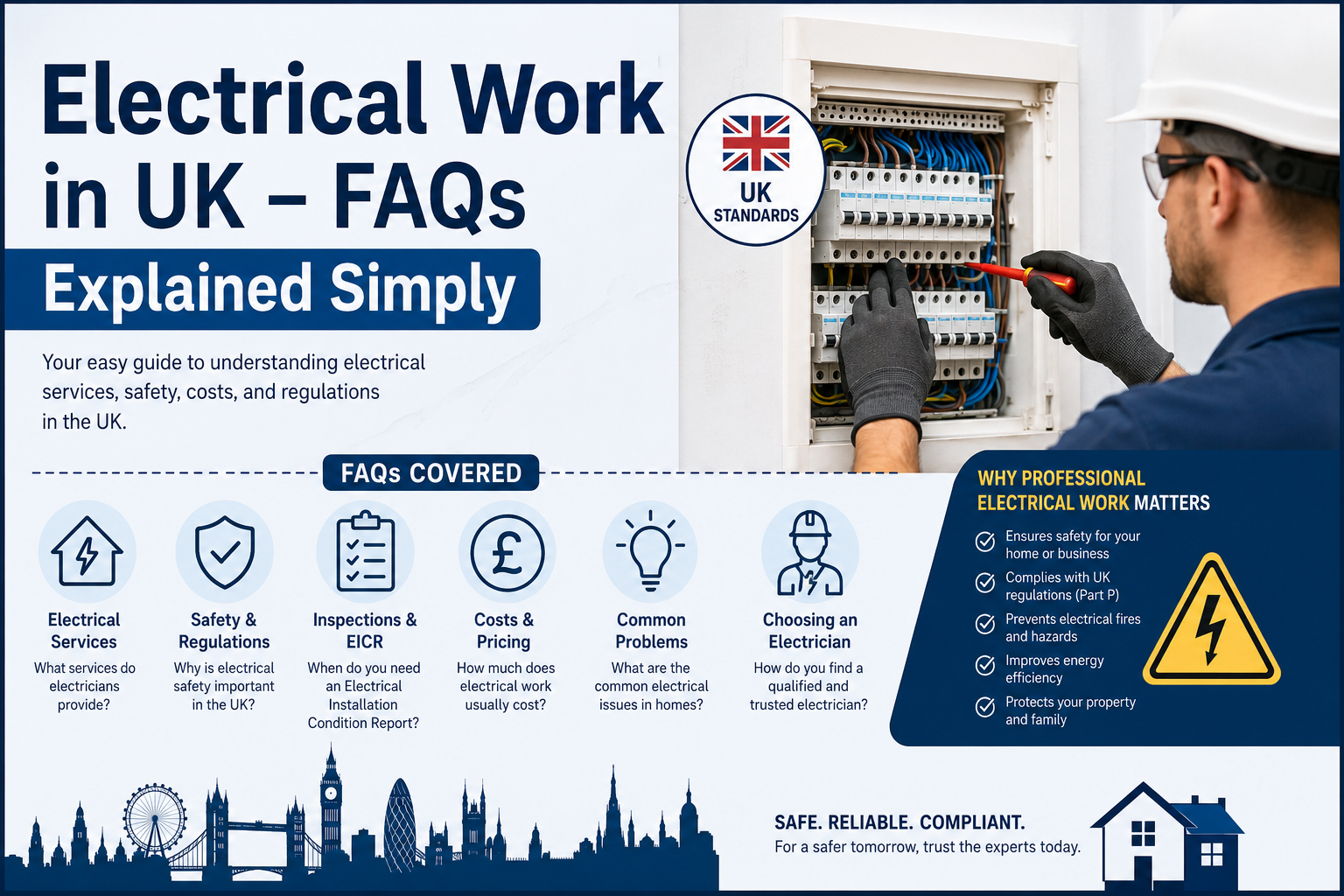
Introduction
Electricity is an essential part of modern homes and businesses across the UK. From lighting and heating to appliances and smart devices, almost every daily activity depends on a safe and reliable electrical system. However, problems caused by damaged wiring, outdated equipment, or incorrect installations can create serious risks.
Understanding Electrical Work helps homeowners recognise problems early, improve safety, and make informed decisions when repairs or upgrades are needed. Professional electricians play an important role in ensuring Electrical Work is completed safely, efficiently, and in compliance with UK regulations.
This guide explains the most common questions about electrical services in simple language. Whether you are dealing with faults, planning improvements, or checking the condition of your property’s system, these FAQs will help you understand what to expect from professional Electrical Work.
1. What is electrical work and why is it important in the UK?
Electrical work includes the installation, repair, maintenance, testing, and inspection of electrical systems in homes, offices, and commercial buildings. It covers tasks such as wiring, lighting installation, socket repairs, consumer unit upgrades, and safety checks.
It is important because electricity can become dangerous when systems are poorly installed, damaged, or not maintained correctly. Professional electricians ensure that systems operate safely and follow UK safety standards, helping to reduce risks such as electrical fires, power failures, and electric shocks.
2. What types of electrical services do electricians provide?
Electricians provide a wide range of services to keep electrical systems safe and working properly. Common services include installing new circuits, repairing electrical faults, upgrading consumer units, fitting lighting systems, testing installations, and carrying out safety inspections.
Many professionals also help with energy-efficient solutions, smart home technology, and electrical improvements during renovations. Their knowledge allows homeowners and businesses to maintain reliable power systems.
3. How do I know if I need an electrician?
You may need an electrician if you notice warning signs such as flickering lights, burning smells, buzzing noises, damaged cables, frequent power cuts, or sockets that stop working.
Some electrical problems may appear small but can indicate more serious issues hidden behind walls or inside electrical systems. Getting professional advice early can help prevent expensive repairs and improve safety.
4. What qualifications should a UK electrician have?
A qualified UK electrician should have proper training, experience, and knowledge of current safety regulations. Many electricians complete recognised qualifications and join approved registration schemes to demonstrate their competence.
Before hiring someone, check their experience, qualifications, and whether they are suitable for the type of work required. Choosing a skilled professional gives you greater confidence that the job will be completed safely.
5. Is it legal to do electrical work yourself in the UK?
Some simple tasks, such as changing a light bulb or replacing certain electrical accessories, can usually be done by homeowners. However, most electrical work requires specialist skills and should be completed by a qualified person.
Incorrect installations can create safety risks and may fail to meet UK regulations. For major repairs, new circuits, or complex changes, hiring a professional electrician is the safer option.
6. What electrical work requires a qualified electrician?
Tasks such as rewiring, installing new circuits, upgrading consumer units, repairing major faults, and completing electrical installations usually require a qualified electrician.
Certain projects must follow specific UK building regulations, especially work that affects safety. A professional can ensure the installation is tested correctly and meets required standards.
7. How often should electrical systems be inspected?
The recommended inspection frequency depends on the age, condition, and type of property. Older homes and buildings with outdated systems may require more frequent checks compared with newer installations.
Regular inspections help identify problems before they become serious. They can detect issues such as damaged wiring, poor connections, and safety concerns that may not be visible to homeowners.
8. What is an Electrical Installation Condition Report (EICR)?
An Electrical Installation Condition Report (EICR) is a detailed inspection that checks whether an electrical system is safe and suitable for continued use.
During the inspection, an electrician examines wiring, circuits, protective devices, and other components to identify faults or potential risks. The report highlights any problems and recommends necessary improvements.
9. When do I need an EICR for my property?
An EICR may be required when renting out a property, purchasing an older home, managing a commercial building, or checking the safety condition of an existing installation.
Regular testing provides peace of mind by confirming that the system remains safe and identifying areas that may need attention.
10. How much does electrical work usually cost in the UK?
The cost depends on several factors, including the type of job, materials needed, property size, and the complexity of the installation.
Small repairs may be relatively affordable, while larger projects such as rewiring or consumer unit replacements usually require a higher budget. It is always recommended to request quotes from qualified electricians before starting any project.
11. What are the common electrical problems in UK homes?
Many UK homes experience common electrical issues due to ageing systems, damaged components, or increased demand from modern appliances. Problems such as frequent circuit trips, faulty sockets, flickering lights, and outdated wiring are among the most common concerns.
Ignoring these warning signs can lead to bigger safety risks. Regular checks and professional electrical work can help identify problems early and keep your home’s system safe and reliable.
12. Why do my lights keep flickering or going off?
Flickering lights can happen for several reasons, including loose connections, faulty bulbs, overloaded circuits, or problems with the wiring. While a simple bulb replacement may solve the issue, repeated flickering should not be ignored.
A qualified electrician can inspect the system and find the actual cause. Fixing the problem early can prevent further damage and improve electrical safety.
13. What causes electrical sockets to stop working?
Electrical sockets may stop working because of damaged wiring, loose connections, tripped circuit breakers, faulty sockets, or problems within the electrical system.
If a socket becomes warm, makes unusual sounds, or stops working repeatedly, it should be checked by a professional. Proper electrical work can identify the fault and restore safe operation.
14. Why does my circuit breaker keep tripping?
A circuit breaker usually trips when it detects an unsafe condition, such as an overloaded circuit, short circuit, or electrical fault. It is designed to protect your property by cutting off power when a problem occurs.
If the breaker keeps tripping after being reset, there may be an underlying issue that requires professional inspection. Repeatedly resetting it without finding the cause can create safety risks.
15. How can I make my home’s electrical system safer?
You can improve electrical safety by arranging regular inspections, avoiding overloaded sockets, replacing damaged cables, and using appliances correctly.
Installing modern safety devices, maintaining your consumer unit, and getting professional electrical work completed when needed can also help protect your home and family from potential hazards.
16. What are the signs of faulty electrical wiring?
Common signs of faulty wiring include burning smells, buzzing noises, flickering lights, discoloured sockets, frequent power interruptions, and unusual heat from electrical components.
Older or damaged wiring can become dangerous over time. If you notice any of these signs, it is important to arrange an inspection with a qualified electrician.
17. How can old wiring affect electrical safety?
Old wiring may not be designed to handle the electrical demands of modern homes. As households use more appliances and technology, outdated systems can become overloaded.
Aged cables, poor connections, and worn components can increase the risk of electrical faults. Professional assessment can determine whether repairs or upgrades are needed.
18. Do older homes need electrical upgrades?
Older properties often benefit from electrical upgrades because their systems may not meet modern safety requirements or support today’s energy demands.
Upgrades may include replacing outdated components, improving wiring, installing modern safety devices, or upgrading the consumer unit. Proper improvements can make the property safer and more efficient.
19. What is a consumer unit and why is it important?
A consumer unit is the main control point for electricity in a property. It distributes power to different circuits and contains protective devices that help prevent electrical dangers.
A modern consumer unit improves safety by providing better protection against faults. Professional installation ensures the system works correctly and complies with current standards.
20. How often should a consumer unit be replaced?
There is no fixed replacement date for every consumer unit, as its condition depends on age, usage, and maintenance history. However, older units may need upgrading if they lack modern safety features.
If your consumer unit shows signs of damage, frequent faults, or outdated components, an electrician can inspect it and recommend suitable improvements.

Leave a Reply