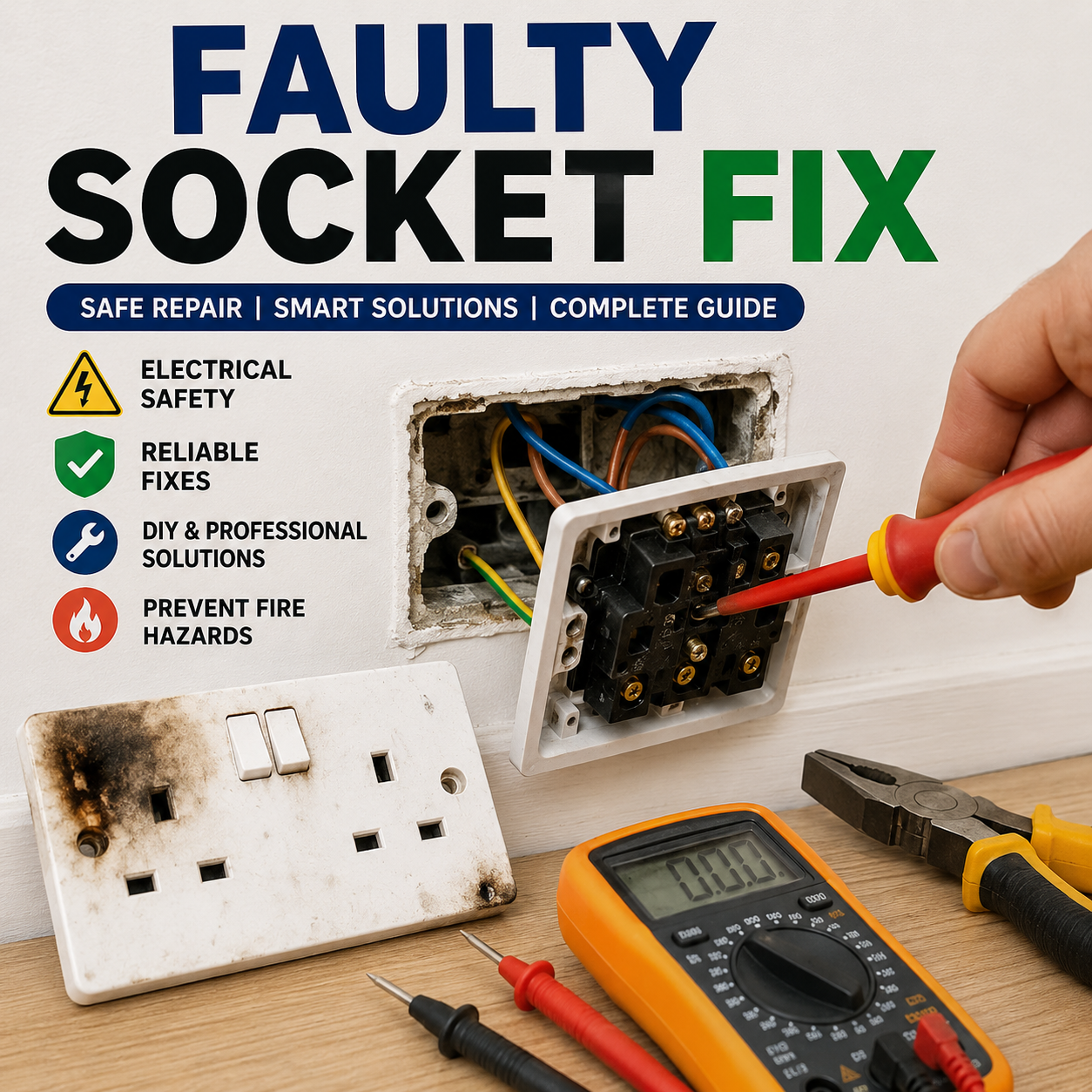
Introduction
Electrical sockets are an essential part of every home and workplace. They provide power for everyday appliances, chargers, and electrical equipment. However, when sockets become damaged, loose, or stop working correctly, they can create inconvenience and safety concerns.
A professional Faulty Socket Fix focuses on finding the real cause of the problem and applying the correct solution. Whether the issue is a damaged socket, loose connection, overheating, or wiring fault, proper diagnosis is important for long-term electrical safety.
Many people ignore small socket problems because they seem minor. A loose plug, unusual noise, or slight burning smell may appear harmless, but these signs can sometimes indicate a bigger electrical issue.
This guide explains common socket problems, warning signs, repair methods, and safety steps homeowners should know before arranging a Faulty Socket Fix.
What Are the Common Causes of a Faulty Socket?
Sockets can become faulty for several reasons. Understanding the cause helps ensure the right repair method is used.
Common causes include:
- Loose internal connections
- Damaged socket parts
- Ageing electrical components
- Overloaded circuits
- Faulty wiring
- Moisture exposure
- Poor installation
Over time, regular use can wear down socket components. A professional Faulty Socket Fix can identify whether the problem requires a simple repair or complete socket replacement.
Ignoring these issues may lead to overheating, appliance damage, or electrical hazards.
How Can I Identify If a Socket Is Damaged or Unsafe?
A damaged socket often gives warning signs before it completely stops working.
Look out for these common indicators:
- Cracked or broken socket covers
- Loose plugs
- Burning smells
- Buzzing sounds
- Heat around the socket
- Black marks or discolouration
- Intermittent power supply
If you notice these problems, avoid using the socket until it has been checked.
A timely Faulty Socket Fix can help prevent minor electrical issues from becoming expensive repairs or safety risks.
What Are the Warning Signs That a Socket Needs Repair?
Many socket problems develop gradually. Recognising early warning signs can help homeowners take action quickly.
Loose Plug Connection
If a plug does not fit securely or keeps falling out, the internal contact points may be worn or damaged.
Burning Smell
A burning odour near a socket may indicate overheating wiring or damaged electrical components.
Flickering Power
Power interruptions from a socket may suggest loose connections or internal faults.
Heat Build-Up
A socket that feels unusually warm should be inspected because excessive heat can increase fire risk.
A professional electrician can provide a safe Faulty Socket Fix and confirm whether the socket is suitable for continued use.
Why Is My Electrical Socket Not Working?
A socket may stop working because of several different reasons. Sometimes the issue is limited to the socket itself, while other times it may involve the wider electrical system.
Possible causes include:
- Tripped circuit breakers
- Faulty socket mechanisms
- Loose wiring connections
- Damaged switches
- Electrical supply problems
Before arranging a Faulty Socket Fix, homeowners can check if other sockets in the property are working. If only one socket has failed, the problem may be isolated.
However, if multiple sockets stop working, a deeper electrical inspection may be required.
Can a Faulty Socket Cause a Power Trip?
Yes, a damaged socket can cause a circuit breaker to trip.
Electrical protection systems are designed to shut down power when they detect unsafe conditions, such as:
- Short circuits
- Excessive electrical current
- Damaged wiring
- Internal socket faults
Repeated power trips should not be ignored. Constantly resetting the breaker without finding the cause may leave the underlying problem unresolved.
A proper Faulty Socket Fix involves identifying why the socket is causing the electrical protection system to activate.
Is It Safe to Use a Socket That Feels Warm?
A socket should normally remain at a safe temperature during use. If it feels hot or warmer than usual, it may indicate a problem.
Possible causes include:
- Loose connections
- Overloaded circuits
- Poor electrical contact
- Damaged internal parts
Using a heated socket can increase the chance of electrical failure or fire.
Arranging a professional Faulty Socket Fix allows an electrician to inspect the socket safely and replace damaged components if needed.
Why Does My Socket Make a Buzzing or Crackling Sound?
Electrical sockets should operate quietly. Buzzing, clicking, or crackling sounds usually indicate that something is wrong.
Common reasons include:
- Loose wiring
- Faulty socket parts
- Poor electrical connections
- Overloaded circuits
These sounds may appear occasionally at first but can become more serious over time.
A qualified electrician can perform a complete Faulty Socket Fix by checking the socket condition, wiring, and electrical connections.
Can a Loose Socket Be Repaired or Does It Need Replacement?
A loose socket does not always require full replacement. The correct solution depends on the condition of the socket.
A repair may involve:
- Securing the socket properly
- Tightening connections
- Replacing damaged parts
However, replacement may be recommended if the socket is cracked, outdated, or internally damaged.
A professional inspection ensures the chosen Faulty Socket Fix provides safe and reliable results.
How Much Does It Cost to Fix a Faulty Socket?
The cost of repairing a socket depends on several factors, including:
- Type of socket
- Extent of damage
- Required replacement parts
- Wiring condition
- Labour time
A simple socket replacement may be affordable, while repairs involving damaged wiring may require additional work.
The best way to understand the cost of a Faulty Socket Fix is to have the issue inspected by a qualified electrician who can provide an accurate estimate.
Should I Repair a Faulty Socket Myself or Hire an Electrician?
Electrical socket repairs should be handled carefully because they involve live electrical connections.
DIY repairs can create risks such as:
- Electric shock
- Incorrect wiring
- Appliance damage
- Increased fire hazards
Hiring a qualified electrician ensures the Faulty Socket Fix is completed safely and correctly.
Professionals have the right tools, training, and testing equipment to identify electrical faults properly.
How Long Does It Take to Replace a Damaged Socket?
The time required depends on the condition of the socket and whether additional problems are discovered.
A standard replacement usually involves:
- Checking the socket
- Turning off the power supply
- Removing the damaged socket
- Installing a new one
- Testing the connection
Simple replacements may be completed quickly, but wiring issues may require more time.
A proper Faulty Socket Fix should always include testing to confirm the socket is safe before use.
What Tools Are Needed for Socket Repair?
A proper socket repair requires the correct tools and safety equipment. Professional electricians use specialised equipment to identify faults and complete repairs safely.
Common tools used during a Faulty Socket Fix may include:
- Voltage testers
- Screwdrivers designed for electrical work
- Wire cutters and strippers
- Electrical testing equipment
- Replacement socket components
Using the wrong tools or attempting repairs without proper knowledge can increase the risk of accidents. Professional electricians use suitable equipment to ensure the work is completed safely and correctly.
Can an Overloaded Socket Become Dangerous?
Yes, an overloaded socket can create serious electrical risks. Plugging too many high-power appliances into one socket can cause excessive heat and damage.
Common causes of socket overload include:
- Using multiple extension leads
- Connecting power-hungry appliances together
- Exceeding the socket’s electrical capacity
Overloaded sockets may lead to:
- Overheating
- Damaged wiring
- Melted socket covers
- Electrical fires
A professional Faulty Socket Fix may involve checking the socket condition, reviewing the electrical load, and improving the safety of the connection.
How Can I Prevent Socket Problems in My Home?
Preventing socket faults is easier than dealing with repairs after damage occurs.
Homeowners can reduce risks by:
- Avoiding socket overloading
- Replacing damaged plugs
- Keeping sockets dry
- Checking for warning signs regularly
- Scheduling electrical inspections
Regular maintenance helps identify small problems before they become major electrical issues.
A planned Faulty Socket Fix can protect your home by addressing damaged sockets before they create bigger safety concerns.
Why Does My Plug Keep Falling Out of the Socket?
A plug that does not stay firmly connected usually indicates worn internal contacts inside the socket.
Possible causes include:
- Ageing socket parts
- Loose internal components
- Frequent use over many years
- Poor-quality installation
A loose plug connection can create electrical resistance, which may lead to overheating.
Replacing the damaged socket is often the safest Faulty Socket Fix because it restores a secure connection and improves reliability.
Can Faulty Sockets Cause Electrical Fires?
Yes, faulty sockets can contribute to electrical fires if the problem is ignored.
Fire risks may increase due to:
- Overheating connections
- Damaged wiring
- Loose terminals
- Excessive electrical load
Sockets showing signs of burning, melting, or discolouration should not be used until they have been inspected.
A professional Faulty Socket Fix helps remove potential hazards and ensures the socket meets electrical safety requirements.
What Should I Do If a Socket Smells Like Burning?
A burning smell from a socket should always be treated seriously.
If you notice this issue:
- Stop using the socket immediately
- Switch off the power if it is safe to do so
- Avoid touching damaged parts
- Contact a qualified electrician
A burning smell may indicate overheating wires or internal damage.
Quick action and a proper Faulty Socket Fix can help prevent further electrical damage and reduce safety risks.
Why Is My Socket Showing Signs of Overheating?
Overheating usually happens when electrical connections are not working correctly.
Possible reasons include:
- Loose wiring connections
- Overloaded circuits
- Damaged socket mechanisms
- Poor electrical contact
Signs of overheating may include:
- Warm socket covers
- Brown marks
- Melted plastic
- Burning smells
A complete inspection is important because the visible damage may only be part of the problem.
A reliable Faulty Socket Fix addresses both the socket and any underlying electrical issues.
How Do Electricians Diagnose Socket Faults?
Electricians use testing methods to identify the exact cause of socket problems.
The inspection may include:
- Checking voltage supply
- Testing electrical connections
- Inspecting wiring condition
- Examining socket components
- Checking circuit protection devices
Professional testing helps avoid unnecessary replacements and ensures the correct solution is applied.
An accurate Faulty Socket Fix depends on proper diagnosis rather than simply replacing parts without finding the cause.
Can Damaged Sockets Be Fixed Without Replacing Wiring?
In many cases, a damaged socket can be repaired without replacing the entire wiring system.
However, this depends on:
- The condition of existing wiring
- Age of the electrical installation
- Type of socket damage
- Safety test results
If the wiring is healthy, replacing the socket may be enough.
A qualified electrician can determine whether a simple Faulty Socket Fix is suitable or whether additional electrical work is required.
What Is the Difference Between Repairing and Replacing a Socket?
Repairing a socket usually involves fixing minor issues, while replacement involves removing the old socket and installing a new one.
Repair may be suitable for:
- Loose fittings
- Minor connection problems
- Installation adjustments
Replacement is often recommended for:
- Cracked sockets
- Burned components
- Old designs
- Severe internal damage
Choosing the right Faulty Socket Fix depends on the condition and safety of the existing socket.
What Safety Checks Are Performed After Socket Repair?
After completing electrical work, testing is important to confirm everything is working correctly.
Safety checks may include:
- Checking voltage levels
- Testing socket operation
- Confirming secure connections
- Inspecting for faults
- Ensuring safe operation
These checks help confirm that the repair has been completed properly.
A professional Faulty Socket Fix should always include final testing before the socket is used again.
Are Modern Sockets Safer Than Older Socket Designs?
Modern sockets usually include improved safety features compared with older models.
Benefits of newer sockets may include:
- Better protection features
- Improved durability
- Safer internal components
- Modern designs for today’s electrical demands
Older sockets may become less reliable over time due to wear and ageing.
Upgrading old sockets through a professional Faulty Socket Fix can improve electrical safety and convenience.
Can Water Damage Cause a Socket to Fail?
Yes, moisture and water exposure can damage electrical sockets.
Water can cause:
- Internal corrosion
- Short circuits
- Electrical failures
- Increased safety risks
Sockets in areas such as kitchens, bathrooms, and outdoor spaces require extra care.
If water damage occurs, a professional Faulty Socket Fix should be completed before using the socket again.
Why Does My Socket Keep Tripping the Circuit Breaker?
A socket that repeatedly trips the circuit breaker usually indicates an electrical problem that needs attention.
Common causes include:
- Overloaded circuits
- Faulty appliances
- Damaged socket wiring
- Internal socket faults
- Short circuits
Circuit breakers are designed to protect your electrical system by cutting power when they detect unsafe conditions.
Instead of repeatedly resetting the breaker, it is better to arrange a professional Faulty Socket Fix to identify and resolve the actual cause.
Can Faulty Sockets Affect Home Electrical Safety?
Yes, damaged sockets can have a direct impact on overall electrical safety.
A faulty socket may lead to:
- Electric shocks
- Appliance damage
- Overheating
- Power interruptions
- Fire risks
Small problems can become more serious when ignored for a long time.
A proper Faulty Socket Fix improves safety by repairing damaged components and ensuring the socket works correctly.
When Should I Call a Professional Electrician for a Socket Problem?
You should contact an electrician when you notice signs that indicate a possible electrical fault.
Professional help is recommended if you experience:
- Burning smells
- Sparks from sockets
- Repeated power trips
- Hot socket covers
- Buzzing sounds
- Damaged socket plates
Electrical repairs should not be delayed because hidden faults can become dangerous.
A qualified electrician can provide a safe Faulty Socket Fix and identify any related electrical problems.
How Can I Choose the Right Replacement Socket for My Home?
Choosing the correct replacement socket depends on your electrical requirements and property needs.
Important factors include:
- Socket type
- Safety features
- Quality standards
- Compatibility with existing wiring
- Location of installation
A professional electrician can recommend suitable options and complete the installation correctly.
The right Faulty Socket Fix ensures the replacement socket is safe, reliable, and suitable for everyday use.
Can a Qualified Electrician Fix Multiple Faulty Sockets at Once?
Yes, electricians can inspect and repair multiple damaged sockets during the same visit.
This can be useful when:
- Several sockets are showing similar problems
- A property has older electrical fittings
- Multiple rooms need inspection
Checking several sockets together can help identify wider electrical issues.
A complete Faulty Socket Fix service can improve the safety and performance of your entire electrical system.
What Are the Risks of Ignoring a Damaged Electrical Socket?
Ignoring a damaged socket can create serious problems over time.
Possible risks include:
- Electrical fires
- Damage to appliances
- Increased energy issues
- Dangerous electrical connections
- Unexpected power failures
Many socket faults become worse gradually, making early repairs important.
A timely Faulty Socket Fix helps prevent small problems from turning into expensive and dangerous situations.
Do Faulty Sockets Need Immediate Attention?
Yes, certain socket problems require quick action.
Immediate attention is needed when you notice:
- Burning smells
- Smoke
- Sparks
- Melting plastic
- Excessive heat
These signs may indicate serious electrical faults.
Arranging a professional Faulty Socket Fix quickly can reduce safety risks and protect your home from further damage.
How Can Regular Electrical Maintenance Prevent Socket Failures?
Regular electrical maintenance helps identify problems before they become major faults.
Maintenance may include:
- Checking socket conditions
- Testing electrical connections
- Inspecting wiring
- Reviewing electrical loads
Routine checks are especially useful in older properties where electrical components may wear out over time.
Regular inspections support a reliable Faulty Socket Fix approach by dealing with issues before they become severe.
Can Faulty Sockets Damage Electrical Appliances?
Yes, damaged sockets can sometimes affect connected appliances.
A faulty socket may cause:
- Unstable power supply
- Voltage problems
- Overheating
- Sudden power interruptions
Sensitive equipment such as computers, televisions, and smart devices may be affected by electrical issues.
A professional Faulty Socket Fix can help protect appliances by restoring a safe and stable electrical connection.
What Are the Benefits of Fixing Faulty Sockets Quickly?
Repairing socket problems early provides several advantages.
Benefits include:
- Improved electrical safety
- Reduced risk of damage
- Better appliance performance
- Fewer unexpected power problems
- Increased confidence in your electrical system
Quick action can also prevent more expensive repairs later.
A reliable Faulty Socket Fix ensures your sockets remain safe and functional for everyday use.
Can Old Electrical Sockets Be Upgraded?
Yes, old sockets can often be replaced with modern alternatives that provide better safety and convenience.
Upgrading may include:
- Installing newer socket designs
- Adding modern safety features
- Replacing worn components
- Improving electrical reliability
Older sockets may not handle modern electrical demands as effectively as newer ones.
A professional Faulty Socket Fix can include upgrading outdated sockets to improve overall safety.
How Do Electricians Ensure a Socket Repair Is Safe?
Electricians follow safety procedures to make sure repairs are completed correctly.
This usually involves:
- Turning off the electrical supply
- Inspecting the fault
- Testing connections
- Installing suitable parts
- Checking final operation
Proper testing confirms that the socket is safe before regular use.
A professional Faulty Socket Fix is not only about replacing parts but also ensuring the entire connection works safely.
What Should Homeowners Do After a Socket Repair?
After a socket repair, homeowners should continue using electrical systems carefully.
Helpful steps include:
- Avoiding socket overload
- Watching for unusual signs
- Keeping sockets clean and dry
- Scheduling inspections when needed
Good electrical habits help maintain long-term safety.
A completed Faulty Socket Fix combined with proper maintenance can keep your electrical system reliable.
Conclusion
Faulty sockets are common electrical problems that many homeowners experience, but ignoring them can create unnecessary risks. Issues such as loose connections, overheating, burning smells, and repeated power trips should always be taken seriously.
A professional Faulty Socket Fix helps identify the real cause of socket problems and provides a safe, long-lasting solution. Whether the issue requires repair, replacement, or further electrical inspection, expert support ensures the work is completed correctly.
Regular maintenance, careful use of electrical equipment, and quick action when problems appear can help prevent serious faults. Keeping sockets in good condition improves safety, protects appliances, and provides peace of mind for every homeowner.
What Is NAPIT and Why Is It Important for Electrical Socket Repairs?
NAPIT is a recognised certification body that helps ensure electricians meet required safety standards and follow proper electrical regulations. Hiring a NAPIT-approved electrician for a Faulty Socket Fix gives homeowners confidence that repairs, testing, and installations are completed safely and professionally.
You can learn more about NAPIT and approved electrical professionals here:
NAPIT Official Website
Leave a Reply