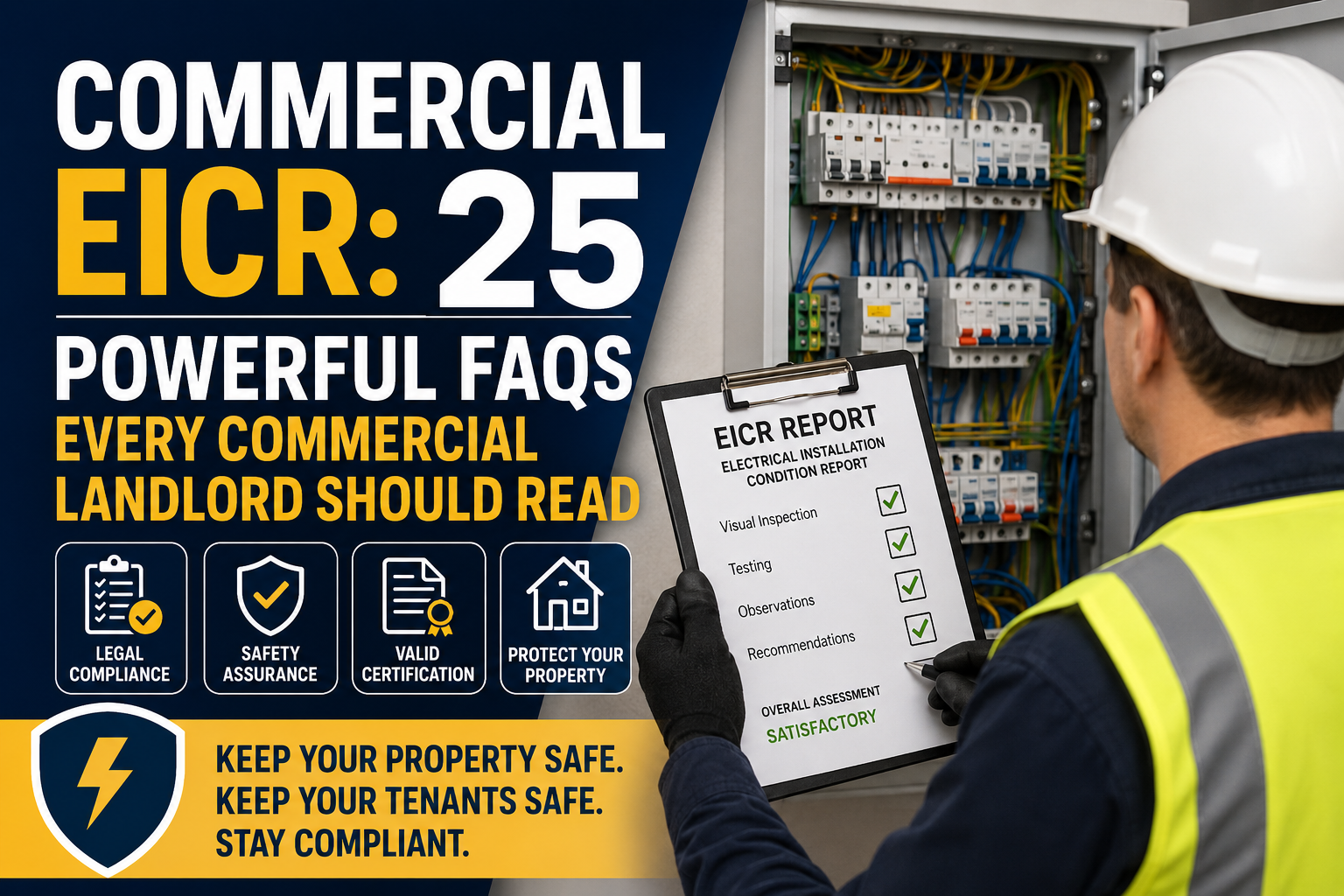
Commercial properties must maintain safe electrical systems to protect tenants, employees, visitors, and investments. A Commercial EICR helps identify electrical faults, damage, and potential hazards before they become serious issues.
Many landlords have questions about inspection requirements, costs, validity, and legal responsibilities. This guide answers common questions to help commercial landlords understand the importance of a Commercial EICR and make informed decisions.
What Is an EICR for Commercial Landlords?
An Electrical Installation Condition Report (EICR) is a detailed inspection of a property’s electrical installation. The purpose of the inspection is to assess whether the electrical system is safe for continued use.
The inspection covers electrical wiring, distribution boards, sockets, switches, earthing arrangements, protective devices, and other fixed electrical components.
For commercial landlords, an EICR provides evidence that reasonable steps have been taken to maintain electrical safety within the property.
Is an EICR a Legal Requirement for Commercial Properties?
While legal requirements can vary depending on property type and use, commercial landlords have a duty to maintain safe electrical systems.
Health and safety legislation requires electrical installations to be maintained in a condition that prevents danger. A Commercial EICR is widely recognised as one of the best ways to demonstrate compliance with these responsibilities.
Many insurance companies, tenants, and property managers also request proof of electrical safety before entering into agreements.
How Often Should Commercial Landlords Obtain an EICR?
The recommended frequency depends on the type of premises and how the electrical installation is used.
Many commercial properties require inspection every five years. However, certain environments may require more frequent inspections due to higher usage, harsh conditions, or increased risks.
Factors that influence inspection frequency include:
- Property type
- Occupancy levels
- Electrical load demand
- Environmental conditions
- Previous inspection findings
A qualified electrician can advise on the most appropriate inspection schedule.
Who Can Carry Out an EICR Inspection for a Commercial Property?
A Commercial EICR should be completed by a qualified and competent electrician with experience in commercial electrical systems.
The inspector should possess the necessary qualifications, knowledge, and testing equipment required to assess electrical installations according to current standards.
Using a qualified professional helps ensure accurate reporting and reliable recommendations.
What Does an EICR Inspection Include?
An EICR inspection includes both visual assessments and electrical testing.
The electrician will examine:
- Consumer units and distribution boards
- Electrical circuits
- Earthing and bonding
- Wiring systems
- Protective devices
- Switches and sockets
- Fixed electrical equipment
Testing is then carried out to verify the safety and performance of the installation.
The findings are recorded in a formal report.
How Long Does a Commercial EICR Inspection Take?
Inspection times vary depending on the size and complexity of the property.
A small office may require only a few hours, while larger commercial premises such as warehouses, schools, factories, or multi-unit buildings may require a full day or multiple days.
The electrician will usually provide an estimated timeframe before beginning the inspection.
What Happens If a Commercial Property Fails an EICR?
If defects or safety concerns are discovered, the report may be classified as unsatisfactory.
This does not necessarily mean the entire electrical installation is unsafe. Instead, it means issues have been identified that require attention.
The report will include observations and recommendations for corrective actions. Once remedial work has been completed, additional testing may be carried out to confirm compliance.
Can Tenants Remain in the Property During an EICR Inspection?
In many cases, tenants can remain on the premises while testing is performed.
However, some circuits may need to be temporarily isolated to allow accurate testing. This can result in short interruptions to power supplies.
Communication between landlords, tenants, and electricians helps minimise disruption during the inspection process.
How Much Does an EICR Cost for Commercial Landlords?
The cost depends on several factors, including:
- Property size
- Number of circuits
- Complexity of the installation
- Accessibility
- Location
Larger properties generally require more testing and therefore cost more than smaller premises.
Obtaining multiple quotations from qualified electricians can help landlords compare services and pricing.
What Are the Different EICR Classification Codes?
An EICR uses coding systems to identify the seriousness of observed defects.
Common classifications include:
- C1: Immediate danger
- C2: Potentially dangerous
- C3: Improvement recommended
- FI: Further investigation required
Codes C1 and C2 typically result in an unsatisfactory report because they represent safety concerns that should be addressed promptly.
What Is the Difference Between a Domestic and Commercial EICR?
Although both inspections assess electrical safety, commercial installations are often more complex.
Commercial properties may contain:
- Three-phase systems
- Large distribution boards
- Industrial equipment
- Emergency systems
- Higher electrical loads
Because of this complexity, commercial inspections generally require additional testing and specialist knowledge.
Do Commercial Landlords Need an EICR Before Leasing a Property?
Obtaining an EICR before leasing a property is considered good practice.
A current report demonstrates that the electrical installation has been professionally assessed and found suitable for continued use.
Providing evidence of electrical safety can increase tenant confidence and support smoother lease agreements.
Can a Commercial Landlord Be Fined for Not Having a Valid Commercial EICR?
Landlords have legal responsibilities regarding electrical safety.
If an unsafe electrical installation causes injury, fire, or damage, landlords may face enforcement action, legal claims, or financial penalties.
A Commercial EICR helps demonstrate a proactive approach to maintaining electrical safety and reducing risk.
What Electrical Issues Are Commonly Found During Commercial EICR Inspections?
Electrical inspections frequently identify issues such as:
- Damaged wiring
- Inadequate earthing
- Loose connections
- Overloaded circuits
- Outdated equipment
- Missing protective devices
- Incorrect installations
Identifying these problems early helps prevent costly failures and safety incidents.
How Can Landlords Prepare for a Commercial EICR Inspection?
Preparation can help make the inspection process more efficient.
Landlords should:
- Provide access to electrical equipment
- Inform tenants of inspection dates
- Gather previous reports
- Ensure distribution boards are accessible
- Provide building plans if available
Good preparation can reduce delays and help inspectors complete testing efficiently.
Does an Commercial EICR Cover Emergency Lighting Systems?
Emergency lighting systems may be visually assessed during an inspection if they form part of the installation.
However, dedicated emergency lighting inspections and testing may also be required to ensure compliance with relevant standards.
Landlords should discuss emergency lighting requirements with their electrical contractor to determine whether additional testing is needed.
Why is hiring a NAPIT-approved electrician important for a Commercial EICR?
NAPIT-approved electrician is regularly assessed for competence and compliance, helping ensure your Commercial EICR is carried out safely, professionally, and in line with current electrical regulations.
Power your business with expert electrical services — click here ➜
Leave a Reply