Your home’s electrical system has to cope with far more demand than many older installations were originally designed for. If wiring, protective devices or electrical accessories have deteriorated, your home needs rewiring may become a genuine safety consideration.
Flickering lights, burning smells, damaged cables, frequent circuit trips and an outdated fuse box can all indicate an electrical problem. However, not every fault means the entire property needs rewiring. A professional inspection can determine whether you need repairs, partial upgrades or a complete rewiring project.
What Are the Signs That a Home Needs Rewiring?
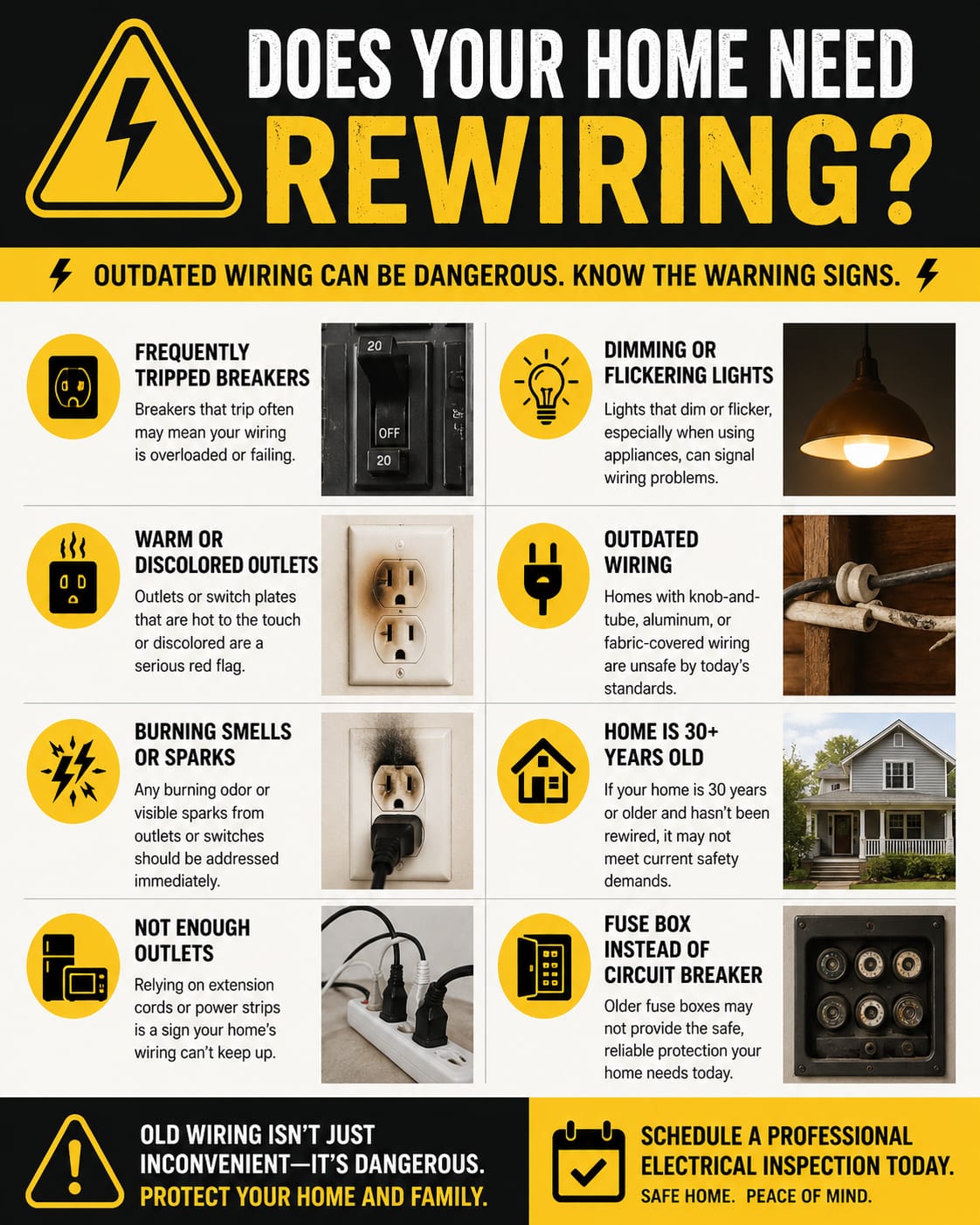
Several warning signs can indicate that your home needs rewiring or electrical upgrading:
- Frequent circuit breaker trips
- Flickering or unstable lights
- Burning smells from sockets or switches
- Warm, cracked or discoloured accessories
- Exposed or damaged cables
- Old or deteriorated wiring
- An outdated fuse box
- Too few sockets for modern electrical use
- Repeated electrical faults
One sign alone does not necessarily mean the whole installation requires replacement. Multiple problems, particularly in an older property, warrant professional investigation.
If several problems appear together, professional rewiring and electrical upgrades may be required to restore the safety and reliability of the installation.
How Can I Tell If My House Wiring Is Outdated?
Most domestic wiring is concealed, so its age and condition cannot always be established visually. Older properties may have outdated cables, inadequate earthing, limited circuit protection or electrical modifications carried out over many years.
Visible warning signs can include damaged cable insulation, old accessories, unusual connections and an outdated fuse box.
If you are unsure whether your home needs rewiring, an electrical inspection can assess the installation without assuming that a complete rewire is automatically necessary.
How Old Does a House Have to Be Before It Needs Rewiring?
There is no specific property age at which rewiring becomes mandatory.
The condition of the installation matters more than the age of the building. A property that has been rewired and maintained properly may remain suitable for many years, while an older installation with deterioration or poor modifications may require attention sooner.
If an older home still appears to have its original wiring, a professional inspection is sensible.
Why Is Old Electrical Wiring a Safety Concern?
Electrical cables and connections can deteriorate through age, heat, mechanical damage and previous alterations. At the same time, modern homes typically use more electrical equipment than older installations were designed to supply.
Where a home needs rewiring, continuing to rely on deteriorated wiring can increase the risk of:
- Overheating
- Electric shock
- Short circuits
- Equipment damage
- Electrical fires
The condition of the complete installation should be assessed rather than replacing wiring based on age alone.
Can Flickering Lights Mean My Home Needs Rewiring?
Repeated flickering lights can have several causes, including loose connections, faulty fittings, overloaded circuits or damaged wiring.
Occasional flickering from a defective bulb may be minor, but persistent or widespread flickering deserves investigation.If lights flicker when appliances are switched on, or several rooms are affected, the underlying electrical installation should be checked. Persistent flickering lights should not be ignored.
Does a Burning Smell From a Socket Mean My House Needs Rewiring?
A burning smell near a socket, switch or electrical appliance can indicate overheating, a loose connection, damaged insulation or excessive electrical load.
Stop using the affected equipment and arrange professional inspection rather than repeatedly resetting the circuit or replacing the fuse.
A burning smell does not automatically mean your home needs rewiring, but it should never be ignored.
Can Frequent Circuit Breaker Trips Indicate Faulty Wiring?
Circuit breakers trip to disconnect power when they detect certain electrical faults or excessive current. Repeated tripping can therefore be an important warning sign.
Possible causes include:
- Overloaded circuits
- Faulty appliances
- Short circuits
- Damaged wiring
- Loose connections
If the same circuit keeps tripping, an electrician should identify the cause instead of repeatedly resetting the breaker. In some older properties, the investigation may reveal that the home needs rewiring or other electrical upgrades.
Do Damaged Sockets and Switches Mean a Home Needs Rewiring?
Cracked, loose, scorched, buzzing or unusually warm sockets and switches should be inspected.
Replacing a damaged accessory may solve the immediate problem, but the wiring behind it also needs checking. If several accessories show deterioration or the installation contains outdated components, more extensive electrical work may be appropriate.
Can Old Wiring Increase the Risk of Electrical Fires?
Yes. Damaged insulation, loose connections, overloaded circuits and poor electrical modifications can create conditions that lead to excessive heat or arcing.
A professional inspection can identify defects before they develop into more serious problems. Where a home needs rewiring, replacing deteriorated wiring and upgrading protection can significantly improve the condition of the installation.
What Types of Wiring Problems Can Require Rewiring?
Rewiring may be considered where an electrical installation contains widespread deterioration or significant defects, such as:
- Damaged cable insulation
- Exposed conductors
- Poor or unsafe connections
- Inadequate circuit protection
- Extensive previous alterations
- Wiring that is unsuitable for the installation
- Significant deterioration across multiple circuits
A single damaged cable does not necessarily mean the entire property requires rewiring. The extent of the problem is important.
Should I Check My Wiring Before Installing New Appliances?
Yes, particularly before adding high-demand equipment such as electric ovens, heating systems or other powerful appliances.
Modern appliances can place additional demand on an older installation. If circuits are already heavily loaded, an electrician may recommend additional circuits, electrical upgrades or, where necessary, rewiring.
Checking the installation first can prevent overload problems and unexpected electrical faults.
How Can an Electrician Confirm Whether a Home Needs Rewiring?
An electrician can inspect the visible installation and carry out appropriate electrical testing to assess its condition.
A professional electrical testing and compliance assessment can help determine whether your home needs rewiring or whether repairs and smaller upgrades are sufficient.
Depending on the property, checks may include:
- Wiring condition
- Circuit protection
- Earthing and bonding
- Sockets and switches
- Consumer unit
- Signs of overheating
- Previous electrical alterations
- Circuit performance and test results
A formal electrical inspection can help establish whether repairs are sufficient or whether your home needs rewiring.
Does an Outdated Fuse Box Mean a House Needs Rewiring?
Not necessarily.
An old fuse box can indicate that the electrical installation may benefit from an upgrade, but replacing the consumer unit does not automatically mean the entire house needs rewiring.
The wiring, earthing, protective devices and overall installation should be assessed first.
f the existing fuse box or distribution equipment is outdated, professional power distribution and consumer unit services may be appropriate.
Should the Consumer Unit Be Replaced During Rewiring?
A consumer unit is an important part of the electrical installation because it contains protective devices for the circuits.
When a home needs rewiring, the condition and suitability of the existing consumer unit should be assessed as part of the project. Depending on its age, condition and protection provided, replacement may be appropriate.
The electrician should determine this based on the actual installation rather than replacing it automatically.
Can DIY Electrical Work Lead to Rewiring Problems?
Unqualified alterations can create hidden electrical defects. Incorrect connections, unsuitable cables, overloaded circuits and poor modifications may make an installation unsafe.
If previous DIY work has affected several circuits, an electrician may need to investigate the installation in greater detail. In some cases, correcting widespread unsafe modifications can form part of a rewiring project.
Electrical rewiring should always be carried out by a suitably qualified professional.
Can You Stay in a House While It Is Being Rewired?
Sometimes, but it depends on the property and the extent of the work.
Rewiring can involve access to walls, floors and ceilings, temporary power interruptions and work across multiple rooms. Larger projects can therefore be disruptive.
Your electrician can plan the work in stages where practical, but temporary accommodation may be preferable for extensive rewiring projects.
How Long Does Home Rewiring Take?
There is no single timeframe because every property is different.
The duration depends on:
- Property size
- Number of circuits
- Accessibility of cables
- Condition of the existing installation
- Number of sockets and accessories
- Extent of electrical upgrades
A professional survey provides a more useful estimate than using a standard number of days.
What Affects the Cost of Rewiring a Home?
The cost of rewiring depends on the work actually required. Important factors include:
- Property size
- Number of rooms and circuits
- Accessibility of existing cables
- Number of sockets and switches
- Consumer unit requirements
- Additional electrical upgrades
- Finishing and making-good requirements
If your home needs rewiring, request a detailed quotation based on an inspection rather than relying on a generic price.
Should I Check an Older Property Before Buying It?
Yes. An electrical inspection can identify defects and help you understand the condition of the installation before committing to a property.
Particular attention should be given to very old wiring, outdated protection, visible alterations, damaged accessories and evidence of previous electrical work.
Finding out whether a home needs rewiring before purchase can also help you plan future electrical costs.
What Are the Benefits of Rewiring an Old House?
Where rewiring is genuinely required, a properly planned installation can provide:
- Improved electrical safety
- Modern circuit arrangements
- Better support for electrical demand
- Updated wiring and accessories
- Improved fault protection
- Greater reliability
- Easier future electrical upgrades
Rewiring should be based on the condition and requirements of the property rather than carried out simply because a house is old.
What Should I Do If My Home Needs Rewiring?
If you notice repeated faults, burning smells, damaged wiring, overheating accessories or frequent circuit trips:
- Stop using equipment that appears unsafe.
- Do not attempt electrical repairs yourself.
- Avoid repeatedly resetting a tripping circuit.
- Arrange an inspection with a qualified electrician.
- Ask for a clear explanation of whether repairs, upgrades or full rewiring are required.
Early investigation can help prevent a minor electrical defect from developing into a more serious problem.
What Electrical Problems Need Immediate Attention?
Contact an electrician promptly if you notice:
- Burning smells
- Sparks
- Smoke
- Electric shocks
- Exposed conductors
- Scorch marks
- Repeated unexplained circuit trips
- Hot sockets or switches
If there is smoke, fire or an immediate danger, leave the affected area and contact the appropriate emergency service.
Can a NAPIT Approved Contractor Help With Rewiring?
A NAPIT Approved Contractor can assess electrical installations and undertake electrical work within their area of competence. NAPIT registration provides homeowners with a way to find contractors who have been assessed against relevant requirements.
You can learn more about registered contractors through the official NAPIT website.
Frequently Asked Questions
Does every old house need rewiring?
No. The age of a property alone does not determine whether rewiring is required. The condition, safety and suitability of the electrical installation need to be assessed.
How do I know if my home needs rewiring?
Frequent electrical faults, damaged wiring, burning smells, outdated protection, overheating accessories and repeated circuit trips can indicate that further investigation is needed.
Is rewiring better than repairing old wiring?
It depends on the condition of the installation. Localised faults may only require repairs, while widespread deterioration may justify a complete rewire.
Can a consumer unit replacement avoid a full rewire?
Sometimes. If the wiring is in suitable condition, replacing the consumer unit may be sufficient. Testing and inspection should determine the appropriate solution.
How often should home wiring be inspected?
There is no single interval that applies to every domestic property. The appropriate frequency depends on factors such as the age, condition and use of the installation. An electrician can advise based on the property’s circumstances.
Conclusion
Knowing when your home needs rewiring helps you deal with electrical problems before they become more serious. Flickering lights, burning smells, damaged cables, outdated protection and repeated circuit trips should all be investigated.
Not every electrical fault requires a complete rewire. A professional assessment can establish whether your property needs a repair, partial upgrade, consumer unit replacement or full rewiring.
If your electrical installation is showing multiple warning signs, arrange a professional inspection rather than waiting for a major fault to occur.
Leave a Reply