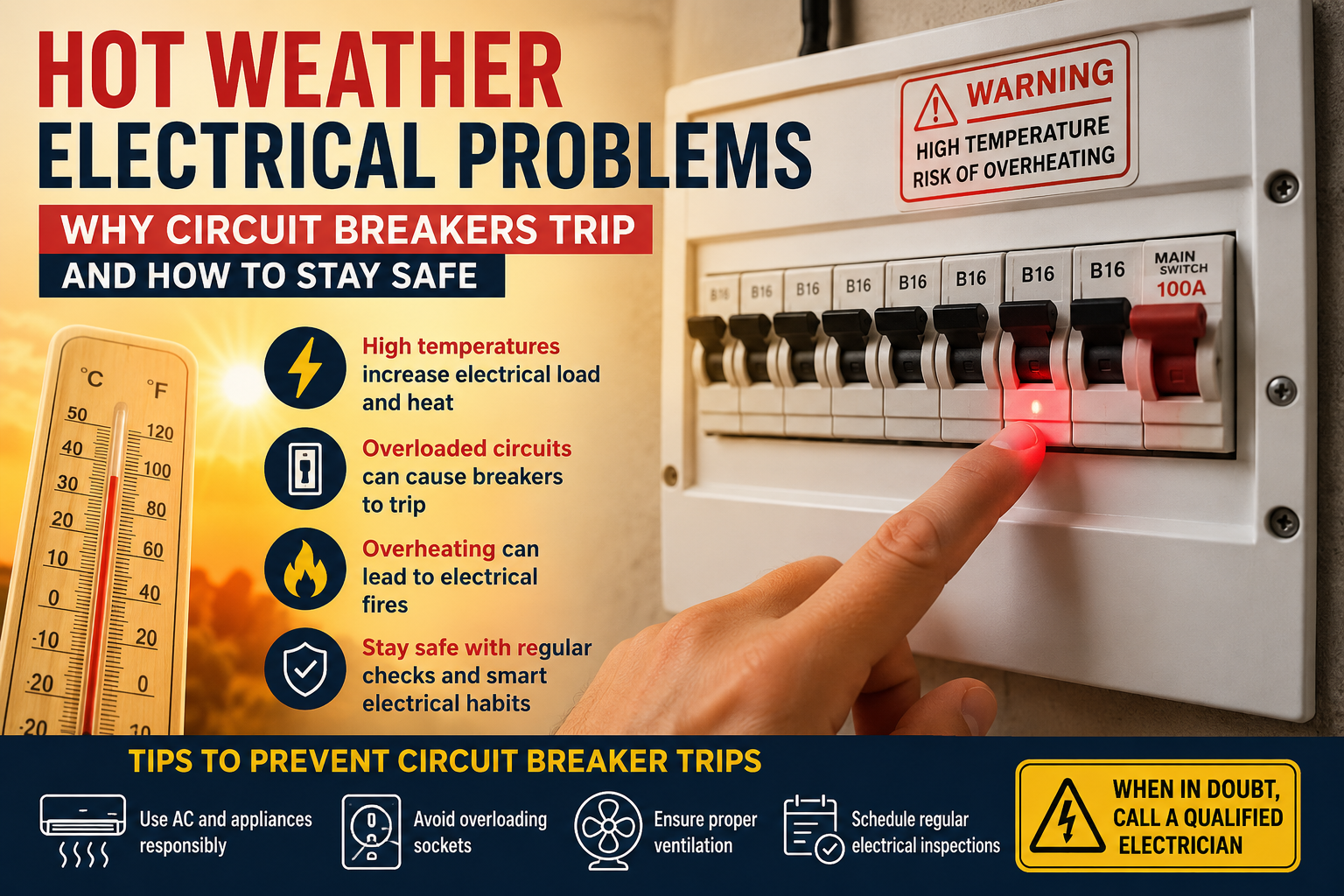
During the summer months, rising temperatures can put extra pressure on home electrical systems. Many homeowners experience issues like power interruptions, overheating equipment, or frequent circuit breaker trips during hot weather.
With increased use of air conditioners, fans, and other appliances, electrical systems often work harder than usual. Understanding Hot Weather Electrical Problems can help you spot warning signs early and take steps to keep your home safe.
Problems such as old wiring, overloaded circuits, and faulty equipment can become more noticeable in extreme heat, making regular electrical checks important.
Why Do Circuit Breakers Trip During Hot Weather?
Circuit breakers are designed to protect your home by automatically cutting power when they detect unsafe electrical conditions. During hot weather, circuit breakers may trip because electrical systems experience increased stress from higher energy usage.
One common reason behind Hot Weather Electrical Problems is the increased use of cooling appliances. Air conditioners, fans, and refrigeration systems often run continuously during heatwaves, causing circuits to carry more electrical load than usual.
Circuit breakers may trip because of:
- Overloaded electrical circuits
- Excessive appliance usage
- Overheating electrical components
- Faulty wiring connections
- Damaged circuit protection devices
A single trip may not always indicate a serious issue, but repeated trips should never be ignored. Frequent circuit breaker problems may suggest that your electrical system requires inspection by a qualified professional.
Can Extreme Heat Affect My Home’s Electrical System?
Yes, extreme temperatures can affect the performance and reliability of your electrical system. Heat can increase stress on cables, electrical panels, and protective devices.
During periods of high temperatures, Hot Weather Electrical Problems can become more common because electrical equipment has less ability to release heat. When components become too warm, they may not operate efficiently and could create safety concerns.
Heat can affect electrical systems by:
- Increasing cable temperature
- Reducing equipment performance
- Causing protective devices to activate
- Increasing the risk of component failure
Homes with older electrical installations may experience more issues because their systems were not designed for today’s higher electricity demands.
Why Does My Fuse Box Keep Tripping in Summer?
A fuse box or consumer unit may trip more often during summer because household electricity usage usually increases. Running multiple high-power appliances at the same time can place extra pressure on electrical circuits.
Common causes of summer fuse box trips include:
- Air conditioning units running for long periods
- Multiple appliances operating together
- Overloaded circuits
- Faulty electrical equipment
- Poor electrical connections
If your fuse box repeatedly trips during warm weather, it may be a sign of underlying Hot Weather Electrical Problems. A professional electrician can test your system and identify whether repairs, upgrades, or additional circuits are needed.
Can Hot Weather Cause Electrical Circuits to Overload?
Hot weather does not directly overload a circuit, but it can increase the chances of overloading because people usually use more electrical equipment during heatwaves.
For example, cooling systems, fans, and other appliances may operate for many hours without stopping. If too many devices are connected to the same circuit, the electrical demand can exceed safe limits.
Signs of overloaded circuits include:
- Circuit breakers frequently switching off
- Warm sockets or switches
- Flickering lights
- Reduced appliance performance
- Burning smells near electrical equipment
These situations are common examples of Hot Weather Electrical Problems that require attention before they become more serious.
How Does High Temperature Affect Circuit Breakers?
Circuit breakers are sensitive safety devices that monitor electrical flow. When temperatures around electrical equipment rise, breakers may become more likely to trip, especially if they are already under heavy load.
High temperatures can affect circuit breakers by:
- Making internal components work harder
- Reducing their ability to handle extra heat
- Increasing the chance of nuisance trips
- Highlighting existing electrical faults
If a circuit breaker trips frequently during hot weather, it is important to understand the cause rather than repeatedly resetting it.
Are Air Conditioners Responsible for Circuit Breaker Trips During Hot Weather?
As temperatures rise in summer, air conditioners often become a major source of increased electrical demand.. They require significant power, especially when operating continuously during extreme heat.
A properly installed air conditioning system should work safely, but problems may occur when:
- The circuit is not designed for the appliance
- The unit has electrical faults
- The wiring is outdated
- Too many devices share the same circuit
Many Hot Weather Electrical Problems occur because older homes were not designed to support modern cooling equipment and increased electricity usage.
Why Do My Lights Flicker When the Weather Is Very Hot?
Flickering lights during hot weather can indicate that your electrical system is under stress. While a loose bulb may sometimes cause flickering, repeated problems throughout your home may point to a deeper issue.
Possible causes include:
- Voltage fluctuations
- Loose electrical connections
- Overloaded circuits
- Aging wiring
- Faulty electrical components
If flickering continues during heatwaves, it should be investigated because it may be linked to Hot Weather Electrical Problems affecting your home’s electrical stability.
Can Overheating Electrical Wires Cause Circuit Breakers to Trip?
Yes, overheating wires can cause circuit breakers to trip. Electrical cables generate heat when carrying current, and excessive demand can increase temperatures beyond safe levels.
Damaged insulation, poor connections, or overloaded circuits can make overheating more likely. When a safety device detects dangerous conditions, it interrupts the power supply to prevent further damage.
Warning signs of overheating wires include:
- Burning smells
- Discoloured outlets
- Warm walls near wiring areas
- Frequent breaker trips
These are important indicators that should be checked by a qualified electrician.
What Are the Warning Signs of Electrical Problems During a Heatwave?
During a heatwave, homeowners should pay attention to unusual electrical behaviour. Early detection can prevent damage and improve safety.
Common warning signs include:
- Repeated circuit breaker trips
- Hot sockets or switches
- Flickering lights
- Burning smells
- Buzzing sounds
- Electrical equipment shutting down unexpectedly
Recognising these signs of Hot Weather Electrical Problems allows homeowners to arrange professional assistance before a serious fault develops
How Can I Prevent Circuit Breakers From Tripping in Hot Weather?
Preventing Hot Weather Electrical Problems starts with reducing unnecessary pressure on your electrical system. During very warm periods, households often use more cooling equipment, which increases electrical demand and can make circuits work harder.
To reduce the chance of circuit breaker trips, homeowners should:
- Avoid running too many high-power appliances at the same time
- Unplug unused electrical devices
- Check that air conditioning units are working correctly
- Keep electrical panels and equipment well ventilated
- Arrange regular electrical inspections
Simple precautions can help prevent Hot Weather Electrical Problems and improve the safety of your home during periods of high temperature.
Is It Safe to Use Multiple Appliances During Extreme Heat?
Using multiple appliances during extreme heat can be safe if your electrical system is designed to handle the demand. However, older systems or overloaded circuits may struggle when several high-power devices operate together.
During summer, appliances such as air conditioners, fans, refrigerators, and kitchen equipment can increase electricity usage significantly. This extra demand can contribute to Hot Weather Electrical Problems if your system is already under stress.
To stay safe:
- Spread appliances across different circuits
- Avoid overusing extension leads
- Monitor unusual sounds or smells
- Do not ignore repeated breaker trips
If your home regularly experiences electrical interruptions, a professional inspection may be necessary.
Can Old Wiring Make Hot Weather Electrical Problems Worse?
Yes, outdated wiring can make electrical issues more noticeable during hot weather. Older cables may not be suitable for modern electricity demands, especially when cooling systems and multiple appliances are running for long periods.
Aging wiring can contribute to Hot Weather Electrical Problems because heat can increase the stress placed on already weakened electrical components.
Warning signs of old wiring include:
- Frequent power interruptions
- Damaged cable insulation
- Burning smells
- Flickering lights
- Limited electrical capacity
Homes with older wiring may benefit from an electrical assessment to determine whether upgrades are needed.
Why Does My Consumer Unit Overheat During Summer?
The consumer unit is responsible for controlling and protecting your home’s electrical circuits. During hot weather, it may become warmer due to increased electricity usage and poor airflow around the unit.
A consumer unit may overheat because of:
- Excessive electrical demand
- Loose internal connections
- Faulty components
- Poor installation
- Lack of ventilation
These conditions can increase the risk of Hot Weather Electrical Problems and may cause protective devices to trip unexpectedly.
If your consumer unit feels unusually hot or makes buzzing noises, it should be inspected by a qualified electrician.
What Should I Do If My Circuit Breaker Keeps Tripping Repeatedly?
A circuit breaker that trips repeatedly should not be ignored. The breaker is designed to protect your home, and frequent trips usually indicate an electrical problem that requires investigation.
When dealing with Hot Weather Electrical Problems, homeowners should:
- Turn off unnecessary appliances
- Reset the breaker only once if safe to do so
- Check for damaged equipment
- Avoid overloading circuits
- Contact a qualified electrician if the problem continues
Repeatedly resetting a breaker without finding the cause can increase safety risks.
Can Electrical Sockets Become Dangerous in Hot Weather?
Yes, electrical sockets can become dangerous when exposed to excessive heat or heavy electrical demand. A socket that feels warm, smells unusual, or shows signs of damage may indicate an underlying fault.
Common socket-related Hot Weather Electrical Problems include:
- Loose connections
- Overloaded outlets
- Damaged wiring
- Poor-quality extension equipment
Homeowners should avoid using damaged sockets and arrange professional checks if overheating occurs.
How Can I Check If My Home Electrical System Is Overloaded?
An overloaded electrical system often shows clear warning signs. During hot weather, increased appliance usage can reveal problems that may not appear during normal conditions.
Signs of an overloaded system include:
- Frequent circuit breaker trips
- Lights dimming when appliances start
- Warm switches or sockets
- Appliances losing power
- Electrical smells
Identifying these issues early can help prevent serious Hot Weather Electrical Problems and protect your property.
Do Older Homes Have More Electrical Problems During Hot Weather?
Older homes are often more likely to experience electrical issues during hot weather because their systems may not have been designed for modern energy demands.
Many older properties have:
- Outdated wiring
- Limited circuit capacity
- Older consumer units
- Insufficient electrical protection
When temperatures rise, these limitations can increase the chance of Hot Weather Electrical Problems. An electrical inspection can help determine whether upgrades are required.
Can a Faulty Appliance Cause Circuit Breakers to Trip in Summer?
Yes, faulty appliances can cause circuit breakers to trip, especially when they are used more frequently during hot weather.
Examples include:
- Old air conditioners
- Damaged fans
- Faulty refrigerators
- Overheating electrical devices
A faulty appliance can create additional strain on your electrical system and contribute to Hot Weather Electrical Problems. Testing appliances and removing damaged equipment can help maintain safety.
How Does Increased Electricity Demand Affect Home Circuits?
Electricity demand usually rises during hot weather because people rely more on cooling systems and other electrical equipment. This increased demand can place additional pressure on household circuits.
When circuits are pushed beyond their safe limits, homeowners may experience:
- Circuit breaker trips
- Voltage fluctuations
- Overheating components
- Reduced appliance performance
Managing electricity usage is an important step in reducing Hot Weather Electrical Problems and keeping your home electrical system reliable.
Should I Upgrade My Electrical System Before Summer Heat Arrives?
Upgrading your electrical system before extreme temperatures can help prevent future problems. Homes with outdated wiring, older consumer units, or limited capacity may struggle with increased summer demand.
Electrical upgrades may include:
- Consumer unit replacement
- Additional circuits
- Wiring improvements
- Electrical capacity upgrades
Preparing in advance can reduce the likelihood of Hot Weather Electrical Problems and improve overall electrical safety.

Leave a Reply