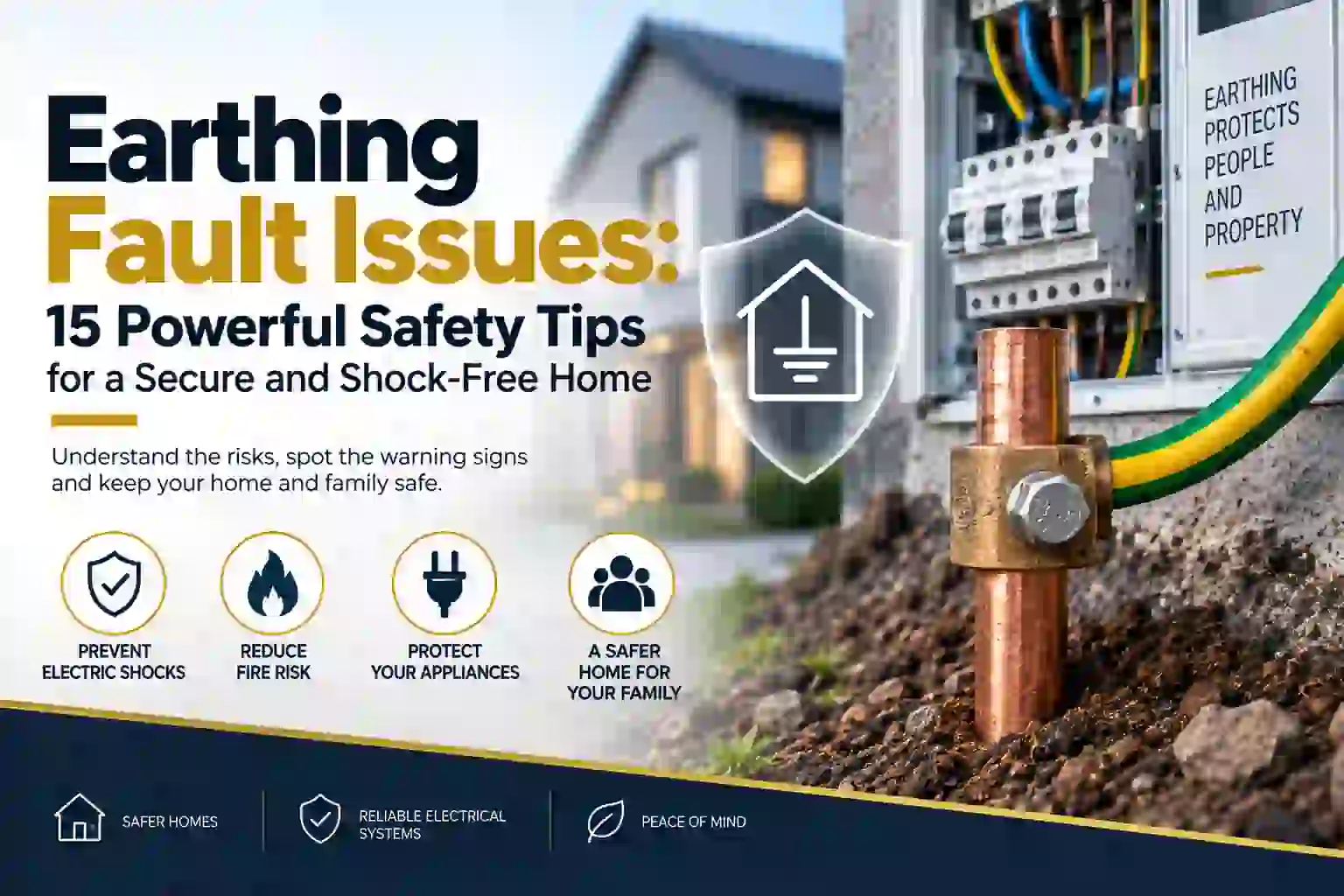
Earthing Fault Issues: Causes, Warning Signs, Testing & Safety
A properly designed earthing system is a critical part of electrical safety. It provides a path for fault current and helps protective devices disconnect a faulty circuit quickly.
When the earthing system is damaged, disconnected or poorly designed, Earthing Fault Issues can increase the risk of electric shock, equipment damage and electrical fires. Warning signs can include shocks from metal appliances, unexplained RCD trips, damaged earth connections and faults that repeatedly affect the same circuit.
What Are Earthing Fault Issues?
Earthing Fault Issues occur when the protective connection between an electrical installation and earth is missing, damaged, poorly connected or otherwise ineffective.
An effective earthing arrangement works alongside protective devices such as RCDs, MCBs and circuit breakers to reduce the consequences of electrical faults.
Problems can involve:
- Damaged earth conductors
- Loose or corroded connections
- Poor earthing arrangements
- Faulty bonding
- Deteriorated wiring
- Earth faults in circuits
- Incorrect previous electrical work
The exact fault needs to be identified through appropriate electrical testing rather than assumed from symptoms alone.
What Are the Signs of an Earthing Problem?
Some warning signs require prompt professional investigation:
- Electric shocks from metal appliance cases
- Repeated RCD or protective-device tripping
- Burning smells or overheating
- Damaged earth conductors
- Unusual electrical behaviour
- Faults appearing after water ingress
- Visible corrosion around electrical connections
A mild shock from a metal appliance should not be treated as normal. Stop using the affected equipment and arrange professional inspection.
Can Poor Earthing Cause Electric Shocks?
Yes. If a fault causes an exposed conductive part to become live and the protective earthing arrangement is ineffective, a person touching it can be exposed to dangerous touch voltage.
If you experience repeated mild shocks or tingling from metal appliances, see our guide to electric tingling and arrange professional inspection.
This is particularly concerning in kitchens, bathrooms, outdoor areas and other locations where moisture may increase the risk.
An RCD can provide additional protection against certain leakage currents, but it does not replace a correctly designed earthing and bonding system.
Why Do RCDs Trip Because of Earthing Faults?
An RCD monitors current flowing through a circuit and can disconnect the supply when it detects a residual current above its operating threshold.
An earth fault, damaged insulation or faulty appliance can create this imbalance and cause an RCD to trip.
Repeated RCD tripping should be investigated rather than repeatedly resetting the device, because the underlying fault may still be present.
If repeated tripping appears to involve the consumer unit, our guide to consumer unit faults explains other possible causes and warning signs.
Can an MCB Trip Because of an Earth Fault?
It can, depending on the fault current and the protective arrangement.
An MCB primarily protects against overcurrent caused by overloads and short circuits. Earth-fault protection depends on the characteristics of the installation and the protective devices provided.
For this reason, an unexplained trip should be properly tested rather than automatically blamed on earthing.
What Causes Earthing Fault Issues?
Common causes include:
- Loose earth connections
- Corrosion
- Damaged conductors
- Poor previous electrical work
- Deteriorated wiring
- Faulty appliances
- Water ingress
- Changes or extensions to an old installation
- Problems with earthing or bonding arrangements
Where faults involve the distribution equipment or protective devices, power distribution and consumer unit services may be required to assess and improve the electrical installation.
Older installations can be particularly difficult to assess because electrical work may have been modified several times over the years.
Can Old Wiring Cause Earthing Problems?
Yes. Ageing cables, deteriorated insulation, damaged connections and outdated electrical alterations can affect the safety of an earthing system.
However, old wiring does not automatically mean the earthing system has failed. Testing is needed to determine the actual condition of the installation.
Where several circuits show defects, an electrician may recommend repairs, upgrades or further inspection.
Can Corrosion Affect an Earthing System?
Yes. Corrosion can increase resistance at connections and deteriorate conductive components.
Moisture, soil conditions and environmental exposure can accelerate corrosion, particularly around external earthing arrangements and connections.
If corrosion is suspected, the earthing system should be inspected and tested by a competent electrician.
How Is an Earthing System Tested?
Professional testing can assess whether the earthing arrangement provides an effective path for fault current.
Professional electrical testing and compliance can help verify the condition of the installation and identify faults requiring remedial work.
Depending on the installation, an electrician may carry out:
- Earth fault loop impedance testing
- Earth continuity testing
- Earth electrode resistance testing where applicable
- Insulation resistance testing
- RCD testing
- Visual inspection
- Bonding checks
The appropriate tests depend on the type and design of the electrical installation.
What Is Earth Resistance?
Earth resistance describes the resistance encountered by current flowing through an earthing electrode and its connection to the surrounding earth.
Where an installation uses an earth electrode, measuring its resistance can help assess whether the electrode arrangement is performing as intended.
A suitable result depends on the particular earthing system and its design, so there is no single resistance value that applies to every installation.
Can Poor Earthing Damage Electrical Appliances?
A faulty earthing arrangement can contribute to unsafe fault conditions and may leave equipment inadequately protected.
However, appliance damage can also result from overvoltage, power-quality problems, defective components, surges or other faults. Earthing should therefore be tested rather than assumed to be the cause.
Sensitive equipment may benefit from appropriate surge protection and correctly designed electrical protection.
Can Earthing Problems Increase Electricity Bills?
Poor earthing should not normally be described as a direct cause of higher electricity bills.
Electrical leakage can occur in a faulty installation, but an increase in energy consumption is not a reliable way to diagnose an earthing problem.
If electricity usage unexpectedly increases, the cause should be investigated separately through appropriate electrical and energy checks.
What Happens If Neutral and Earth Are Incorrectly Connected?
Incorrect neutral-earth connections can create dangerous current paths and cause unwanted current to flow through protective conductors and exposed metalwork.
They can also cause nuisance RCD operation and create potentially hazardous touch voltages.
Neutral and earth connections should only be tested or altered by a qualified electrician.
Can Water Ingress Cause Earthing Faults?
Yes. Water can damage insulation, corrode connections and create leakage paths between electrical conductors and earth.
This is particularly important around:
- Outdoor equipment
- Garages
- Basements
- Kitchens
- Bathrooms
- External sockets
- Areas affected by flooding or leaks
Electrical equipment affected by water should be professionally assessed before being returned to service.
Does Earthing Protect Against Lightning?
Earthing forms part of some lightning protection arrangements, but a normal electrical installation’s protective earthing should not be treated as a complete lightning protection system.
Buildings requiring dedicated lightning protection may need a separately designed system incorporating appropriate air terminals, down conductors and earth electrodes.
A specialist assessment is required where lightning protection is necessary.
What Is the Difference Between Earthing and Bonding?
Earthing connects relevant parts of an electrical installation to earth so fault currents can be dealt with safely.
Bonding connects exposed or extraneous conductive parts to help maintain similar electrical potential and reduce dangerous touch voltages.
Both form important parts of an electrical safety system, but they perform different functions.
Is Earthing Required in Electrical Installations?
Electrical installations require appropriate protective measures against electric shock, which can include earthing, bonding and automatic disconnection of supply.
The exact arrangement depends on the type of electrical supply and installation.
For UK installations, the design and verification should follow the applicable requirements of BS 7671.
How Often Should Earthing Be Tested?
There is no universal rule that every residential earthing system must be tested once a year.
Inspection and testing intervals depend on factors such as:
- Installation type
- Age and condition
- Environment
- Use of the property
- Previous electrical work
- Results of earlier inspections
Commercial and higher-risk installations may require more structured periodic inspection and testing.
Can an Electrician Fix Earthing Fault Issues?
Yes. Once the fault has been identified, an electrician may repair or replace damaged conductors, connections, bonding or other components.
Depending on the problem, remedial work may include:
- Repairing earth connections
- Replacing damaged cables
- Correcting bonding issues
- Improving protective arrangements
- Repairing faulty circuits
- Testing RCD operation
- Upgrading unsuitable components
The solution should be based on test results rather than replacing components unnecessarily.
What Should I Do If I Suspect an Earthing Fault?
If you experience an electric shock, repeated RCD trips or another serious electrical warning sign:
- Stop using the affected equipment.
- Do not touch damaged electrical components.
- Do not attempt to repair the earthing system yourself.
- Arrange inspection and testing by a qualified electrician.
- If there is smoke, fire or immediate danger, leave the area and contact the appropriate emergency service.
Why Is Professional Electrical Testing Important?
Earthing faults are not always visible. A system can look normal while having a problem with continuity, resistance, bonding or fault-current paths.
Professional electrical testing provides measurable results and can identify defects that a basic visual inspection may miss.
For existing commercial installations, a Commercial EICR Manchester can provide a broader assessment of electrical safety, condition and compliance.
Testing is particularly important after significant alterations, electrical damage, water ingress or suspected faults.
Can a NAPIT Approved Contractor Check Earthing Problems?
A NAPIT Approved Contractor can undertake electrical work within their assessed scope of competence. When choosing a contractor for earthing inspection or remedial work, check their qualifications, experience and relevant registration.
You can find further information through the official NAPIT website.
FAQs
Can I test my home’s earthing myself?
DIY checks cannot reliably confirm that an earthing system is safe. Proper testing requires suitable electrical test equipment and competence.
Is an electric shock from an appliance normal?
No. Any unexplained shock from an appliance or metal electrical component should be treated as a potential electrical fault.
Does an RCD mean my earthing is safe?
No. An RCD provides additional protection but does not replace correct earthing, bonding and other protective measures.
Does an old house automatically have an earthing fault?
No. The age of a property alone cannot confirm the condition of its earthing system. Appropriate inspection and testing are required.
Can earthing problems cause circuit breakers to trip?
They can contribute to protective-device operation, but repeated tripping can have several causes, including overloads, short circuits, insulation faults and faulty appliances.
Conclusion
Earthing Fault Issues can affect electrical safety without always producing obvious warning signs. Electric shocks, repeated RCD trips, damaged earth connections, corrosion and water-related electrical faults should all be investigated.
The safest approach is to have the installation properly inspected and tested. A qualified electrician can determine whether the problem involves earthing, bonding, wiring, protective devices or another electrical fault and recommend the appropriate remedial work.
Leave a Reply