Introduction
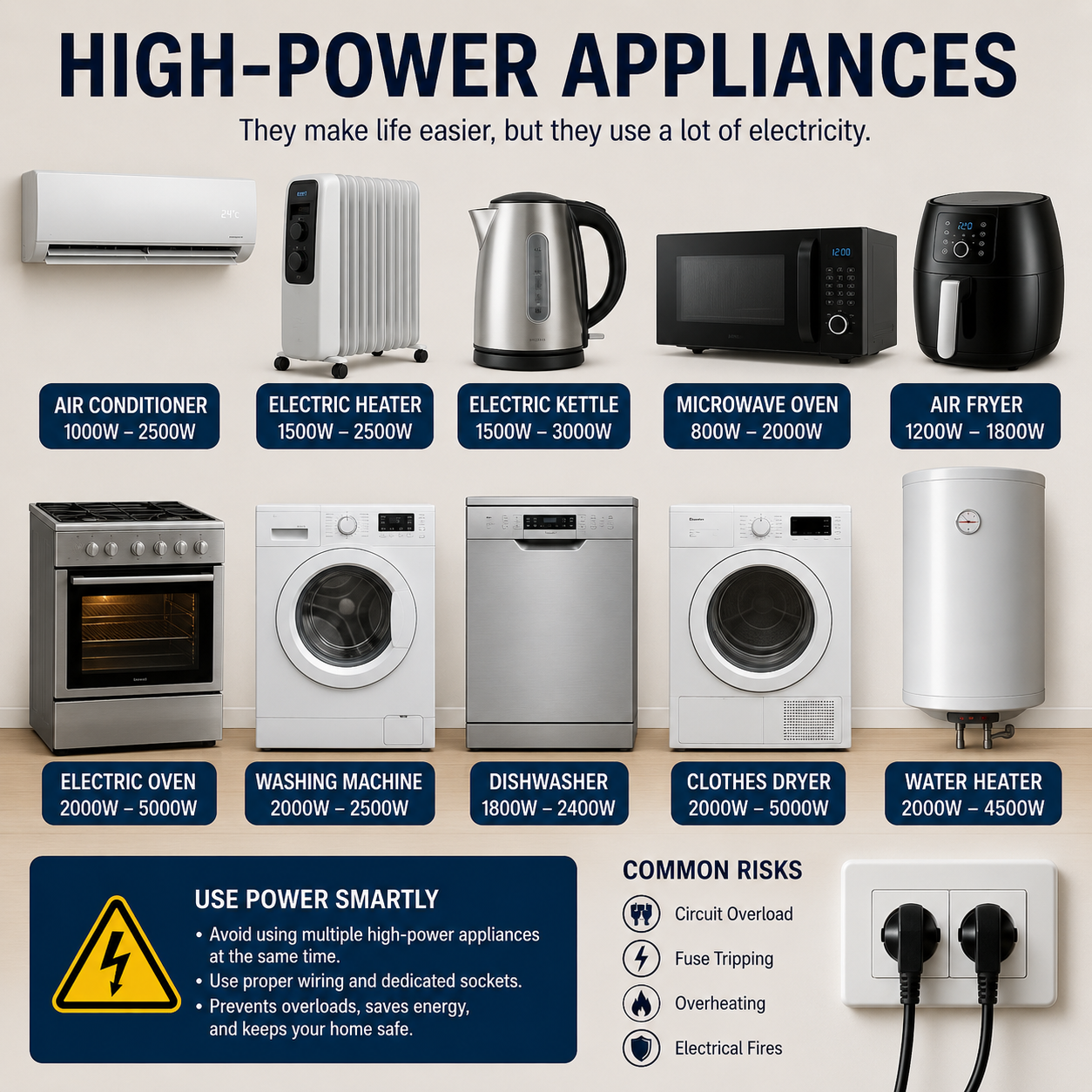
Modern homes depend on electricity for everyday tasks like cooking, heating, cooling, and charging devices. While High-Power Appliances make life easier, they also put extra demand on your electrical system.
Understanding electrical load, safety risks, and proper appliance usage helps prevent faults, reduce energy costs, and keep your home safe. This guide covers how to use High-Power Appliances efficiently while protecting your electrical system.
What Are High-Power Appliances?
High-Power Appliances are electrical devices that require a large amount of electricity to operate. They typically use more power than standard household electronics such as televisions, laptops, and lamps.
Examples include:
- Electric ovens
- Electric showers
- Air conditioners
- Tumble dryers
- Washing machines
- Dishwashers
- Electric heaters
- Induction cooktops
- Heat pumps
- Electric vehicle chargers
These appliances often consume hundreds or even thousands of watts during operation. Because of their high energy demand, they can significantly affect the total electrical load within a property.
The more High-Power Appliances used simultaneously, the greater the demand placed on the home’s electrical system.
Which Household Appliances Consume the Most Electricity?
Some appliances use substantially more electricity than others. Understanding which devices consume the most power helps homeowners manage usage effectively.
Common high-energy devices include:
- Electric showers
- Storage heaters
- Electric ovens
- Air conditioning systems
- Water heaters
- Tumble dryers
- EV chargers
Electric showers are often among the highest consumers because they heat water instantly. Similarly, electric heaters and dryers convert large amounts of electrical energy into heat, which requires significant power.
Although refrigerators operate continuously, they generally consume less electricity than many High-Power Appliances because their power demand is spread throughout the day.
Knowing which devices use the most energy allows homeowners to make smarter decisions about scheduling and usage.
How Much Electrical Load Can a Typical Home Circuit Handle?
Every electrical circuit has a limit. This limit is determined by the circuit breaker, cable size, and overall system design.
In many homes:
- Lighting circuits often use 6-amp breakers.
- Socket circuits commonly use 32-amp breakers.
-
When the electrical demand exceeds the circuit’s capacity, safety devices activate to prevent overheating and potential fire hazards.
This is why High-Power Appliances often require dedicated circuits. Large electrical loads cannot always be safely supported by standard socket circuits.
Understanding circuit capacity is important because overloading can damage wiring and create serious safety risks.
Can Running Multiple High-Power Appliances at the Same Time Overload a Circuit?
Yes. This is one of the most common causes of electrical issues in residential properties.
Imagine operating:
- An electric oven
- A kettle
- A tumble dryer
- An electric heater
all at the same time on connected circuits.
The combined electrical demand may exceed the circuit’s safe capacity. When this happens, the breaker may trip to prevent overheating.
Even if breakers do not immediately trip, continuous heavy loading can place stress on electrical components.
Many homeowners underestimate how much power High-Power Appliances consume when used together. Staggering appliance usage can significantly reduce strain on the system.
How Can You Tell If Your Electrical Circuit Is Overloaded?
Identifying problems early can help avoid expensive repairs and reduce potential safety risks.
Common indicators include:
Frequent Breaker Trips
Circuit breakers are designed to shut off power when excessive current flows through a circuit. Repeated tripping often indicates an overload problem.
Flickering Lights
Lights may dim or flicker when large appliances start operating. This suggests significant electrical demand on the system.
Warm Outlets
Electrical outlets should never feel excessively hot. Warmth may indicate excessive current flow or poor electrical connections.
Burning Smells
A burning odor should never be ignored.
Buzzing Sounds
Electrical systems should operate quietly. Buzzing noises can signal overloaded circuits or faulty connections.
When these warning signs appear, homeowners should investigate immediately before more serious damage occurs.
Why Do Circuit Breakers Trip When Using High-Power Appliances?
Circuit breakers help keep your electrical system safe by preventing damage caused by excessive current.
When High-Power Appliances draw more current than a circuit can safely handle, the breaker disconnects power. This prevents:
- Overheating
- Electrical fires
- Equipment damage
- Wiring failure
Although breaker trips can be inconvenient, they serve an important protective function.
Ignoring repeated trips and simply resetting the breaker without identifying the cause can allow underlying problems to worsen.
A qualified electrician can determine whether the issue involves overloaded circuits, faulty appliances, damaged wiring, or insufficient electrical capacity.
Can High-Power Appliances Cause Electrical Fires?
High-Power Appliances do not automatically cause fires. However, improper installation, poor maintenance, or overloaded circuits can increase fire risk.
Electrical fires may occur when:
- Wiring overheats
- Connections become loose
- Extension leads are overloaded
- Damaged appliances remain in use
- Old electrical systems cannot support modern loads
Heat is one of the biggest contributors to electrical fires. Because High-Power Appliances generate substantial electrical demand, they require proper wiring and protection.
Regular inspections help identify problems before they become dangerous.
Which Appliances Should Have Their Own Dedicated Circuit?
Dedicated circuits provide power to a single appliance without sharing electrical capacity with other devices.
Appliances that commonly require dedicated circuits include:
- Electric showers
- Electric cookers
- Air conditioning units
- EV chargers
- Heat pumps
- Large water heaters
Dedicated circuits improve safety and ensure appliances receive adequate power.
When installing new High-Power Appliances, homeowners should always verify whether a dedicated circuit is required.
Connecting heavy electrical appliances to shared circuits can increase safety risks and affect the reliability of your electrical system.
How Can I Calculate the Electrical Load of My Appliances?
Calculating electrical load is easier than many people think.
Most appliances display a power rating in watts (W).
To estimate total demand:
- Identify the wattage of each appliance.
- Add the wattages together.
- Compare the total to the circuit’s capacity.
For example:
- Oven = 2500W
- Kettle = 3000W
- Heater = 2000W
Total demand = 7500W
This simple calculation helps homeowners understand how High-Power Appliances affect overall electrical usage.
What Is the Difference Between Watts, Volts, and Amps?
These three electrical terms are often misunderstood.
Watts
Watts measure power consumption. They indicate how much energy an appliance uses.
Volts
Volts measure electrical pressure or potential.
Amps
Amps measure electrical current flow.
Together, these values determine how much power an appliance requires.
Understanding these measurements makes it easier to manage High-Power Appliances safely and identify whether circuits are suitable for particular devices.
Do Electric Ovens Require a Dedicated Electrical Circuit?
Most electric ovens require a dedicated circuit because of their high power demand.
Electric ovens often draw far more electricity than standard kitchen appliances. Sharing a circuit with multiple devices may increase the risk of overloads.
Dedicated circuits provide:
- Improved safety
- Better appliance performance
- Reduced breaker trips
- Lower risk of overheating
Professional installation is always recommended when adding new kitchen appliances with substantial power requirements.
Can Electric Showers Put Too Much Pressure on Your Home’s Electrical System?
Electric showers are among the most demanding High-Power Appliances found in modern homes. Unlike traditional showers that rely on a boiler or hot water cylinder, electric showers heat water instantly as it flows through the unit. This process requires a significant amount of electricity.
Most electric showers operate between 7kW and 10.5kW, making them one of the largest electrical loads in a property. Because of this high demand, they typically require their own dedicated circuit and protective devices.
Problems can occur when an older electrical installation was not designed to support modern High-Power Appliances. If an electric shower is installed without proper assessment, homeowners may experience tripped breakers, overheating cables, or voltage fluctuations.
A professional electrical inspection can determine whether the existing system can safely support the appliance.
Are Air Conditioners Considered High-Power Appliances?
Yes. Air conditioning systems are classified as High-Power Appliances because they consume substantial electricity, especially during hot weather.
The amount of power used depends on several factors:
- Unit size
- Cooling capacity
- Energy efficiency rating
- Running time
- Outdoor temperature
Portable units generally consume less electricity than whole-home systems, but both can place significant demand on the electrical system.
During summer months, air conditioners often operate for extended periods. This continuous operation can increase energy bills and place additional stress on household circuits.
Proper installation, regular maintenance, and choosing energy-efficient models can help reduce power consumption while maintaining comfort.
How Much Electricity Does an Electric Heater Use?
Electric heaters are designed to convert electrical energy directly into heat. Because of this, they are often among the most energy-intensive High-Power Appliances used in homes.
Common heater ratings include:
- 1000 watts
- 1500 watts
- 2000 watts
- 3000 watts
The higher the wattage, the greater the energy consumption.
For example, a 2000W heater running for five hours consumes approximately 10 kilowatt-hours of electricity. Over time, frequent use can noticeably increase household energy costs.
Homeowners should use heaters responsibly and avoid plugging multiple heating devices into the same circuit whenever possible.
Can Using Extension Cords with High-Power Appliances Be Dangerous?
Extension cords are convenient, but they are not always suitable for High-Power Appliances.
Many extension leads are designed for temporary use and moderate electrical loads. Connecting appliances such as heaters, tumble dryers, or electric cookers to extension cords can create overheating risks.
Potential dangers include:
- Melted insulation
- Damaged plugs
- Overheated cables
- Increased fire risk
- Reduced appliance performance
Whenever possible, High-Power Appliances should be connected directly to properly installed wall outlets.
If an extension lead must be used temporarily, it should be rated for the appliance’s electrical demand and remain fully uncoiled during operation to prevent heat buildup.
What Risks Are Associated with Old Wiring and High-Power Appliances?
Older homes often have electrical systems that were installed long before modern High-Power Appliances became common.
Many older properties were designed for basic lighting and a limited number of electrical devices. Today’s households often include multiple high-demand appliances operating simultaneously.
Common issues with outdated wiring include:
- Insufficient cable capacity
- Aging insulation
- Lack of modern protective devices
- Overloaded circuits
- Loose electrical connections
As demand increases, these weaknesses become more noticeable.
Homeowners living in older properties should consider periodic electrical inspections to determine whether upgrades are necessary.
Modern wiring systems are designed to support current electrical needs more safely and efficiently.
How Can I Reduce the Electrical Load in My Home?
Managing electrical demand is one of the simplest ways to improve safety and efficiency.
Several practical strategies can help:
Avoid Simultaneous Use
Try not to run several High-Power Appliances at the same time. Spreading appliance use throughout the day reduces peak demand.
Upgrade Older Appliances
Modern appliances are often more energy efficient and place less strain on electrical systems.
Install Dedicated Circuits
Dedicated circuits prevent large appliances from competing for electrical capacity.
Monitor Energy Usage
Smart monitoring devices can help identify which appliances consume the most electricity.
Schedule Heavy Loads
Running appliances at different times helps distribute demand more evenly.
These simple habits can reduce stress on the electrical system and lower energy costs.
Is It Safe to Plug Multiple Appliances into One Socket?
It depends on the total electrical demand.
A single socket may safely power several low-energy devices. However, connecting multiple High-Power Appliances through adapters or extension leads can quickly exceed safe limits.
For example, combining:
- An electric heater
- A kettle
- A microwave
on one outlet can create a substantial load.
Overloaded sockets may overheat, increasing the risk of electrical faults and fire hazards.
Homeowners should always consider the total wattage being drawn from a single outlet before connecting multiple devices.
What Causes Electrical Outlets to Become Hot?
Electrical outlets should normally remain cool during operation.
When an outlet becomes noticeably warm or hot, several issues may be responsible:
- Loose wiring
- Excessive electrical demand
- Damaged sockets
- Faulty plugs
- Overloaded circuits
High-Power Appliances often reveal hidden electrical weaknesses because they draw larger currents than smaller devices.
Hot outlets should never be ignored. Continued use may worsen the problem and increase safety risks.
Professional inspection is recommended whenever overheating is detected.
How Often Should Electrical Systems Be Inspected in Homes with High-Power Appliances?
Regular inspections help ensure safe operation and identify potential problems before they become serious.
The ideal inspection schedule depends on factors such as:
- Property age
- Appliance usage
- Electrical system condition
- Renovation history
Homes that regularly use several High-Power Appliances may benefit from more frequent assessments.
Inspections typically evaluate:
- Wiring condition
- Consumer unit performance
- Circuit protection
- Earth bonding
- Electrical load capacity
Preventive maintenance can reduce the likelihood of unexpected failures and improve long-term safety.
Can Smart Plugs Help Manage Appliance Energy Usage?
Smart plugs have become increasingly popular because they provide greater control over electrical consumption.
These devices allow homeowners to:
- Monitor electricity usage
- Schedule operating times
- Turn appliances on or off remotely
- Track energy costs
Although smart plugs are useful, they are not suitable for every situation.
Some High-Power Appliances exceed the power ratings of standard smart plugs. Always verify compatibility before connecting heavy electrical loads.
When used correctly, smart plugs can help reduce energy waste and improve efficiency throughout the home.
What Is Load Balancing in a Residential Electrical System?
Load balancing refers to distributing electrical demand evenly across circuits and the overall electrical system.
When electrical loads are balanced:
- Circuits operate more efficiently
- Overloads become less likely
- Equipment experiences less stress
- Energy usage becomes easier to manage
Homes with numerous High-Power Appliances benefit significantly from proper load distribution.
Electricians often consider load balancing when designing or upgrading electrical installations.
A well-balanced system can improve reliability and reduce the risk of nuisance breaker trips.
Do High-Power Appliances Increase Energy Bills Significantly?
Because High-Power Appliances consume more electricity than standard devices, they can have a major impact on monthly energy costs.
Several factors influence overall consumption:
- Appliance wattage
- Frequency of use
- Operating duration
- Energy efficiency
- Household habits
For example, running an electric heater for several hours each day typically costs more than operating a television for the same period.
However, modern energy-efficient models can help reduce costs while still delivering excellent performance.
Monitoring usage patterns is one of the most effective ways to control expenses associated with High-Power Appliances.
How Can I Improve Electrical Safety When Using Large Appliances?
Electrical safety begins with responsible appliance use.
Important safety practices include:
- Following manufacturer instructions
- Avoiding overloaded outlets
- Replacing damaged cords
- Scheduling electrical inspections
- Using dedicated circuits where required
- Keeping appliances properly maintained
Homeowners should also watch for warning signs such as unusual smells, sparks, buzzing sounds, or recurring breaker trips.
Proper installation and maintenance remain the most effective ways to ensure High-Power Appliances operate safely and efficiently over the long term.
Here is Part 3 with the remaining FAQs and the final conclusion.
What Should I Do If Lights Flicker When an Appliance Starts?
Many homeowners notice lights briefly dimming or flickering when certain appliances start operating. This often happens because some High-Power Appliances require a large surge of electricity during startup.
Air conditioners, refrigerators, heat pumps, and electric motors commonly draw extra power when first switching on. A slight flicker may not always indicate a serious problem, especially if it lasts only a moment.
However, frequent or severe flickering could point to:
- Overloaded circuits
- Loose electrical connections
- Undersized wiring
- Voltage drop issues
- Aging electrical systems
If flickering occurs regularly when High-Power Appliances start running, an electrical inspection can help identify the cause and determine whether upgrades are necessary.
Can a Fuse Box Handle Modern High-Power Appliances?
Many older homes still contain fuse boxes that were installed decades ago. While these systems were suitable for the electrical demands of their time, they may struggle to support modern lifestyles.
Today’s households often use multiple High-Power Appliances every day, including electric showers, induction hobs, EV chargers, and air conditioning systems.
Older fuse boxes may lack:
- Modern circuit protection
- Residual current protection
- Adequate circuit capacity
- Safety features required by current standards
In some cases, the electrical system can continue operating safely. In others, upgrading to a modern consumer unit may provide improved protection and greater capacity for High-Power Appliances.
A qualified electrician can assess whether an upgrade is beneficial.
When Should I Upgrade My Consumer Unit or Electrical Panel?
There is no fixed age at which every consumer unit must be replaced. However, certain signs indicate that an upgrade may be worthwhile.
Common reasons include:
Frequent Breaker Trips
Repeated tripping may suggest the system is struggling to handle electrical demand.
Home Renovations
Property extensions often introduce additional circuits and High-Power Appliances that increase load requirements.
Outdated Equipment
Older consumer units may lack modern safety devices.
New Appliance Installations
Adding electric vehicle chargers, heat pumps, or large kitchen appliances may require electrical upgrades.
Safety Concerns
Visible damage, overheating, or recurring faults should never be ignored.
Modern consumer units provide improved protection and are better suited to homes that rely heavily on High-Power Appliances.
Are Electric Vehicle Chargers Considered High-Power Appliances?
Yes. Electric vehicle chargers are among the fastest-growing categories of High-Power Appliances in residential properties.
Depending on charging speed, EV chargers can draw substantial electrical current for several hours at a time.
Common charger types include:
- Slow chargers
- Fast chargers
- Rapid chargers
Because of their power requirements, EV chargers usually need:
- Dedicated circuits
- Proper cable sizing
- Circuit protection
- Professional installation
As electric vehicle ownership continues to grow, many homeowners are upgrading their electrical systems to accommodate these High-Power Appliances safely.
Can Solar Panels Help Offset the Energy Use of High-Power Appliances?
Solar panels can significantly reduce reliance on grid electricity and help offset the energy consumed by High-Power Appliances.
During daylight hours, solar systems generate electricity that can be used directly within the home. This power may help support:
- Air conditioners
- Washing machines
- Dishwashers
- Water heaters
- EV charging systems
While solar panels may not always provide enough energy to run every appliance continuously, they can reduce overall electricity consumption and lower utility bills.
Battery storage systems can further improve efficiency by storing excess solar energy for later use.
For homeowners who regularly operate High-Power Appliances, solar technology may provide long-term financial and environmental benefits.
What Is the Safest Way to Operate Multiple High-Power Appliances?
Safe operation starts with understanding your home’s electrical capacity.
Several best practices can help reduce risks:
Spread Usage Throughout the Day
Avoid operating several major appliances simultaneously whenever possible.
Use Dedicated Circuits
Dedicated circuits provide safer operation for appliances with high electrical demand.
Maintain Appliances Regularly
Proper maintenance helps prevent faults and improves efficiency.
Follow Manufacturer Instructions
Always use appliances according to the manufacturer’s recommendations.
Avoid Overloaded Sockets
Never connect multiple High-Power Appliances through a single outlet or extension lead.
Monitor Electrical Performance
Pay attention to warning signs such as overheating, unusual sounds, or frequent breaker trips.
These simple habits can significantly improve safety while extending the life of electrical equipment.
How Do Surge Protectors Help Protect High-Power Appliances?
Electrical surges occur when voltage temporarily rises above normal levels.
Surges may result from:
- Lightning strikes
- Utility network issues
- Faulty electrical equipment
- Large motors switching on and off
Although High-Power Appliances are designed to operate under normal electrical conditions, sudden voltage spikes can damage sensitive components.
Surge protection devices help by diverting excess voltage away from equipment.
Benefits include:
- Reduced equipment damage
- Improved appliance lifespan
- Better protection for electronic controls
- Enhanced system reliability
Surge protection can be particularly valuable in homes that contain expensive High-Power Appliances and modern electronic systems.
Can Faulty Appliances Damage a Home’s Electrical System?
Yes. Faulty appliances can create a variety of electrical problems.
Possible issues include:
- Short circuits
- Overheating
- Excessive current draw
- Arcing
- Repeated breaker trips
Because High-Power Appliances draw substantial electrical current, faults can have a greater impact than problems involving smaller devices.
Warning signs of appliance faults include:
- Burning smells
- Sparking
- Unusual noises
- Reduced performance
- Frequent shutdowns
Any appliance displaying these symptoms should be disconnected and inspected before further use.
What Are the Benefits of Installing Dedicated Circuits for Heavy-Load Appliances?
Dedicated circuits are one of the most effective ways to improve electrical safety.
Instead of sharing power with multiple devices, a dedicated circuit serves a single appliance.
Benefits include:
Improved Safety
The risk of overloads is significantly reduced.
Better Performance
Appliances receive a stable and consistent power supply.
Reduced Breaker Trips
Electrical demand remains isolated from other circuits.
Easier Fault Diagnosis
Problems can be identified more quickly.
Future-Proofing
Dedicated circuits make it easier to accommodate additional High-Power Appliances later.
For many homes, dedicated circuits are an essential part of a safe and reliable electrical installation.
How Can Homeowners Identify Electrical Load Problems Early?
Early detection is important because electrical issues often develop gradually.
Homeowners should watch for:
- Flickering lights
- Hot sockets
- Burning odors
- Repeated breaker trips
- Buzzing sounds
- Frequent appliance malfunctions
Monitoring energy usage can also reveal unusual patterns that may indicate excessive demand.
Regular inspections remain one of the most effective ways to identify developing issues before they become costly repairs.
Properties that use several High-Power Appliances daily should pay particular attention to these warning signs.
Should I Consult an Electrician Before Installing a New High-Power Appliance?
In many situations, yes.
Professional advice helps ensure that:
- Circuits are correctly sized
- Wiring is suitable
- Protection devices are adequate
- Installation meets safety standards
- The electrical system can handle additional load
This is especially important when installing:
- Electric showers
- EV chargers
- Air conditioning systems
- Heat pumps
- Electric cookers
An electrician can assess the existing system and recommend any upgrades needed to support new High-Power Appliances safely.
Smart Energy Habits for Modern Homes
As technology continues to evolve, households are using more electricity than ever before. Smart energy habits can help reduce strain on the electrical system while keeping energy bills under control.
Useful strategies include:
- Choosing energy-efficient appliances
- Turning off unused devices
- Scheduling heavy electrical loads
- Monitoring energy consumption
- Maintaining electrical systems regularly
- Investing in smart home technology
These practices not only improve efficiency but also help High-Power Appliances operate more effectively.
Common Mistakes Homeowners Make with High-Power Appliances
Many electrical problems arise from simple mistakes that could be avoided.
Common examples include:
- Using overloaded extension leads
- Ignoring tripped breakers
- Delaying electrical repairs
- Installing appliances without professional advice
- Using damaged power cords
- Operating multiple heavy-load devices simultaneously
Avoiding these mistakes helps protect both appliances and the home’s electrical infrastructure.
Conclusion
High-Power Appliances are an important part of modern homes, providing comfort, convenience, and better functionality. However, they also place greater demands on electrical systems. Understanding electrical load, identifying warning signs of overload, and following safe usage practices can help prevent electrical faults and costly repairs.
Whether you use electric showers, heaters, air conditioners, EV chargers, or other High-Power Appliances, proper installation and regular maintenance are essential. Professional inspections, dedicated circuits, and energy-efficient habits help create a safer, more reliable, and efficient home electrical system.
Why should you hire a NAPIT-approved electrical contractor for installing and maintaining High-Power Appliances safely?
A NAPIT-approved electrical contractor follows recognised safety standards, ensuring your electrical installations are compliant, reliable, and suitable for demanding appliances. You can learn more about NAPIT-approved professionals here: NAPIT Official Website
For more information about our electrical services, please click here ➜
Leave a Reply