Introduction
Electrical systems are essential in every modern home, powering lighting, appliances, and daily activities. However, old, faulty, or neglected wiring can lead to major electrical safety concerns.
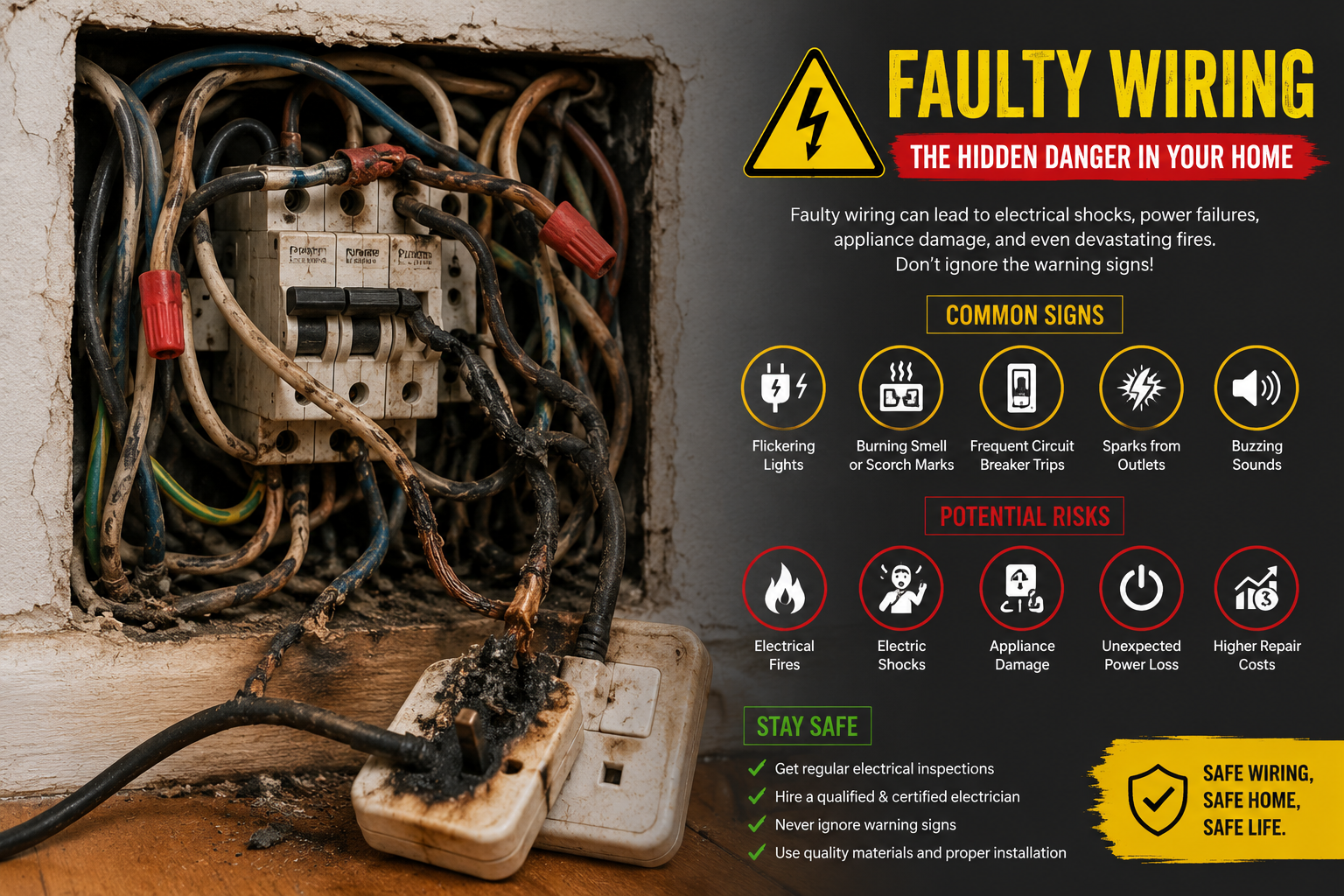
Faulty Wiring Risks can lead to electrical fires, shocks, and appliance damage due to issues like loose connections, overloaded circuits, and damaged cables.
This guide covers the main causes, warning signs, and safety measures to help homeowners detect issues early and protect their homes.
What is faulty wiring and why is it dangerous?
Faulty wiring refers to electrical wiring that is damaged, incorrectly installed, outdated, or no longer working safely. Wiring problems can develop over time because of ageing materials, physical damage, poor installation, or increased electrical demand.
Faulty Wiring Risks can be dangerous because electricity needs a safe path to flow. When wires become damaged or connections become loose, electricity may escape and create hazards.
Common dangers caused by faulty wiring include:
- Electrical fires
- Electric shocks
- Appliance damage
- Power interruptions
- Overheating electrical components
Many wiring problems remain hidden behind walls, making professional inspections important. A small issue that is ignored can gradually become a serious safety threat.
What are the common causes of faulty wiring in homes?
There are several reasons why wiring problems develop in residential properties. Some issues occur because electrical systems become old, while others happen due to incorrect usage or poor installation.
Common causes include:
- Ageing electrical wiring
- Poor installation work
- Overloaded circuits
- Damaged cables
- Loose electrical connections
- Moisture exposure
- DIY electrical repairs
Older homes are more likely to experience wiring problems because electrical systems were often designed for lower power demands. Modern homes use many more appliances, which can place extra pressure on older wiring.
Regular maintenance and professional inspections can help identify and reduce Faulty Wiring Risks before they become dangerous.
How can I identify signs of faulty electrical wiring?
Electrical wiring problems often provide warning signs before they cause major damage. Recognising these signs early can help homeowners arrange repairs before the situation becomes unsafe.
Common warning signs include:
- Flickering or dimming lights
- Burning smells near outlets
- Buzzing sounds from switches
- Warm electrical sockets
- Frequent circuit breaker trips
- Sparks when plugging in devices
- Discoloured outlets
If you notice any of these problems, it is important not to ignore them. They may indicate that your electrical system needs professional attention.
Early detection is one of the best ways to reduce Faulty Wiring Risks and maintain a safer property.
Can faulty wiring cause electrical fires?
Yes, faulty wiring can be a major cause of electrical fires. Damaged insulation, loose connections, and overloaded circuits can create excessive heat that may ignite nearby materials.
Electrical fires can happen when:
- Wires overheat
- Connections become loose
- Circuits carry too much electrical load
- Damaged cables are left unrepaired
A wiring problem may not always look serious, but hidden faults can continue developing behind walls or inside electrical equipment.
Regular electrical checks, safe appliance use, and professional repairs are important steps to prevent Faulty Wiring Risks and protect your home from fire hazards.
What are the warning signs of dangerous wiring problems?
Dangerous wiring problems usually show clear warning signs that should never be ignored.Homeowners should pay attention to changes in how their electrical system operates.
Some important warning signs include:
- Burning odours
- Frequent power failures
- Flickering lights
- Electrical shocks
- Cracked or damaged sockets
- Heat coming from switches or outlets
These issues may indicate that electrical components are struggling or becoming unsafe.
Taking quick action when warning signs appear can prevent bigger problems. Ignoring these symptoms can increase Faulty Wiring Risks and put your property at risk.
How can outdated wiring create safety hazards in a home?
Old wiring can become unsafe because electrical materials naturally deteriorate over time. Older systems may also struggle to handle the electricity requirements of modern homes.
Old wiring may lead to:
- Overheating
- Poor electrical performance
- Frequent faults
- Increased fire risk
- Damage to appliances
Properties built many years ago may not have modern safety features such as updated protective devices or suitable circuits for today’s electrical demands.
Upgrading outdated wiring improves reliability and reduces Faulty Wiring Risks by ensuring the electrical system can safely handle modern usage.
Can faulty wiring damage electrical appliances?
Yes, faulty wiring can damage household appliances by providing unstable or unsafe electrical power. Appliances rely on a consistent electricity supply to operate correctly.
Wiring problems can cause:
- Voltage fluctuations
- Sudden power interruptions
- Internal component damage
- Reduced appliance lifespan
Electronic equipment like computers, televisions, and smart home devices can be particularly vulnerable to electrical faults.
Protecting your wiring system helps protect your expensive devices. Regular inspections can help spot issues early and lower the risk of faulty wiring problems developing in your home.
Why do my lights flicker when there is a wiring problem?
Flickering lights can sometimes indicate a wiring issue. A loose bulb can sometimes cause minor flickering, but ongoing issues may point to more serious electrical problems.
Possible causes include:
- Loose wiring connections
- Overloaded circuits
- Damaged electrical components
- Voltage problems
If several lights flicker at the same time, the issue may be related to the electrical system rather than individual bulbs.
A professional electrician can inspect the system and identify the cause. Addressing flickering lights early helps prevent Faulty Wiring Risks and improves electrical safety.
What causes burning smells from electrical outlets or wiring?
A burning smell from an outlet or wiring usually indicates overheating or an electrical fault. This should always be treated as a warning sign.
Possible causes include:
- Overheated wires
- Loose connections
- Damaged insulation
- Overloaded sockets
- Faulty electrical components
If you notice a burning smell, stop using the affected outlet and arrange a professional inspection.
Ignoring unusual smells can allow the problem to become worse. Quick action helps reduce Faulty Wiring Risks and prevents possible electrical fires.
How can I check if my home has unsafe wiring?
Homeowners can perform basic visual checks, but electrical wiring should always be inspected professionally for complete safety.
You can look for:
- Damaged cables
- Loose sockets
- Burn marks
- Old electrical fittings
- Exposed wires
- Unusual sounds
However, many wiring faults are hidden inside walls and cannot be identified without proper testing equipment.
A qualified electrician can carry out detailed inspections to find hidden problems and reduce Faulty Wiring Risks before they become serious.
Are loose electrical connections dangerous?
Yes, loose electrical connections can create serious safety problems in a home. When wires are not properly secured, they can create resistance, which causes heat to build up over time.
Loose connections may lead to:
- Overheating wires
- Damaged sockets
- Flickering lights
- Electrical sparks
- Increased fire risk
These problems often become worse gradually, making them difficult to notice until significant damage occurs.
Professional inspections can identify loose connections and help reduce Faulty Wiring Risks by ensuring all electrical components are secure and working correctly.
Can overloaded circuits lead to faulty wiring risks?
Yes, overloaded circuits are one of the common reasons electrical wiring becomes unsafe. When too many appliances draw power from the same circuit, the wiring may carry more electricity than it was designed to handle.
This extra demand can cause:
- Wires to overheat
- Insulation damage
- Circuit breaker trips
- Electrical fires
Modern homes often use many high-powered appliances, so it is important that electrical circuits are properly designed and balanced.
Avoiding excessive electrical loads is an effective way to prevent Faulty Wiring Risks and maintain a safer electrical system.
How often should electrical wiring be inspected?
The frequency of electrical inspections depends on the age, condition, and usage of your electrical system. Older properties usually require more regular checks because wiring can deteriorate over time.
A professional electrical inspection can identify:
- Damaged wiring
- Unsafe connections
- Outdated components
- Potential hazards
- Electrical system problems
Homeowners should consider inspections when buying an older property, after major renovations, or if they notice warning signs.
Regular inspections help detect Faulty Wiring Risks early and provide peace of mind that your electrical system is safe.
What should I do if I notice exposed wires in my home?
Exposed wires are a serious electrical hazard and should never be ignored. Damaged insulation can allow people to come into contact with live electrical parts.
If you find exposed wires:
- Avoid touching them
- Keep children and pets away
- Switch off the power if it is safe
- Do not attempt DIY repairs
- Contact a qualified electrician
Exposed wiring can cause electric shocks, short circuits, and fires.
Taking immediate action reduces Faulty Wiring Risks and helps protect everyone inside the property.
Can DIY electrical repairs increase wiring risks?
Yes, DIY electrical repairs can increase safety risks if someone does not have proper training and experience. Electrical systems require specialist knowledge to repair correctly.
Incorrect repairs can cause:
- Poor connections
- Damaged wiring
- Electric shocks
- Fire hazards
- Further electrical faults
Simple tasks like replacing a bulb are usually safe, but complex electrical work should always be completed by a qualified professional.
Using expert help reduces Faulty Wiring Risks and ensures electrical work meets safety standards.
Why is professional electrical testing important for faulty wiring?
Professional electrical testing helps identify problems that cannot always be seen through a visual inspection. Electricians use specialist equipment to check whether electrical systems are operating safely.
Testing can detect:
- Insulation damage
- Wiring faults
- Circuit issues
- Unsafe connections
- Electrical weaknesses
Early detection allows problems to be repaired before they become dangerous.
Regular testing is an important step in preventing Faulty Wiring Risks and maintaining a safe home environment.
How can faulty wiring cause electric shocks?
Faulty wiring can cause electric shocks when damaged cables or electrical components allow electricity to escape from its intended path.
Electric shocks may happen because of:
- Exposed wires
- Poor grounding
- Damaged appliances
- Faulty sockets
- Broken insulation
Even a small electric shock can indicate a serious electrical issue that requires attention.
Proper repairs, regular inspections, and safe electrical practices help reduce Faulty Wiring Risks and protect homeowners from injury.
What types of homes are more likely to have wiring problems?
Older homes are generally more likely to experience wiring problems because their electrical systems may not have been designed for modern electricity demands.
Properties at higher risk may include:
- Older houses with original wiring
- Renovated homes with poor electrical upgrades
- Properties with outdated fuse boxes
- Homes with frequent electrical problems
However, wiring issues can happen in any property if installation quality or maintenance is poor.
Regular checks help identify Faulty Wiring Risks regardless of the age of your home.
How can I prevent faulty wiring in an older property?
Older properties often need additional attention because electrical components naturally wear down over time. Improving the electrical system can make the home safer and more reliable.
Ways to prevent wiring issues include:
- Arrange professional inspections
- Replace outdated wiring
- Upgrade old electrical components
- Avoid overloading circuits
- Repair damaged cables quickly
A qualified electrician can assess the condition of your wiring and recommend suitable improvements.
Taking preventive action helps reduce Faulty Wiring Risks and protects your property for the future.
Can damaged cables create serious electrical hazards?
Yes, damaged cables can create serious electrical dangers. Cuts, cracks, or exposed sections of cable can allow electricity to escape and increase the chance of accidents.
Damaged cables may cause:
- Electric shocks
- Short circuits
- Appliance damage
- Overheating
- Electrical fires
Cables can become damaged due to ageing, bending, pressure, or incorrect use.
Replacing damaged cables and avoiding unsafe repairs are important steps to control Faulty Wiring Risks and improve overall electrical safety.
When should I call an electrician for wiring problems?
Knowing when to contact a qualified electrician is important for preventing electrical hazards. Some wiring issues may appear minor but can become dangerous if they are ignored.
You should call an electrician if you notice:
- Burning smells from outlets
- Frequent circuit breaker trips
- Flickering lights
- Electrical shocks
- Sparks from switches or sockets
- Damaged or exposed wires
- Unusual buzzing sounds
Professional electricians have the knowledge and equipment needed to identify the real cause of electrical problems.
Getting expert help at the right time can reduce Faulty Wiring Risks and prevent expensive repairs or serious safety issues.
How can regular electrical maintenance reduce wiring risks?
Regular electrical maintenance helps keep your home’s electrical system safe, reliable, and efficient. Over time, wiring, sockets, switches, and other components can wear out.
Maintenance helps identify:
- Loose connections
- Damaged wires
- Overloaded circuits
- Ageing electrical components
- Safety concerns
Routine checks allow problems to be repaired before they become major faults.
A well-maintained electrical system reduces Faulty Wiring Risks and helps protect your family, property, and electrical appliances.
What safety steps should I follow during a wiring emergency?
Electrical emergencies require careful action to avoid injuries and further damage. Attempting unsafe repairs can make the situation worse.
During a wiring emergency:
- Switch off the electricity supply if it is safe
- Avoid touching exposed wires
- Keep away from damaged electrical equipment
- Do not use water near electrical faults
- Contact a qualified electrician
Never attempt complex electrical repairs without proper training.
Following the correct safety steps can help control Faulty Wiring Risks and protect everyone in your home.
How does upgrading old wiring improve home safety?
Upgrading old wiring improves the safety and reliability of your electrical system. Older wiring may not handle the electricity demands of modern appliances and technology.
A wiring upgrade can provide:
- Better electrical performance
- Improved protection
- Reduced fire risk
- Safer power distribution
- Increased property value
Modern electrical systems include improved safety features that help prevent common electrical problems.
Replacing outdated wiring is an effective way to reduce Faulty Wiring Risks and create a safer living environment.
How can I protect my family from faulty wiring risks?
Protecting your family requires awareness, regular maintenance, and safe electrical habits. Many electrical accidents can be prevented by identifying problems early.
Safety steps include:
- Arrange regular electrical inspections
- Replace damaged cables
- Avoid overloaded sockets
- Keep electrical devices away from water
- Teach children about electrical dangers
- Use qualified electricians for repairs
Small safety improvements can make a significant difference in preventing accidents.
Taking these precautions helps reduce Faulty Wiring Risks and keeps your home safer.
What role does an RCD play in protecting against wiring faults?
An RCD (Residual Current Device) is a safety device designed to quickly disconnect electricity when it detects an electrical fault.
It helps protect against:
- Electric shocks
- Damaged wiring problems
- Faulty appliances
- Current leaks
RCD protection is especially useful in areas where electricity may come into contact with water, such as kitchens, bathrooms, and outdoor areas.
Installing suitable protection devices is an important part of reducing Faulty Wiring Risks and improving electrical safety.
How can NAPIT-approved electricians help with faulty wiring issues?
NAPIT-approved electricians follow recognised industry standards and have the skills required to complete electrical work safely and professionally.
They can help with:
- Electrical inspections
- Wiring repairs
- Electrical testing
- System upgrades
- Identifying safety hazards
Choosing a qualified professional ensures that electrical work is completed correctly and safely.
Using approved electricians is a reliable way to manage Faulty Wiring Risks and maintain a safer electrical system.
What electrical checks should homeowners perform regularly?
Homeowners can perform simple visual checks to identify possible electrical problems. These checks do not replace professional inspections but can help spot warning signs early.
Regular checks should include:
- Looking for damaged cables
- Checking sockets for heat or marks
- Listening for buzzing sounds
- Watching for flickering lights
- Checking for burning smells
- Avoiding overloaded outlets
If anything unusual is noticed, professional advice should be requested.
Regular attention helps identify Faulty Wiring Risks before they become serious electrical hazards.
Can faulty wiring increase energy costs?
Yes, faulty wiring can sometimes increase energy costs by reducing electrical efficiency. Poor connections and damaged components may cause electricity to be wasted.
Possible effects include:
- Appliances working less efficiently
- Increased power consumption
- Frequent electrical problems
- Reduced equipment performance
While high energy bills can have many causes, electrical faults should not be ignored.
Fixing wiring problems can improve efficiency and help reduce unnecessary costs caused by Faulty Wiring Risks.
Why should homeowners never ignore electrical warning signs?
Electrical warning signs should always be taken seriously because small problems can quickly develop into dangerous situations.
Ignoring issues such as:
- Burning smells
- Flickering lights
- Sparks
- Damaged wiring
- Frequent power trips
can increase the chance of electrical fires, shocks, and equipment damage.
Early action allows problems to be repaired before they become emergencies.
Understanding and addressing Faulty Wiring Risks helps homeowners maintain a safer property and protect the people living inside.
How can NAPIT-approved electricians help reduce faulty wiring risks in my home?
NAPIT-approved electricians follow recognised electrical safety standards and can provide professional inspections, testing, repairs, and wiring upgrades. Their expertise helps identify hidden wiring problems and reduce potential electrical hazards, improving the safety of your home.
For more information about NAPIT standards and approved electrical professionals, visit:
NAPIT Official Website

Final Thoughts About Faulty Wiring Risks
Electrical wiring plays an important role in keeping modern homes comfortable and functional. However, damaged, outdated, or poorly maintained wiring can create serious safety concerns.
Understanding Faulty Wiring Risks helps homeowners recognise warning signs, prevent electrical problems, and make safer decisions. Issues such as loose connections, overloaded circuits, damaged cables, and old wiring should always be addressed by qualified professionals.
Regular inspections, proper maintenance, and safe electrical habits are the best ways to protect your home. By taking preventive action, you can reduce electrical dangers, improve system reliability, and create a safer environment for your family.
Leave a Reply