Table of content
ToggleIntroduction
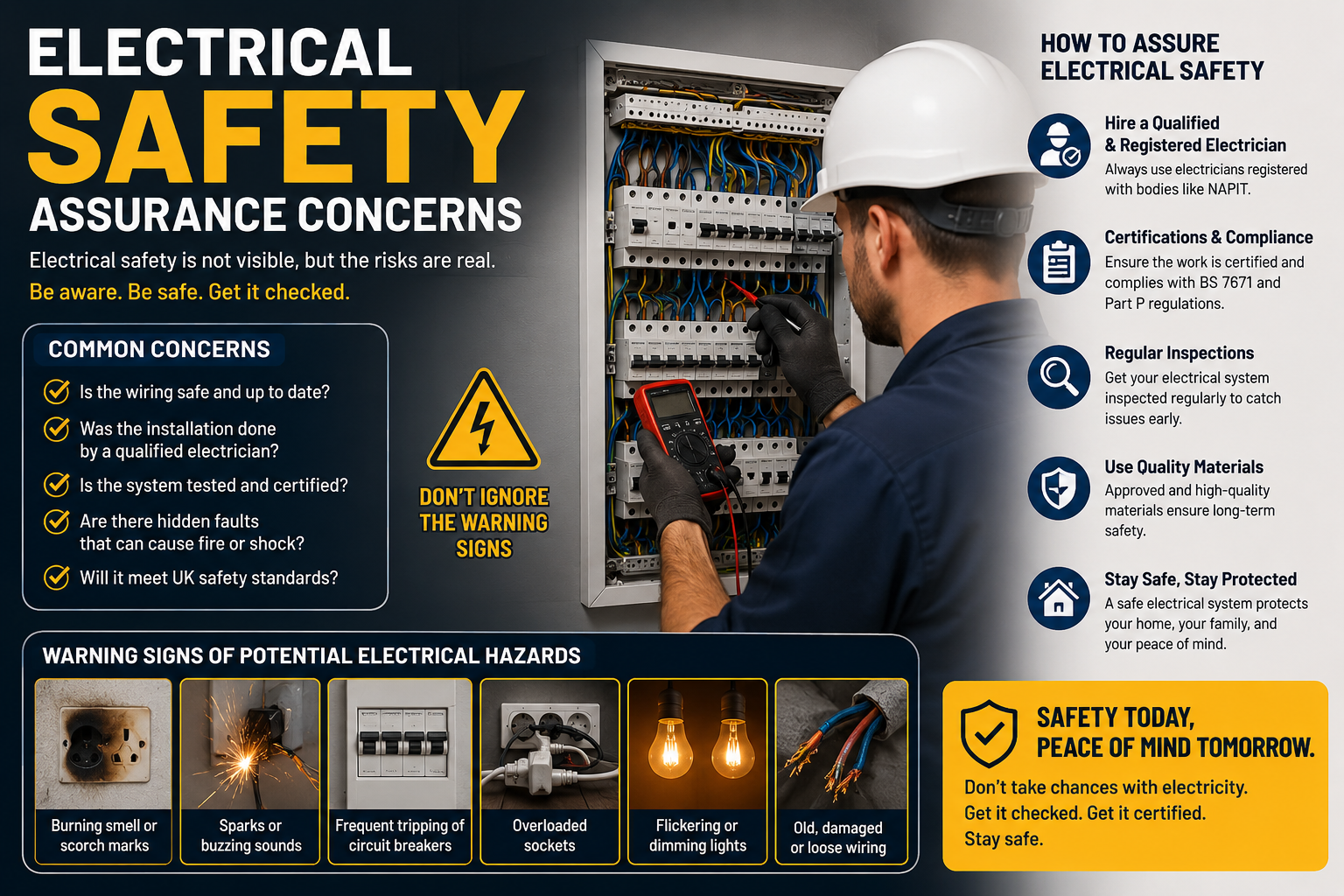
Electricity is an essential part of modern homes and businesses, powering everything from lighting and heating to appliances and security systems. However, electrical systems can become unsafe due to faults, ageing components, poor maintenance, or increased demand. Electrical Safety Assurance Concerns help property owners understand potential risks, identify problems early, and maintain safer electrical installations. Regular inspections, proper maintenance, and professional support can help prevent electrical failures, protect property, and ensure a reliable electrical system. This guide explains common electrical safety issues, their warning signs, prevention methods, and the importance of professional checks.
What Does Electrical Safety Assurance Mean for Homes and Businesses?
Electrical safety assurance means ensuring that an electrical system is safe, reliable, and operating correctly. It involves regular inspections, testing, maintenance, and repairs to identify possible hazards before they become dangerous.
For homeowners, electrical safety assurance protects families from risks such as electric shocks, electrical fires, and damaged appliances. For businesses, it helps maintain workplace safety and prevents costly interruptions caused by electrical failures.
Electrical Safety Assurance Concerns usually involve checking different parts of an electrical system, including:
- Wiring condition
- Consumer units
- Electrical sockets
- Switches
- Lighting systems
- Safety protection devices
- Electrical equipment
A professional electrician can identify faults that may not be visible during a normal inspection. Regular checks provide peace of mind and help ensure that electrical systems continue to work safely.
Why Is Electrical Safety Important in Modern Properties?
Modern properties depend heavily on electricity because people use more electrical devices than ever before. Smart home technology, electric heating, kitchen appliances, charging devices, and home offices have increased the demand placed on electrical systems.
Older installations may struggle to handle modern electrical requirements, creating potential safety problems.
Ignoring Electrical Safety Assurance Concerns can lead to:
- Electrical shocks
- Damaged appliances
- Power failures
- Overheated components
- Electrical fires
A safe electrical system is not only about preventing accidents; it also improves efficiency and reliability. Regular inspections help identify outdated components and allow property owners to make necessary improvements before problems occur.
What Are the Common Electrical Safety Concerns Homeowners Should Know About?
Homeowners should understand common electrical risks because early action can prevent serious issues. Some electrical problems may appear small but can become dangerous over time.
Common Electrical Safety Assurance Concerns include:
Faulty Wiring
Electrical wiring is a crucial part of every property’s electrical system. However, wires can become damaged due to age, moisture, overheating, poor installation, or physical damage.
Faulty wiring may cause:
- Flickering lights
- Power interruptions
- Electrical shocks
- Burning smells
- Fire risks
Because most wiring is hidden behind walls, homeowners may not notice problems until they become serious. Regular electrical inspections can detect damaged or unsafe wiring early, helping prevent serious safety issues.
Overloaded Circuits
An overloaded circuit occurs when too many electrical devices use the same circuit at one time. Modern homes often have many high-power appliances, which can place extra pressure on electrical systems.
Signs of an overloaded circuit include:
- Circuit breakers frequently tripping
- Warm sockets
- Flickering lights
- Poor appliance performance
Managing electrical usage properly is an important part of reducing Electrical Safety Assurance Concerns. Avoiding excessive loads and seeking professional advice before adding new electrical equipment can improve safety.
Faulty Electrical Equipment
Electrical appliances and devices can become unsafe when they are damaged or poorly maintained. Faulty equipment may overheat, create sparks, or damage the electrical system.
Common warning signs include:
- Damaged cables
- Cracked plugs
- Burning smells
- Unusual noises
- Excessive heat
Replacing damaged equipment and using electrical products correctly can help prevent unnecessary safety risks.
How Can I Identify Potential Electrical Hazards in My Property?
Identifying electrical hazards early is one of the best ways to maintain a safe property. Many electrical faults provide warning signs before they become serious.
Homeowners should look for:
Burning Smells
A burning smell near electrical fittings, sockets, or appliances may indicate overheating or damaged components. When electricity passes through a faulty connection, heat can build up and damage surrounding parts.
This is one of the important Electrical Safety Assurance Concerns because overheating electrical components can increase fire risks.
If you notice a burning smell:
- Switch off the affected equipment if safe
- Avoid touching damaged parts
- Contact a qualified electrician
Buzzing or Crackling Sounds
Electrical systems should normally operate quietly. Buzzing, humming, or crackling sounds may indicate loose connections, faulty switches, or damaged components.
These sounds should not be ignored because they may be early signs of electrical problems.
Flickering Lights
Flickering lights are common, but repeated flickering can sometimes indicate an electrical fault.
Possible causes include:
- Loose wiring
- Faulty bulbs
- Damaged switches
- Circuit problems
- Voltage issues
If replacing the bulb does not solve the problem, professional testing may be required.
Hot Sockets or Switches
Electrical sockets and switches should not become unusually hot. Heat often indicates resistance caused by poor connections, overloading, or damaged components.
A hot socket should be inspected because continued use may increase safety risks.
Can Old Wiring Create Electrical Safety Risks?
Yes, old wiring can create serious risks, especially in properties that have not been electrically upgraded for many years. Electrical systems installed decades ago were often designed for lower electricity usage compared with modern homes.
Modern properties often rely on multiple electrical devices at the same time, such as computers, smart appliances, heating systems, and charging equipment. Older wiring may struggle to handle this increased demand.
Common problems caused by ageing wiring include:
- Damaged insulation
- Overheating cables
- Poor electrical connections
- Power interruptions
- Increased fire risks
One of the major Electrical Safety Assurance Concerns in older properties is that wiring problems are often hidden behind walls and ceilings. A professional electrician can inspect and test the installation to determine whether upgrades are required.
Upgrading old wiring improves electrical safety, enhances system reliability, and ensures the property can handle modern power demands.
How Can Poor Electrical Connections Affect Safety?
Faulty electrical connections are a common cause of electrical failures. When wires are loose or connections are poorly installed, electricity may not flow correctly through the system.
A weak connection can create resistance, which produces heat. Over time, this heat can damage electrical components and increase safety risks.
Signs of faulty connections may include:
- Flickering lights
- Burning smells
- Buzzing sounds
- Warm sockets
- Intermittent power problems
These issues are important Electrical Safety Assurance Concerns because they can become worse if ignored.
A qualified electrician can inspect connections inside switches, sockets, lighting fittings, and consumer units to identify and repair faults safely.
How Can Electrical Overloads Affect Safety?
Electrical overloads happen when a circuit is required to supply more power than it was designed to handle.
This commonly occurs when multiple high-power appliances are connected to the same circuit.
Examples include:
- Electric heaters
- Kitchen appliances
- Washing machines
- Charging equipment
- Office devices
An overloaded circuit may cause:
- Circuit breakers to trip
- Electrical components to overheat
- Lights to flicker
- Appliances to become damaged
Preventing overloads is an important part of managing Electrical Safety Assurance Concerns. Property owners should avoid excessive use of extension leads and seek professional advice before adding new electrical equipment.
Why Do Electrical Appliances Sometimes Create Safety Concerns?
Electrical appliances can become dangerous when they are damaged, incorrectly used, or poorly maintained.
Common appliance-related problems include:
- Broken plugs
- Damaged cables
- Internal faults
- Overheating parts
- Poor-quality equipment
A faulty appliance may not only damage itself but can also affect the electrical system connected to it.
Homeowners should check appliances regularly and look for warning signs such as unusual smells, strange noises, or excessive heat.
Proper appliance maintenance is an important step in reducing Electrical Safety Assurance Concerns and protecting the entire property.
Can Flickering Lights Indicate an Electrical Safety Problem?
Yes, flickering lights can sometimes indicate an electrical safety problem. While occasional flickering may simply be caused by a loose bulb, repeated flickering should not be ignored.
Possible causes include:
- Loose wiring connections
- Faulty switches
- Damaged light fittings
- Circuit issues
- Voltage fluctuations
If several lights flicker at the same time, it may indicate a larger electrical problem.
Persistent lighting issues are common Electrical Safety Assurance Concerns because they may point towards faults that require professional investigation.
How Can I Prevent Electrical Fires in My Home?
Electrical fires can often be prevented through safe habits and regular maintenance.
Important prevention steps include:
Avoid Overloading Sockets
Using too many devices from one outlet can create excessive heat. High-power appliances should always have suitable electrical connections.
Replace Damaged Equipment
Broken plugs, damaged cables, and faulty appliances should not continue to be used.
Arrange Electrical Inspections
Regular inspections help identify hidden problems before they become dangerous.
Keep Electrical Areas Safe
Electrical equipment should be kept away from water and sources of excessive heat.
Taking preventive action helps reduce Electrical Safety Assurance Concerns and creates a safer living environment.
What Safety Checks Should Be Carried Out Before Buying an Older Property?
Before purchasing an older property, checking the electrical system is extremely important.
Important checks include:
Electrical Installation Condition Report (EICR)
An EICR provides information about the condition of the electrical installation and identifies possible safety issues.
Consumer Unit Inspection
Older fuse boxes may not provide modern protection. A professional can check whether an upgrade is needed.
Wiring Assessment
An electrician can check whether the wiring is safe and suitable for current electrical demands.
These checks help buyers understand possible repair requirements and avoid unexpected electrical problems after moving in.
How Does an Electrical Installation Condition Report (EICR) Improve Electrical Safety?
An Electrical Installation Condition Report is a professional inspection that checks whether an electrical installation is safe.
During an EICR, an electrician examines:
- Wiring systems
- Consumer units
- Sockets
- Switches
- Protective devices
- Electrical accessories
The report identifies problems such as:
- Damage
- Age-related deterioration
- Unsafe installations
- Potential hazards
An EICR is one of the most effective ways to manage Electrical Safety Assurance Concerns because it provides a detailed overview of an electrical system’s condition.
When Should I Hire a Qualified Electrician for Safety Inspections?
A qualified electrician should be contacted whenever there are signs of possible electrical problems.
You should arrange professional help if you notice:
- Burning smells
- Damaged wiring
- Flickering lights
- Electrical shocks
- Repeated breaker trips
- Sparks from sockets
Electricians have specialist tools and training to identify faults safely.
Professional inspections are especially important when dealing with major Electrical Safety Assurance Concerns because incorrect repairs can create additional risks.
Are DIY Electrical Repairs Dangerous?
Yes, DIY electrical repairs can be dangerous without proper training and experience.
Electricity requires specialist knowledge because incorrect repairs can cause:
- Electric shocks
- Electrical fires
- Equipment damage
- Unsafe installations
Common DIY mistakes include:
- Incorrect wiring
- Using unsuitable components
- Removing safety protection
Simple tasks such as changing a bulb are usually safe, but electrical repairs involving wiring should be completed by a qualified professional.
What Electrical Safety Checks Should Landlords Complete in the UK?
UK landlords have responsibilities to ensure rental properties have safe electrical installations.
Important checks include:
- Regular electrical inspections
- Maintaining electrical systems
- Repairing faults quickly
- Ensuring appliances are safe
Landlords should arrange appropriate electrical testing and respond quickly when tenants report problems.
Ignoring Electrical Safety Assurance Concerns in rental properties can put tenants at risk and may create legal problems.
How Can Businesses Maintain Electrical Safety Standards?
Businesses depend on electrical systems for daily operations, so maintaining proper safety standards is extremely important. Offices, shops, warehouses, and commercial buildings often use more electrical equipment than residential properties, which increases the chances of electrical faults.
Businesses can reduce Electrical Safety Assurance Concerns by carrying out regular inspections, maintaining electrical equipment, and repairing problems quickly.
Important safety steps include:
- Scheduling regular electrical inspections
- Testing electrical equipment
- Checking wiring and connections
- Training employees about electrical safety
- Keeping records of maintenance work
A safe electrical system helps businesses avoid unexpected downtime, protect employees, and reduce the risk of electrical accidents.
What Are the Risks of Ignoring Electrical Faults?
Ignoring electrical faults can turn a small issue into a serious safety problem. Many electrical failures develop slowly, giving property owners time to take action.
Common risks of ignoring electrical faults include:
- Electrical fires
- Damage to appliances
- Power failures
- Electrical shocks
- Expensive repairs
For example, a loose connection may seem like a minor problem, but over time it can create heat and damage surrounding components.
Addressing Electrical Safety Assurance Concerns early helps prevent major failures and improves the overall safety of a property.
How Can Faulty Switches and Sockets Become Safety Hazards?
Switches and sockets are used frequently, so they can wear out over time. A damaged switch or socket may not provide a safe electrical connection.
Warning signs of faulty switches and sockets include:
- Crackling sounds
- Burning smells
- Loose movement
- Heat around the fitting
- Black marks or discolouration
Faulty sockets can create poor connections, which may produce heat and increase the risk of electrical damage.
Replacing damaged switches and sockets professionally is an important step in managing Electrical Safety Assurance Concerns and maintaining a safe electrical installation.
Can Damaged Cables Increase the Risk of Electrical Accidents?
Yes, damaged cables can significantly increase electrical risks. Cables protect internal wires, and when the outer covering becomes damaged, the electrical system becomes more vulnerable.
Cable damage may happen because of:
- Age
- Physical impact
- Heat exposure
- Incorrect storage
- Pets damaging cables
Damaged cables can lead to:
- Electric shocks
- Short circuits
- Overheating
- Fire hazards
Electrical cables should be checked regularly, and damaged ones should be replaced instead of using temporary fixes.
Why Is Regular Electrical Maintenance Important?
Regular electrical maintenance helps identify problems before they become dangerous. Many faults remain hidden until they cause noticeable damage.
Maintenance helps check:
- Wiring condition
- Electrical connections
- Safety devices
- Appliances
- Circuit performance
The main benefits of regular maintenance include:
- Improved safety
- Reduced repair costs
- Better system reliability
- Longer equipment lifespan
Regular maintenance is one of the most effective ways to manage Electrical Safety Assurance Concerns because it allows problems to be discovered before they become emergencies.
How Do Circuit Breakers Improve Electrical Safety?
Circuit breakers are important safety devices that protect electrical systems from damage. They automatically switch off the electricity supply when they detect problems such as overloads or short circuits.
Circuit breakers help prevent:
- Overheating
- Equipment damage
- Electrical fires
- Dangerous electrical conditions
However, a circuit breaker that trips repeatedly should not be ignored. Frequent trips may indicate an underlying fault that requires professional investigation.
A qualified electrician can identify the cause and ensure the system is operating safely.
What Should I Do If I Smell Burning From an Electrical Fitting?
A burning smell from an electrical fitting is a serious warning sign. It may indicate overheating, damaged wiring, or a faulty component.
If you notice a burning smell:
- Turn off the affected equipment if it is safe.
- Avoid touching hot switches or sockets.
- Check for visible signs of damage.
- Contact a qualified electrician.
Ignoring burning smells can increase Electrical Safety Assurance Concerns because overheating electrical parts may eventually cause serious damage or fire.
Are Electrical Safety Inspections Required for Commercial Properties?
Yes, electrical safety inspections are an important requirement for many commercial properties. Businesses have a responsibility to provide a safe environment for employees, customers, and visitors.
Commercial electrical inspections help identify:
- Faulty wiring
- Damaged equipment
- Unsafe installations
- Circuit problems
Regular inspections are especially important in workplaces with heavy electrical usage.
Managing Electrical Safety Assurance Concerns in commercial properties helps reduce risks and supports a safer working environment.
How Can I Make My Home More Electrically Safe?
Homeowners can improve electrical safety by following simple precautions and arranging professional checks when needed.
Useful safety steps include:
- Avoid overloading sockets
- Replace damaged cables
- Use appliances correctly
- Keep electrical equipment away from water
- Arrange regular inspections
- Hire qualified electricians for repairs
Small improvements can make a big difference in reducing electrical risks.
A safer home electrical system helps prevent accidents and provides greater confidence when using everyday electrical devices.
What Role Does a Qualified Electrician Play in Electrical Safety Assurance?
A qualified electrician plays an important role in identifying, repairing, and preventing electrical problems.
Electricians can:
- Inspect electrical systems
- Test wiring and circuits
- Find hidden faults
- Repair damaged components
- Complete safety reports
- Recommend improvements
Many electrical issues cannot be identified through visual checks alone. Professional testing equipment allows electricians to detect problems that may otherwise remain hidden.
Qualified electricians are essential for managing Electrical Safety Assurance Concerns because they ensure repairs and installations are completed safely.
Can Power Surges Damage Electrical Systems and Create Safety Issues?
Yes, power surges can damage electrical systems and connected equipment. A power surge is a sudden increase in voltage that can affect sensitive electrical components.
Power surges may damage:
- Computers
- Televisions
- Appliances
- Lighting systems
- Electrical circuits
They can occur due to:
- Lightning strikes
- Problems with the electricity supply
- Switching large electrical equipment
Installing suitable surge protection and maintaining the electrical system can reduce the impact of power surges.
How Do Electrical Safety Standards Protect Homeowners and Businesses?
Electrical safety standards provide guidelines for installing, testing, and maintaining electrical systems safely.
These standards help ensure:
- Correct installation methods
- Safe electrical equipment use
- Proper protection systems
- Reduced accident risks
Following electrical safety standards protects homeowners, employees, customers, and electricians.
For both residential and commercial properties, meeting safety requirements is an important part of managing Electrical Safety Assurance Concerns.
Why Should Electrical Safety Concerns Never Be Ignored?
Electrical safety concerns should never be ignored because small problems can quickly become dangerous.
A minor issue such as a damaged cable, faulty socket, or loose connection may eventually lead to:
- Electrical fires
- Equipment damage
- Power failures
- Safety hazards
Taking action early is usually safer and more affordable than waiting for a major electrical failure.
Understanding Electrical Safety Assurance Concerns allows property owners to recognise risks, arrange professional inspections, and maintain safer electrical systems.
Conclusion
Electrical systems provide essential power for homes and businesses, but they require regular care to remain safe. Faulty wiring, overloaded circuits, damaged equipment, and outdated installations can create serious risks if they are ignored.
Managing Electrical Safety Assurance Concerns requires a combination of regular maintenance, professional inspections, and responsible electrical usage.
Homeowners should pay attention to warning signs such as flickering lights, burning smells, damaged cables, and repeated circuit breaker trips. Businesses should maintain proper inspection schedules and ensure electrical systems meet safety requirements.
By taking electrical safety seriously, property owners can reduce risks, protect valuable equipment, and create a safer environment for everyone. Regular checks and professional support are the best ways to maintain a reliable electrical system and prevent avoidable electrical problems.
What Role Does NAPIT Play in Managing Electrical Safety Assurance Concerns?
NAPIT helps address Electrical Safety Assurance Concerns by supporting qualified electricians through registration, assessment, and safety standards. Choosing a NAPIT-registered electrician gives homeowners and businesses confidence that electrical work is completed by professionals who follow recognised safety requirements and industry practices. NAPIT registration can help ensure electrical installations, inspections, and repairs are carried out safely and correctly.
Leave a Reply