Introduction
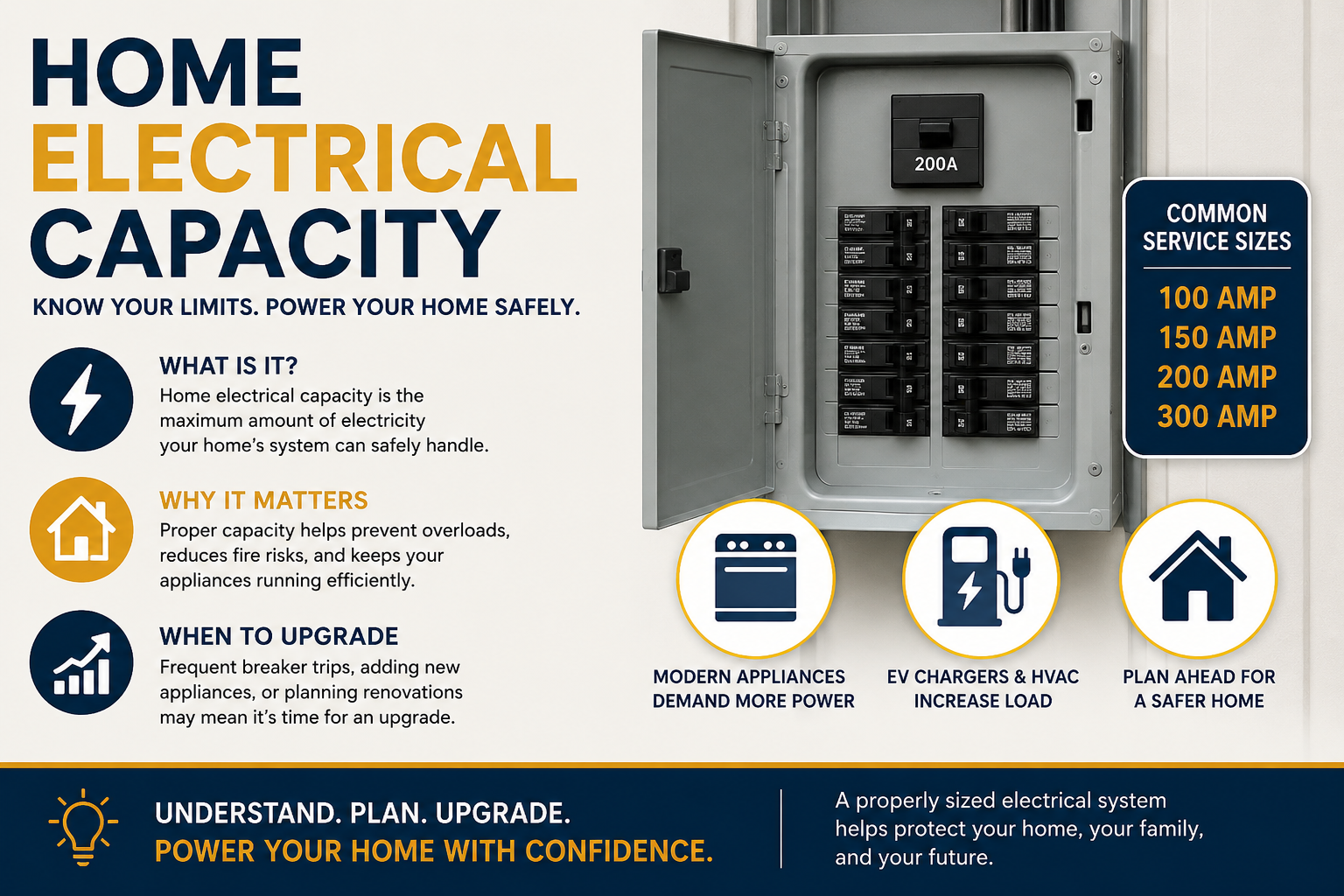
Understanding Home Electrical Capacity is essential for every homeowner. Whether you’re installing an electric vehicle charger, upgrading your kitchen, adding air conditioning, or simply wondering why your breakers keep tripping, knowing your home’s electrical limits can help you make safer and smarter decisions.
Many homeowners only think about Home Electrical Capacity when something goes wrong. However, planning ahead can prevent overloaded circuits, expensive repairs, and potential fire hazards. A properly sized electrical system ensures your appliances operate efficiently while keeping your family and property safe.
This guide answers the most common questions about Home Electrical Capacity in clear, practical language. By the end, you’ll understand how your electrical service works, when upgrades are necessary, and how to determine whether your home’s electrical system is ready for future demands.
1. What is home electrical capacity?
Home Electrical Capacity refers to the maximum amount of electrical power your home’s electrical system can safely supply at one time. It depends primarily on your main electrical service, electrical panel rating, wiring, and circuit breakers.
For example, a 100-amp electrical service can safely deliver less power than a 200-amp service. Every appliance in your home—including lighting, refrigerators, ovens, HVAC systems, and EV chargers—shares this available capacity.
Knowing your home’s capacity helps prevent overloaded circuits and ensures any future additions are installed safely.
2. How do I know the electrical capacity of my home?
The easiest way to determine Home Electrical Capacity is by checking your main electrical panel. The main breaker usually displays its rating, such as 100A, 150A, or 200A.
You can also:
- Read the label inside the electrical panel.
- Review your home’s electrical inspection documents.
- Ask a licensed electrician to perform a load assessment.
- Check building records if available.
If your home is several decades old, it’s worth having the system professionally inspected before adding major electrical loads.
3. What is the difference between a 100-amp and 200-amp electrical service?
A 100-amp service can safely power many traditional homes but may struggle with today’s electrical demands.
A 200-amp service provides significantly more Home Electrical Capacity, allowing homeowners to run multiple large appliances simultaneously without overloading the system.
A 200-amp service is often recommended for homes with:
- Electric vehicle chargers
- Heat pumps
- Electric water heaters
- Electric ranges
- Hot tubs
- Home workshops
- Large HVAC systems
It also offers greater flexibility for future renovations.
4. How much electrical capacity does a modern home need?
Modern households generally require more Home Electrical Capacity than homes built several decades ago because people now rely on numerous high-powered appliances and electronic devices.
Most newer homes are built with 200-amp electrical service because it comfortably supports:
- Central air conditioning
- Electric cooking appliances
- Home offices
- Smart home devices
- EV charging
- Entertainment systems
The exact requirement depends on the size of your home and your lifestyle.
5. Can I increase my home’s electrical capacity?
Yes. If your current Home Electrical Capacity is no longer sufficient, a licensed electrician can upgrade your electrical service.
An upgrade may include:
- Installing a larger electrical panel
- Replacing the main breaker
- Upgrading service entrance cables
- Coordinating with your electricity provider
- Installing additional circuits
A professional load calculation determines whether an upgrade is necessary or whether adding new circuits will be enough.
6. What are the signs that my home’s electrical capacity is insufficient?
Several warning signs indicate your Home Electrical Capacity may not be adequate.
Common signs include:
- Frequently tripped breakers
- Flickering or dimming lights
- Appliances slowing down when others start
- Warm electrical panel
- Overloaded extension cords
- Limited space for new circuits
- Burning smells from electrical equipment
Ignoring these warning signs can increase the risk of electrical failures and fire hazards.
7. How do I calculate my home’s electrical load?
Calculating electrical load involves adding the expected power demand of all major appliances and comparing it with your available Home Electrical Capacity.
The calculation considers:
- Heating and cooling systems
- Kitchen appliances
- Water heaters
- Laundry equipment
- Lighting
- Small appliance circuits
- Future electrical additions
Licensed electricians use standardized load calculation methods to ensure the electrical system remains within safe operating limits.
8. Does adding an EV charger require a panel upgrade?
Not always.
An electric vehicle charger places a significant continuous demand on your electrical system. Before installation, an electrician will evaluate your available Home Electrical Capacity.
If enough unused capacity exists, the charger may simply require a dedicated circuit.
If your panel is already close to its limit, you may need:
- A panel upgrade
- Load management equipment
- Electrical service upgrade
Planning ahead prevents overloads while ensuring safe EV charging.
9. Can my electrical panel handle a heat pump installation?
Heat pumps are highly efficient, but they still require sufficient Home Electrical Capacity.
Whether your existing panel can support one depends on:
- Existing electrical load
- Panel size
- Heating system type
- Additional appliances already connected
A professional load assessment determines whether your current system can safely accommodate the new equipment without exceeding electrical limits.
10. How many appliances can I safely run at the same time?
There isn’t a fixed number because every appliance uses different amounts of electricity.
Your Home Electrical Capacity determines how many devices can operate simultaneously without overloading the system.
For example, running an electric oven, clothes dryer, water heater, air conditioner, and EV charger at the same time places much greater demand on your electrical system than using lighting, televisions, and computers.
If your breakers trip regularly when multiple large appliances operate together, your electrical system may be approaching its safe capacity limit.
11. What causes an overloaded electrical circuit?
An overloaded circuit occurs when the connected appliances draw more electricity than the circuit is designed to handle. Even if your Home Electrical Capacity is sufficient, individual circuits still have their own limits.
Common causes include:
- Plugging multiple high-power appliances into one circuit
- Using extension leads for heavy equipment
- Running space heaters with other appliances
- Outdated electrical wiring
Circuit breakers trip to protect the wiring from overheating.
12. Is a larger electrical panel always better?
Not necessarily. A larger panel only provides benefits if your home actually needs additional Home Electrical Capacity. Installing an oversized panel without increasing the electrical service or load requirements offers little advantage.
A licensed electrician can determine the correct panel size based on your current usage and future plans.
13. How does electrical capacity affect home safety?
Adequate Home Electrical Capacity helps prevent overloaded circuits, overheating, damaged wiring, and electrical fires. When your electrical system operates within its limits, appliances perform more reliably and breakers are less likely to trip unexpectedly.
If your home regularly exceeds its electrical capacity, the risk of equipment damage and safety hazards increases.
14. What happens if I exceed my home’s electrical capacity?
Exceeding your Home Electrical Capacity causes the electrical system to protect itself by tripping the main breaker or individual circuit breakers.
If overloads happen frequently, you may notice:
- Flickering lights
- Repeated breaker trips
- Warm outlets
- Reduced appliance performance
Ignoring these signs can shorten the lifespan of electrical equipment and increase fire risks.
15. Can solar panels increase my home’s electrical capacity?
No. Solar panels generate electricity, but they do not increase your Home Electrical Capacity. Your electrical panel and utility service still determine how much power your home can safely distribute.
If you’re installing a large solar system while adding new electrical equipment, your electrician may recommend upgrading the electrical service.
16. Do older homes usually have lower electrical capacity?
Yes. Many older homes were built when households used far fewer electrical appliances. As a result, they often have 60-amp or 100-amp services, which may not provide enough Home Electrical Capacity for modern living.
Older electrical systems may also have outdated wiring or panels that should be inspected before major renovations.
17. When should I upgrade from a 100-amp to a 200-amp service?
Upgrading is worth considering if your current Home Electrical Capacity no longer meets your household’s needs.
Common reasons include:
- Installing an EV charger
- Adding central air conditioning
- Home extensions
- Converting to electric heating
- Kitchen renovations
- Frequent breaker trips
A professional load calculation will confirm whether an upgrade is necessary.
18. Does installing an electric shower require more electrical capacity?
In many cases, yes. Electric showers are among the highest-power appliances in a home and often require a dedicated circuit.
Before installation, an electrician should confirm your available Home Electrical Capacity to ensure the new circuit can be safely supported.
19. How does home electrical capacity affect energy efficiency?
Increasing Home Electrical Capacity does not reduce electricity bills by itself. However, an electrical system with adequate capacity allows appliances to operate correctly without voltage drops caused by overloaded circuits.
Efficient appliances, proper wiring, and balanced electrical loads all contribute to better overall energy performance.
20. Can smart home devices overload my electrical system?
Most smart home devices consume very little electricity. On their own, they rarely affect Home Electrical Capacity.
However, if your smart home includes high-power devices such as electric heating, EV charging, air conditioning, automated lighting, and multiple connected appliances, the combined electrical demand should be assessed to ensure your system has enough capacity.
21. What is the maximum load an electrical panel can safely handle?
The maximum load depends on the panel’s amp rating and your home’s electrical service. For example, a 100-amp panel safely handles less electrical demand than a 200-amp panel. However, for continuous use, electricians generally recommend keeping the total load below the panel’s maximum rating. Monitoring your Home Electrical Capacity helps ensure your electrical system operates safely without unnecessary strain.
22. How can I tell if my electrical panel is overloaded?
Several warning signs suggest your panel may be overloaded:
- Breakers trip frequently.
- Lights dim when large appliances start.
- The panel feels unusually warm.
- You hear buzzing sounds from the panel.
- New appliances cause power interruptions.
If you notice these issues, have an electrician assess your Home Electrical Capacity before adding more electrical equipment.
23. Does adding a home office increase electrical demand?
Yes, although the increase is usually moderate. Computers, multiple monitors, printers, networking equipment, and backup power supplies all add to your home’s electrical load. If you also use electric heating or cooling in the office, the demand increases further. While most home offices won’t exceed Home Electrical Capacity, it’s important to consider the additional load when planning renovations.
24. Will a kitchen renovation require an electrical capacity upgrade?
It might. Modern kitchens often include induction cooktops, double ovens, dishwashers, microwaves, wine coolers, and other high-powered appliances. These additions can significantly increase electrical demand. Before renovating, an electrician should calculate your available Home Electrical Capacity to determine whether your existing service can support the new appliances safely.
25. Can I add more circuits without upgrading my electrical service?
Sometimes. If your electrical panel has available space and enough unused Home Electrical Capacity, additional circuits can often be installed without upgrading the main electrical service. However, if your panel is full or your service is already operating near its limit, an upgrade may be required.
26. How much electrical capacity does an air conditioner require?
The required capacity depends on the size and type of air conditioner. Small window units consume relatively little electricity, while central air conditioning systems require much more power and dedicated circuits. Before installing a new system, verify that your Home Electrical Capacity can safely support the additional electrical load.
27. Does an electric vehicle charger need a dedicated circuit?
Yes. Most Level 2 EV chargers require their own dedicated circuit because they operate continuously at high power for several hours. Before installation, your electrician should confirm that your Home Electrical Capacity is sufficient and that your electrical panel can safely accommodate the new circuit.
28. Why do my breakers keep tripping when multiple appliances are running?
Frequent breaker trips usually indicate that a circuit is overloaded. Running several high-power appliances at the same time can exceed the circuit’s limit, even if your overall Home Electrical Capacity is adequate. If breaker trips become common throughout the house, your main electrical service may also need evaluation.
29. Is it safe to replace a larger breaker without upgrading the wiring?
No. Installing a larger breaker without upgrading the wiring is dangerous. Breakers are designed to protect the wiring, not the appliances. A larger breaker may allow wires to overheat before the breaker trips, increasing the risk of electrical fires. If your current breaker trips frequently, have a licensed electrician evaluate your Home Electrical Capacity and determine the correct solution.
30. Should I have a professional assess my home’s electrical capacity before adding new appliances?
Yes. A professional assessment ensures your electrical system can safely support additional demand. This is especially important before installing EV chargers, heat pumps, air conditioners, electric showers, hot tubs, or major kitchen appliances. An electrician will calculate your Home Electrical Capacity, inspect the electrical panel, and recommend any upgrades needed to keep your home safe and compliant.
Here’s an SEO-friendly FAQ you can add naturally to your article.
31. Should I hire a NAPIT-registered electrician when upgrading my home electrical capacity?
Yes. If you’re upgrading your Home Electrical Capacity, hiring a NAPIT-registered electrician helps ensure the work is carried out safely and in accordance with the latest UK electrical standards. NAPIT members are regularly assessed for competence and can carry out electrical work that complies with relevant regulations. You can also verify a contractor or learn more about NAPIT through the official website: NAPIT Consumer Advice.

Conclusion
Understanding Home Electrical Capacity helps you make informed decisions whenever you add new appliances, renovate your home, or plan future upgrades. Knowing the limits of your electrical system reduces the risk of overloaded circuits, frequent breaker trips, and potential safety hazards.
If your household’s electrical demand continues to grow, don’t assume your existing system can handle it. A professional electrical inspection and load calculation will confirm whether your current Home Electrical Capacity is sufficient or if an upgrade is the safest option. Keeping your electrical system properly sized ensures reliable performance, protects your appliances, and provides peace of mind for years to come.
Leave a Reply