Introduction
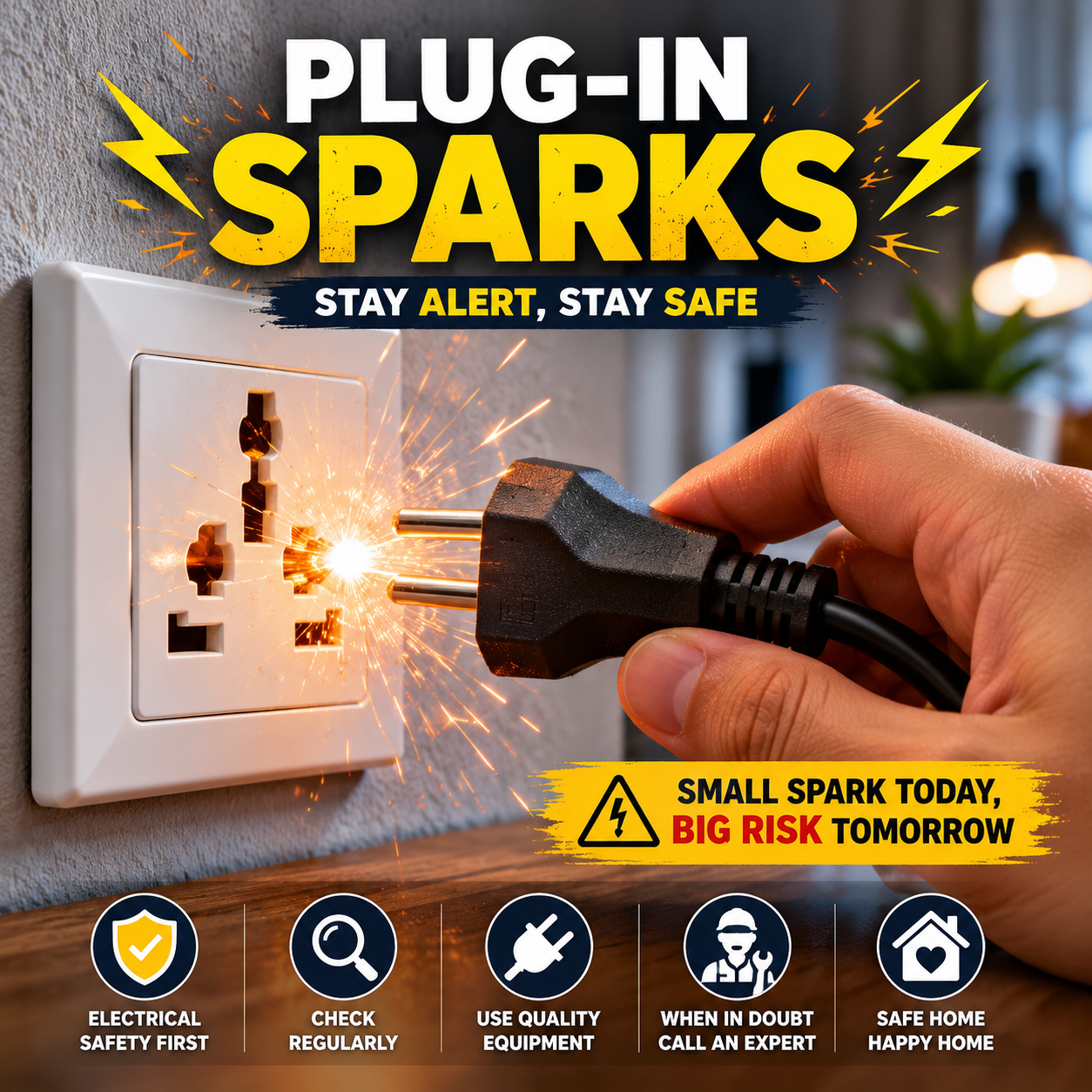
Many people become concerned when they notice a spark while plugging an appliance into a socket. In some cases, a small spark is completely normal. In other situations, sparks can indicate a serious electrical problem that requires immediate attention. Understanding why sparks occur and knowing when to take action can help keep your home, family, and electrical system safe.
This guide explains the most common causes of electrical sparks, when they are dangerous, and how to prevent future problems. Whether you have noticed sparks from a charger, kettle, extension lead, or wall socket, this article will help you understand what is happening and what steps to take next.
What Causes Sparks When Plugging in a Device?
Electricity flows instantly when a plug makes contact with the socket terminals. During this brief moment, a tiny arc of electricity may occur. This arc appears as a small spark.
The spark is usually caused by the sudden transfer of electrical current from the socket to the appliance. High-power appliances may create slightly larger sparks because they draw more electricity when they start operating.
Most small sparks happen because of normal electrical activity. However, large or repeated sparks may indicate a fault.
Are Sparks When Plugging in Appliances Dangerous?
Not all sparks are dangerous. A tiny blue spark that appears briefly when plugging in a device can be normal.
The concern begins when sparks are large, bright, yellow, white, or accompanied by smoke, burning smells, popping sounds, or heat. These signs may indicate damaged wiring, loose connections, or faulty outlets.
Dangerous sparks should never be ignored because they can increase the risk of electrical shock or fire.
Is It Normal to See a Small Spark When Plugging in a Device?
Yes. Small sparks are often a normal part of electrical operation.
Many appliances draw power immediately when connected. This sudden demand can create a small visible spark. Devices with motors, heating elements, or large power supplies commonly produce this effect.
A brief spark without any other warning signs is generally not a cause for concern.
Why Do Electrical Outlets Spark When Inserting a Plug?
Electrical outlets may spark because electricity jumps between the socket contacts and the plug pins during connection.
This usually occurs for only a fraction of a second. The effect becomes more noticeable when appliances require a higher starting current.
If the spark becomes larger over time or happens every time with multiple devices, the outlet should be inspected.
Can a Sparking Outlet Cause an Electrical Fire?
Yes. A faulty outlet that produces repeated or large sparks can potentially start an electrical fire.
Sparks create heat. If heat continues to build around damaged wiring, loose terminals, or worn components, nearby materials may ignite.
This is why persistent sparking should always be investigated by a qualified electrician.
Should I Stop Using an Outlet That Sparks Frequently?
Yes. Frequent sparking is often a warning sign.
An outlet that sparks regularly may have loose connections, internal damage, wear, or overheating components. Continuing to use it could increase the risk of fire or electric shock.
It is best to stop using the outlet until it has been checked.
What Should I Do if I See a Large Spark When Plugging in a Device?
A large spark should be treated seriously.
Unplug the appliance if it is safe to do so. Stop using the outlet immediately. Check for visible signs of damage such as burn marks, discoloration, melted plastic, or unusual smells.
If the problem continues, arrange for an electrical inspection.
Can Faulty Wiring Cause Sparks When Plugging in Appliances?
Yes. Faulty wiring is one of the most common causes of dangerous electrical sparks.
Damaged insulation, loose conductors, worn connections, or incorrectly installed wiring can allow electricity to arc where it should not.
These electrical arcs generate heat and can eventually damage outlets and appliances.
Why Does My Extension Lead Spark When I Plug Something In?
Extension leads can spark for several reasons.
The lead may be overloaded, damaged, old, or poorly manufactured. Loose internal connections can also create electrical arcing.
Always inspect extension leads regularly and replace any that show signs of wear.
Can Overloaded Sockets Create Sparks?
Yes. Overloaded sockets can create excessive heat and increase the chance of sparking.
When too many high-power appliances share a single outlet, electrical components may become stressed. Over time, this stress can damage connections and lead to sparks.
Avoid plugging multiple heavy-load appliances into one outlet.
Do Damaged Plugs Cause Electrical Sparks?
Absolutely.
Broken plug pins, loose wiring inside the plug, cracked casings, and worn components can all contribute to sparking.
If a plug shows signs of damage, replace it immediately.
Why Does My Charger Spark When I Plug It Into the Wall?
Phone and laptop chargers contain electronic components that draw power as soon as they are connected.
A small spark can occur during this process. However, if the spark is large, frequent, or accompanied by heat, the charger or outlet may be faulty.
Can Moisture in a Socket Cause Sparking?
Yes. Moisture and electricity are a dangerous combination.
Water can create unintended pathways for electrical current, resulting in arcing, short circuits, and sparks.
If moisture enters a socket, stop using it until it has been professionally inspected.
Plug-In Sparks and Dangerous Warning Signs
While many sparks are harmless, certain warning signs should never be ignored.
These include burning smells, smoke, crackling noises, melted plastic, discoloration around outlets, repeated sparks, hot plugs, and tripping circuit breakers.
Any of these symptoms suggest that an electrical fault may be present.
How Can I Tell if a Sparking Outlet Is Dangerous?
A dangerous outlet often displays more than just sparks.
Look for black marks, heat, unusual noises, loose fittings, flickering power, or a burning odor. These indicators suggest the outlet may need repair or replacement.
Professional inspection is recommended whenever these symptoms appear.
Can Old Electrical Outlets Spark More Often?
Yes. Electrical outlets wear out over time.
Years of plugging and unplugging devices can weaken internal contacts. Loose contacts create resistance, and resistance creates heat and sparks.
Older outlets should be inspected periodically and replaced when necessary.
Why Does a Socket Spark and Make a Crackling Noise?
Crackling sounds usually indicate electrical arcing.
Arcing occurs when electricity jumps across a gap instead of flowing through a secure connection. This can happen because of loose wiring, damaged outlets, or worn components.
Crackling noises should never be ignored.
Should I Call an Electrician for a Sparking Outlet?
If sparking occurs regularly, produces large flashes, or is accompanied by heat or burning smells, calling an electrician is the safest option.
Electrical problems can become more serious over time if left unresolved.
Can Loose Electrical Connections Cause Sparks?
Yes. Loose connections are one of the leading causes of electrical arcing.
When electrical conductors do not make firm contact, electricity may jump across gaps. This creates sparks and heat.
Regular inspections can help identify these issues before they become dangerous.
Why Does a Socket Spark Even When Nothing Is Switched On?
A socket may spark because of internal faults, damaged wiring, residual current, or loose connections.
Even if the appliance is switched off, electricity may still be present within parts of the circuit.
This situation requires professional investigation.
Can a Sparking Plug Damage My Appliance?
Yes. Repeated electrical arcing can damage sensitive electronics.
Power fluctuations caused by faulty outlets or plugs may shorten the lifespan of appliances and increase the risk of failure.
Using a damaged outlet is never recommended.
What Are the Signs of a Faulty Electrical Outlet?
Common signs include:
- Frequent sparks
- Burning smells
- Warm outlet surfaces
- Cracked faceplates
- Flickering power
- Buzzing sounds
- Discoloration around the socket
These symptoms indicate the outlet may need repair or replacement.
Can a Worn-Out Socket Cause Sparks?
Yes. Over time, socket contacts lose tension and wear down.
Loose contact between the plug and socket increases resistance and encourages sparking.
Replacing worn sockets can improve both safety and performance.
Why Do Sparks Appear When Unplugging a Device?
Sparks can occur when the electrical connection breaks while current is still flowing.
This is especially common with appliances that draw significant power, such as heaters, kettles, and vacuum cleaners.
A small spark is often normal, but large sparks should be investigated.
Is It Safe to Use a Socket After It Sparks Once?
If the spark was very small and no other warning signs appeared, the socket may be safe.
However, if the spark was large or accompanied by heat, smoke, or unusual odors, stop using the outlet until it has been inspected.
Can a Circuit Breaker Trip Because of a Sparking Outlet?
Yes. Sparking may indicate a short circuit or fault condition.
Modern circuit breakers are designed to disconnect power when dangerous conditions are detected.
Repeated breaker trips should never be ignored.
How can a NAPIT Approved Electrician help prevent plug-in sparks and electrical hazards?
A NAPIT Approved Electrician can help identify unsafe sockets, faulty wiring, overloaded circuits, and incorrect electrical installations that may cause plug-in sparks. Using a qualified professional ensures electrical work is inspected and completed according to recognised safety standards. Homeowners can learn more about finding a registered electrical professional through the official NAPIT website:
NAPIT Official Website

Leave a Reply