Introduction
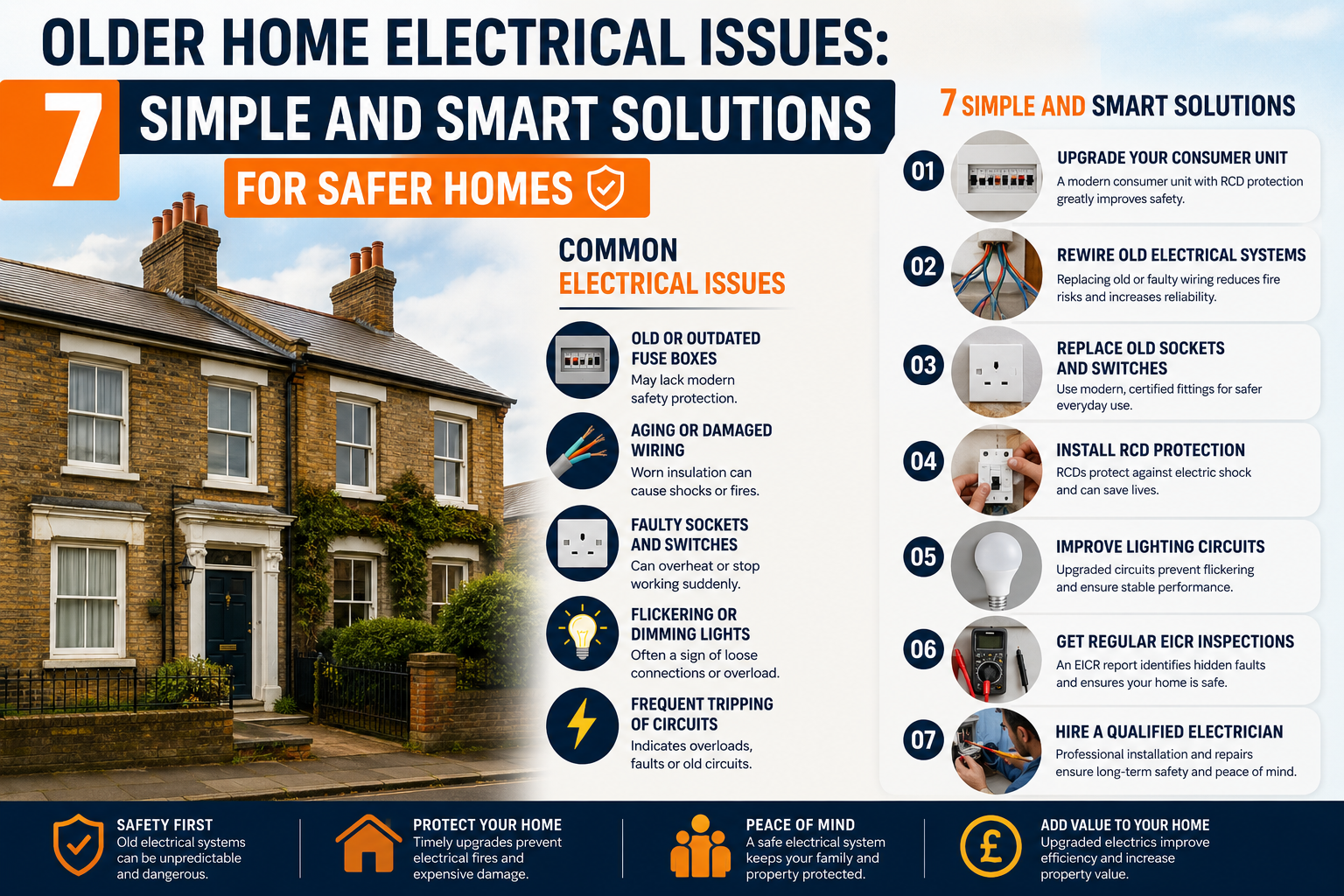
Older Home Electrical Issues : Older houses in the UK have charm, character, and strong construction, but they often come with hidden electrical problems that can become serious safety risks if ignored. Many homeowners face issues like repeated power trips, blinking lights, or faulty sockets but often struggle to identify the actual reason behind these electrical problems.
These problems are commonly grouped under Older Home Electrical Issues, and they usually happen because electrical systems were installed decades ago and are no longer designed to handle modern electrical loads like smart appliances, heating systems, and high-power devices.
In this guide, we will explain the most common problems, why they happen, how to identify warning signs, and the smartest solutions to keep your home safe and fully functional.
What Are Older Home Electrical Issues?
Older Home Electrical Issues refer to electrical faults found in properties built 30+ years ago where wiring, fuse boxes, and circuits may be outdated or worn out. These issues often develop due to aging materials, lack of maintenance, or increased electricity demand beyond the system’s capacity.
Common systems affected include:
- Old fuse boxes
- Outdated wiring (rubber or fabric insulated cables)
- Lack of proper earthing
- Weak circuit protection systems
Why Older Home Electrical Issues Are Common in UK Properties
Many UK homes were built before modern electrical safety regulations existed. At that time, homes were not designed for today’s energy usage.
Key reasons include:
- Old wiring insulation becoming brittle
- Increased electrical load from modern appliances
- Lack of upgrades to consumer units
- Moisture and damp affecting circuits
- Poor previous DIY electrical work
These conditions increase the chances of faults developing over time.
Why Does My Fuse Box Keep Tripping?
One of the most common Older Home Electrical Issues is a tripping fuse box. This happens when your system detects a fault or overload.
Causes include:
- Too many appliances on one circuit
- Faulty wiring
- Damaged appliances
- Short circuits
If your fuse box keeps tripping regularly, it is a warning sign that your system is struggling to handle electrical demand.
What Causes Flickering Lights in Older Homes?
Flickering lights are another major sign of Older Home Electrical Issues.
Common causes:
- Loose wiring connections
- Old or failing light switches
- Voltage fluctuations
- Overloaded circuits
This issue should never be ignored as it may indicate deeper wiring problems.
Why Do Electrical Sockets Stop Working Suddenly?
When sockets stop working, it often indicates a fault in the circuit.
Possible reasons:
- Tripped breaker or blown fuse
- Loose internal wiring
- Burnt or damaged socket
- Faulty connection in junction boxThis is a common symptom of aging electrical systems.
What Causes RCD to Keep Tripping?
RCD (Residual Current Device) trips are designed to protect you from electric shock.
In older homes, RCDs trip due to:
- Moisture in wiring
- Faulty appliances
- Damaged insulation
- Earth leakage issues
Frequent tripping is a strong indicator of Older Home Electrical Issues.
What Are Signs of Overloaded Circuits?
Older homes often have circuits that cannot handle modern appliances.
Signs include:
- Warm sockets or switches
- Flickering lights
- Burning smell
- Frequent breaker trips
Overloading is dangerous and can lead to electrical fires if not fixed.
Why Do Lights Become Dim When Large Appliances Start Running?
This is a very common issue in older UK homes.
Reasons include:
- Weak electrical supply
- Poor wiring condition
- Shared circuits
- Voltage drop under load
It shows that your electrical system is struggling to distribute power properly.
What Causes Buzzing Sounds from Switches or Sockets?
Buzzing sounds are never normal and should be checked immediately.
Causes include:
- Loose wiring
- Faulty switch mechanism
- Electrical arcing inside sockets
This is one of the serious Older Home Electrical Issues that should not be ignored.
Can Old Wiring Cause Electrical Fires?
Yes, outdated wiring is one of the leading causes of electrical fires in older homes.
Risk factors:
- Cracked insulation
- Overheated cables
- Loose connections
- Overloaded circuits
Routine inspections help identify electrical risks early and reduce the chances of fire hazards.
Is It Safe to Use Old Wiring in UK Homes?
Old wiring may still function, but it is not always safe.
Issues include:
- Lack of earthing
- Outdated materials
- Inability to support modern load
Most electricians recommend inspection and possible rewiring.
What Is Knob-and-Tube or Old Wiring?
Some older UK homes still have legacy wiring systems.
Problems include:
- No earth wire
- Brittle insulation
- High fire risk
This type of wiring is outdated and should be upgraded.
What Are Warning Signs of Faulty Electrical Connections?
Faulty connections are common in older homes.
Signs include:
- Sparks when plugging devices
- Intermittent power loss
- Burning smell
- Warm outlets
These are clear indicators of Older Home Electrical Issues.
Should I Replace My Consumer Unit?
Modern consumer units offer better protection.
Upgrading is recommended if:
- Your fuse box is over 20 years old
- You have no RCD protection
- You experience frequent tripping
A new unit improves safety and reliability.
What Is an EICR Report and Why Does It Matter for Electrical Safety?
EICR (Electrical Installation Condition Report) is a safety check for your home wiring.
It helps to:
- Identify faults
- Prevent electrical hazards
- Ensure compliance with UK regulations
Landlords and homeowners should get it regularly.
Why Do Some Rooms Lose Power?
This issue is common in older systems.
Possible causes:
- Tripped circuit breaker
- Faulty wiring in a specific circuit
- Damaged junction box
It shows imbalance in electrical distribution.
What Causes Burning Smell from Electrical Outlets?
A burning odour from electrical equipment should be treated as a serious safety warning.
Causes include:
- Overheating wires
- Loose connections
- Electrical arcing
Switch off the electricity immediately and contact a qualified electrician for assistance.
Can Damp Affect Electrical Wiring?
Yes, damp is a major contributor to electrical faults in older homes.
Effects include:
- Short circuits
- Corrosion in wiring
- RCD tripping
This issue is often found in basements and properties with older wall structures.
Why Do Switches Feel Warm?
Warm switches are not normal.
Reasons include:
- Overloaded circuit
- Poor connection
- Faulty switch
This is a potential safety risk that needs to be inspected as soon as possible.
Risks of DIY Electrical Repairs
DIY electrical work can increase risks in older homes.
Problems include:
- Incorrect wiring
- Safety hazards
- Fire risk
Always use a qualified electrician.
How Much Does Rewiring Cost in UK Homes?
Rewiring cost depends on property size.
Factors:
- House size
- Age of property
- Accessibility of wiring
Though it may be expensive, it improves safety significantly.
Electrical Safety Tips for Older Homes
To reduce Older Home Electrical Issues, follow these tips:
- Avoid overloading sockets
- Get regular inspections
- Upgrade old fuse boxes
- Replace damaged sockets
- Use certified electricians
When Should You Call an Electrician?
Call a professional if you notice:
- Frequent tripping
- Burning smell
- Flickering lights
- Old wiring systems
Early action prevents serious damage.
How can NAPIT help with older home electrical issues?
NAPIT can help homeowners dealing with older home electrical issues by ensuring that any inspection, repair, or upgrade is carried out by a qualified and registered electrician. Older homes often have outdated wiring, overloaded circuits, or unsafe fuse boxes, which can be dangerous if not handled properly.
NAPIT-registered professionals follow strict safety standards and building regulations, helping to identify risks early and provide safe solutions such as rewiring, installing modern consumer units, and improving overall electrical safety. This makes homes safer, more reliable, and better protected from electrical faults or fire hazards.

Conclusion
Older properties are beautiful but often come with hidden electrical risks. Understanding and identifying Older Home Electrical Issues early can prevent accidents, reduce repair costs, and improve home safety.
Regular inspections, timely upgrades, and professional maintenance are the best ways to ensure your electrical system remains safe and reliable for years to come.
Leave a Reply