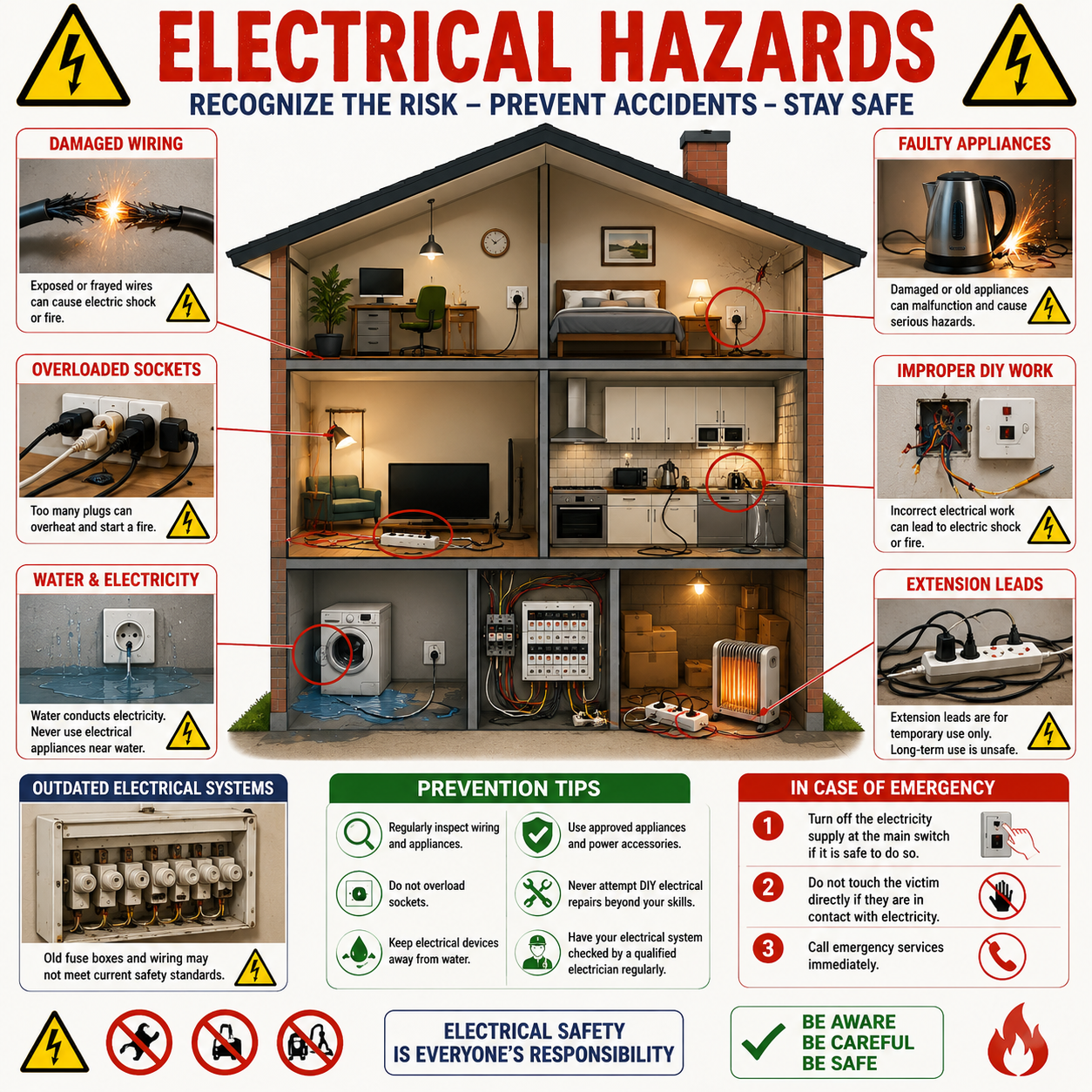
Electrical Hazards
Electricity is essential in every modern home across the United Kingdom. It powers lighting, heating, cooking, and almost every appliance we rely on daily. However, when electrical systems are poorly maintained or incorrectly used, they can become extremely dangerous. Fires, shocks, and serious injuries can occur if basic safety rules are ignored.
Electrical Hazards Awareness is therefore important for homeowners, tenants, landlords, and employers. Understanding risks and how to prevent them can save lives and protect property. This article answers the most common questions about electrical safety in UK homes in a simple and practical way.
Why Electrical Hazards Awareness is Important in UK Homes
Electrical Hazards Awareness helps people understand how everyday electricity use can become dangerous without proper care. In many UK homes, accidents happen due to overloaded sockets, old wiring, or unsafe appliances.
Improving awareness allows residents to:
- Reduce fire risks
- Prevent electric shocks
- Identify early warning signs
- Follow UK safety regulations correctly
In short, awareness is the first step toward preventing electrical accidents before they happen.
What are the most common electrical hazards in UK homes?
The most common electrical hazards in UK homes include faulty wiring, overloaded sockets, damaged cables, and outdated fuse boxes. Many older properties still use wiring systems that were not designed for modern electricity demands.
Extension leads used incorrectly are another major risk. Plugging too many devices into one socket can cause overheating and fire hazards.
Water exposure in kitchens and bathrooms also increases danger, especially when electrical devices are used near sinks or wet surfaces.
How can Electrical Hazards starts fires in UK households?
Electrical fires usually start when wiring or appliances overheat. This happens when circuits carry more electricity than they are designed for.
Common causes include:
- Overloaded sockets
- Faulty appliances
- Damaged insulation on wires
- Leaving heaters or irons unattended
When wires overheat, surrounding materials such as wood, curtains, or furniture can catch fire quickly. This is why regular maintenance is essential.
What are the legal electrical safety requirements in the UK?
In the UK, electrical safety is controlled by laws such as:
- Electricity at Work Regulations 1989
- Building Regulations (Part P)
These rules require electrical systems to be safe and properly installed. Landlords must ensure that rental properties meet safety standards and carry out regular inspections.
Electrical work must follow approved standards and, in many cases, be completed by qualified electricians registered with bodies such as NAPIT.
How often should electrical installations be inspected in UK properties?
In most UK homes, electrical installations should be inspected every 10 years. Rental properties require inspections every 5 years or when tenants change.
These inspections help identify:
- Hidden wiring faults
- Overloaded circuits
- Unsafe electrical systems
Older homes may require more frequent checks due to aging infrastructure.
What is an EICR and why is it important in the UK?
It identifies:
- Faulty wiring
- Wear and tear
- Safety risks
The report classifies issues based on severity and recommends repairs if needed. For landlords, it is a legal requirement in many cases.
Who is responsible for electrical safety in rented UK properties?
In rental homes, landlords are responsible for ensuring electrical safety. They must:
- Arrange regular EICR inspections
- Repair faulty systems
- Maintain safe installations
Tenants must also report issues such as flickering lights, burning smells, or faulty sockets as soon as they notice them.
What are the signs of faulty wiring in UK homes?
Faulty wiring often shows warning signs, including:
- Flickering or dimming lights
- Burning smells near sockets
- Buzzing sounds from outlets
- Frequent tripping of circuit breakers
If sockets feel warm or discoloured, this may indicate a serious problem that requires urgent attention.
What should I do if I get an electric shock in the UK?
If someone receives an electric shock:
- Switch off the power source if safe
- Do not touch the person directly if they are still in contact with electricity
- Call emergency services immediately if needed
Even mild shocks should be checked by a medical professional, as internal injuries may not be visible.
Are old fuse boxes still safe in UK houses?
Old fuse boxes are less safe than modern consumer units. They often lack RCD protection, which is designed to prevent electric shocks and fires.
Upgrading to a modern system improves safety and reduces risks significantly in older UK homes.
How dangerous are overloaded sockets in UK homes?
Overloaded sockets are one of the leading causes of electrical fires in the UK. They happen when too many devices are connected to a single socket.
High-power appliances like kettles and heaters should always be used in separate sockets. Overloading increases heat buildup and fire risk.
What UK regulations apply to DIY electrical work?
DIY electrical work is limited in the UK. Minor tasks may be allowed, but major installations must be completed by qualified electricians.
Notifiable work must follow Building Regulations and often requires certification. Poor DIY work can lead to serious safety hazards.
When should a UK homeowner call a qualified electrician?
A qualified electrician should be called if:
- You notice burning smells
- Sockets spark or feel hot
- Breakers trip frequently
- Lights flicker regularly
Professional help is always safer than attempting repairs yourself.
What are the risks of using non-compliant electrical appliances in the UK?
Non-compliant appliances may not meet UK safety standards. This increases risks such as:
- Electric shock
- Fire hazards
- Appliance failure
Always purchase appliances from trusted UK retailers.
How can water increase electrical hazards in UK bathrooms and kitchens?
Water conducts electricity, making it extremely dangerous near electrical systems. Wet hands, leaks, or spills can increase shock risk.
Bathrooms and kitchens must have safety features like RCD protection to reduce danger.
What is the UK standard for electrical safety certificates?
Electrical safety certificates confirm that installations meet UK standards. They are issued after inspections or new electrical work.
These certificates are important for landlords to prove compliance with safety laws.
How do RCDs improve electrical safety in UK homes?
Residual Current Devices (RCDs) automatically cut power when a fault is detected. They react quickly to reduce the risk of shocks and fires.
RCDs are now a standard safety requirement in modern UK electrical systems.
What are the dangers of damaged electrical cables in UK properties?
Damaged cables expose live wires, which can cause electric shocks or fires. Cables may be damaged by wear, pressure, or pets.
Any damaged cable should be replaced immediately by a qualified electrician.
Are extension leads safe for long-term use in UK households?
Extension leads are designed for temporary use only. Long-term use can cause overheating and increase fire risk.
If extension leads are constantly needed, additional sockets should be installed.
What electrical safety rules apply to UK workplaces?
UK workplaces must follow strict safety laws, including the Electricity at Work Regulations 1989. Employers must ensure safe systems and regular inspections.
Portable Appliance Testing (PAT) is commonly used to maintain safety standards.
How can landlords ensure electrical safety in UK rental homes?
Landlords must:
- Arrange regular inspections
- Fix electrical faults
- Maintain safe wiring systems
Hiring qualified electricians ensures compliance with UK laws and tenant safety.
What are the penalties for ignoring electrical safety regulations in the UK?
Ignoring electrical safety laws can result in:
- Heavy fines
- Legal action
- Imprisonment in severe cases
Landlords may also lose rental rights and insurance coverage.
How do you identify an electrical overload in UK circuits?
Signs of overload include:
- Flickering lights
- Warm sockets
- Frequent breaker trips
Reducing electrical load helps prevent these issues.
What should UK residents do during an electrical emergency?
In an emergency:
- Switch off the main power if safe
- Avoid touching damaged wires
- Call emergency services if fire or danger occurs
Are portable heaters a fire risk in UK homes?
Yes, portable heaters can be risky if misused. They can overheat, overload sockets, or ignite nearby materials.
They should always be used carefully and never left unattended.
What are the most common causes of Electrical Hazards in the UK?
The most common causes include:
- Faulty wiring
- Overloaded sockets
- Damaged appliances
- Poor maintenance
Regular inspections and safe usage significantly reduce risks.
What does Electrical Hazards Awareness mean and how does it help prevent risks?
Electrical Hazards Awareness is the understanding of dangers linked to electricity in homes, workplaces, and public buildings. It helps people recognize unsafe conditions such as damaged wiring, overloaded sockets, and faulty appliances before they cause harm. Good Electrical Hazards Awareness reduces accidents, prevents fires, and improves overall safety in daily life.
In the UK, improving Electrical Hazards Awareness is especially important because many homes still contain older electrical systems that may not meet modern safety demands. By increasing Electrical Hazards Awareness, individuals can identify risks early, follow safety regulations, and take action such as contacting a qualified electrician when needed.
Final Thoughts on Electrical Hazards Awareness
Improving Electrical Hazards Awareness is essential for preventing accidents in UK homes and workplaces. Most electrical dangers are avoidable with proper maintenance, safe usage, and regular inspections.
By following UK safety regulations and acting on early warning signs, homeowners and landlords can significantly reduce risks and protect lives and property.