Category: categorized

  • Electrical Hazards Awareness in UK Homes: Complete Safety Guide

    Electrical Hazards Awareness in UK Homes: Complete Safety Guide

    Electrical Hazards

    Electricity is essential in every modern home across the United Kingdom. It powers lighting, heating, cooking, and almost every appliance we rely on daily. However, when electrical systems are poorly maintained or incorrectly used, they can become extremely dangerous. Fires, shocks, and serious injuries can occur if basic safety rules are ignored.

    Electrical Hazards Awareness is therefore important for homeowners, tenants, landlords, and employers. Understanding risks and how to prevent them can save lives and protect property. This article answers the most common questions about electrical safety in UK homes in a simple and practical way.


    Why Electrical Hazards Awareness is Important in UK Homes

    Electrical Hazards Awareness helps people understand how everyday electricity use can become dangerous without proper care. In many UK homes, accidents happen due to overloaded sockets, old wiring, or unsafe appliances.

    Improving awareness allows residents to:

    • Reduce fire risks
    • Prevent electric shocks
    • Identify early warning signs
    • Follow UK safety regulations correctly

    In short, awareness is the first step toward preventing electrical accidents before they happen.


    What are the most common electrical hazards in UK homes?

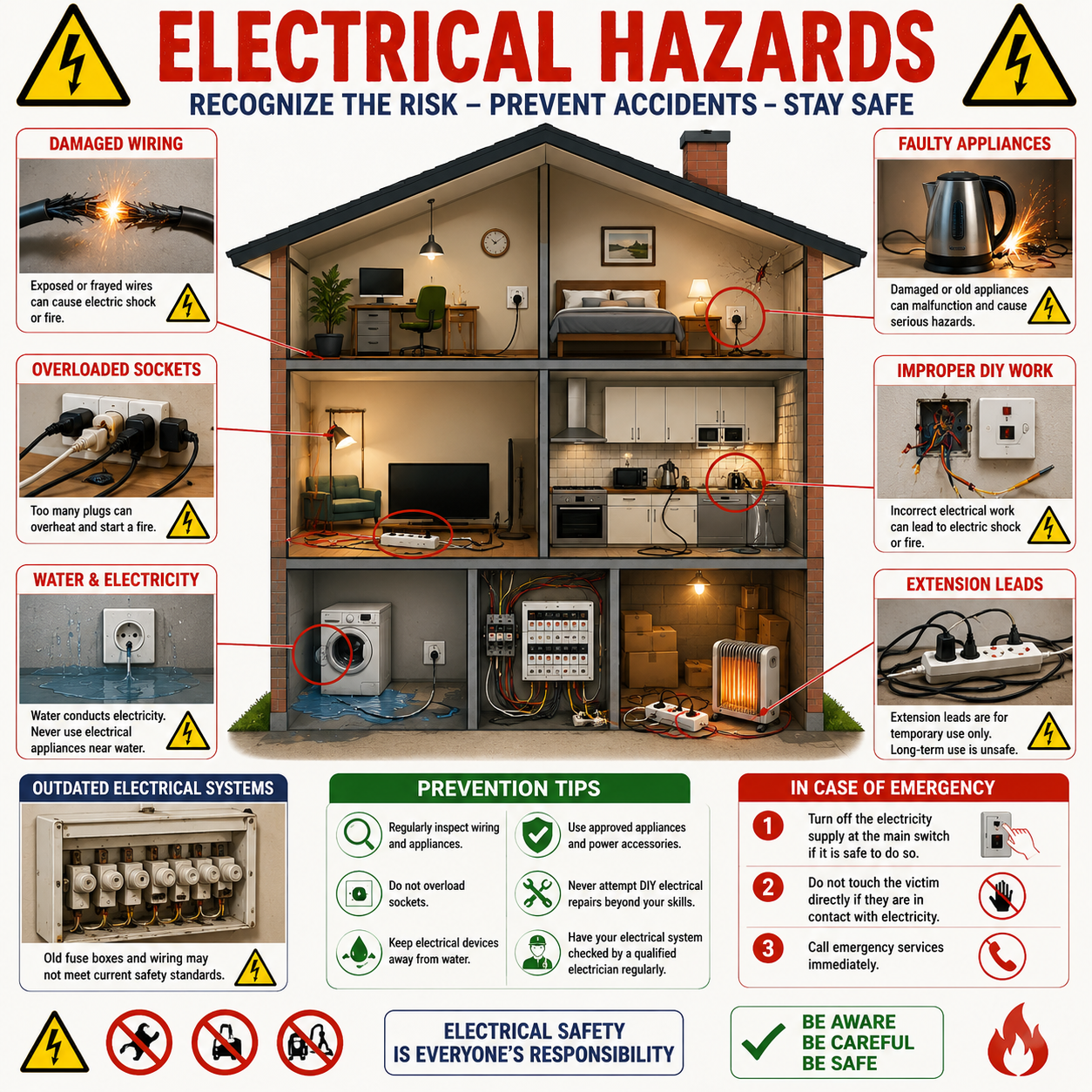
    The most common electrical hazards in UK homes include faulty wiring, overloaded sockets, damaged cables, and outdated fuse boxes. Many older properties still use wiring systems that were not designed for modern electricity demands.

    Extension leads used incorrectly are another major risk. Plugging too many devices into one socket can cause overheating and fire hazards.

    Water exposure in kitchens and bathrooms also increases danger, especially when electrical devices are used near sinks or wet surfaces.


    How can Electrical Hazards starts fires in UK households?

    Electrical fires usually start when wiring or appliances overheat. This happens when circuits carry more electricity than they are designed for.

    Common causes include:

    • Overloaded sockets
    • Faulty appliances
    • Damaged insulation on wires
    • Leaving heaters or irons unattended

    When wires overheat, surrounding materials such as wood, curtains, or furniture can catch fire quickly. This is why regular maintenance is essential.


    What are the legal electrical safety requirements in the UK?

    In the UK, electrical safety is controlled by laws such as:

    • Electricity at Work Regulations 1989
    • Building Regulations (Part P)

    These rules require electrical systems to be safe and properly installed. Landlords must ensure that rental properties meet safety standards and carry out regular inspections.

    Electrical work must follow approved standards and, in many cases, be completed by qualified electricians registered with bodies such as NAPIT.


    How often should electrical installations be inspected in UK properties?

    In most UK homes, electrical installations should be inspected every 10 years. Rental properties require inspections every 5 years or when tenants change.

    These inspections help identify:

    • Hidden wiring faults
    • Overloaded circuits
    • Unsafe electrical systems

    Older homes may require more frequent checks due to aging infrastructure.


    What is an EICR and why is it important in the UK?

    An Electrical Installation Condition Report (EICR) is a formal inspection that checks the safety of electrical systems in a property.

    It identifies:

    • Faulty wiring
    • Wear and tear
    • Safety risks

    The report classifies issues based on severity and recommends repairs if needed. For landlords, it is a legal requirement in many cases.


    Who is responsible for electrical safety in rented UK properties?

    In rental homes, landlords are responsible for ensuring electrical safety. They must:

    • Arrange regular EICR inspections
    • Repair faulty systems
    • Maintain safe installations

    Tenants must also report issues such as flickering lights, burning smells, or faulty sockets as soon as they notice them.


    What are the signs of faulty wiring in UK homes?

    Faulty wiring often shows warning signs, including:

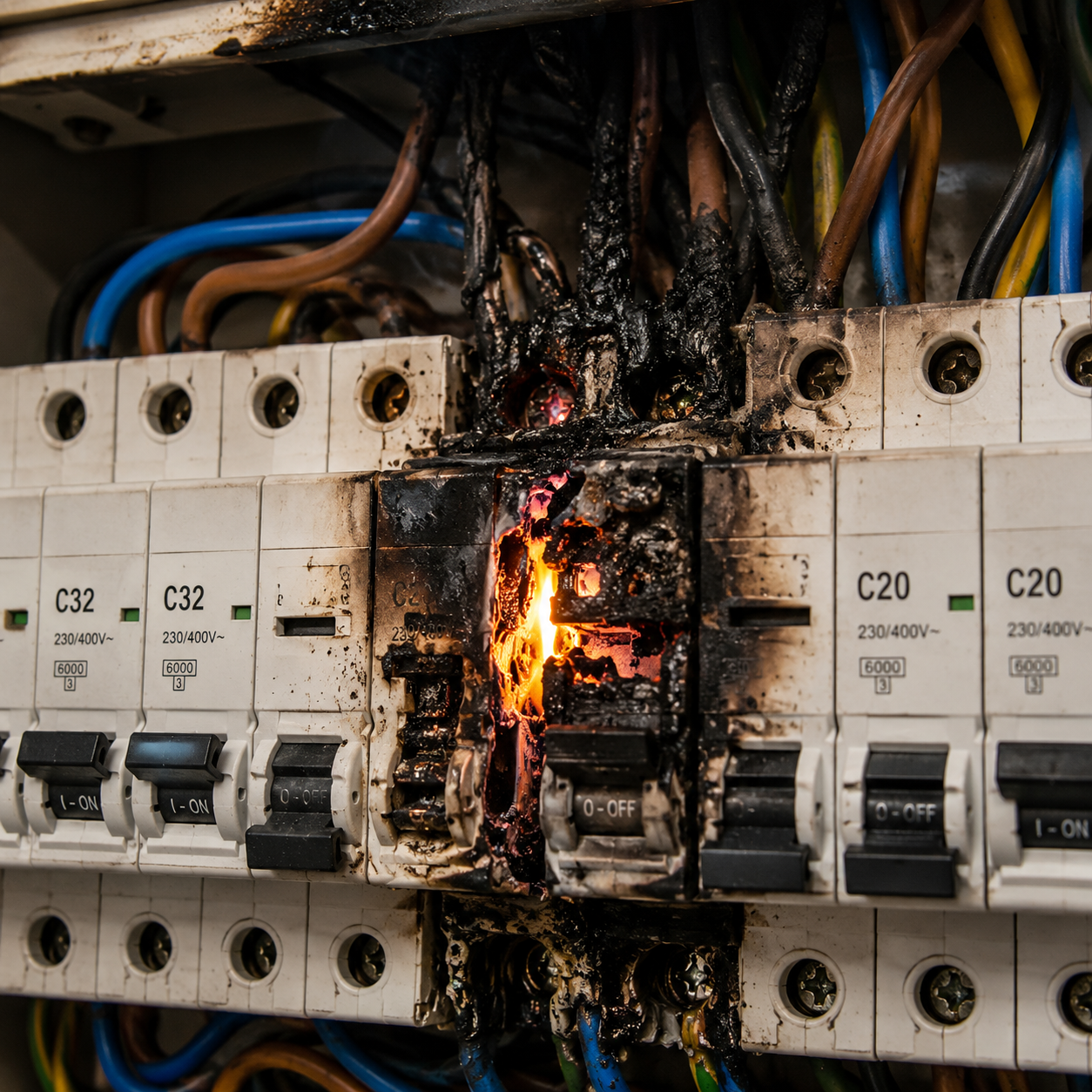
    If sockets feel warm or discoloured, this may indicate a serious problem that requires urgent attention.


    What should I do if I get an electric shock in the UK?

    If someone receives an electric shock:

    1. Switch off the power source if safe
    2. Do not touch the person directly if they are still in contact with electricity
    3. Call emergency services immediately if needed

    Even mild shocks should be checked by a medical professional, as internal injuries may not be visible.


    Are old fuse boxes still safe in UK houses?

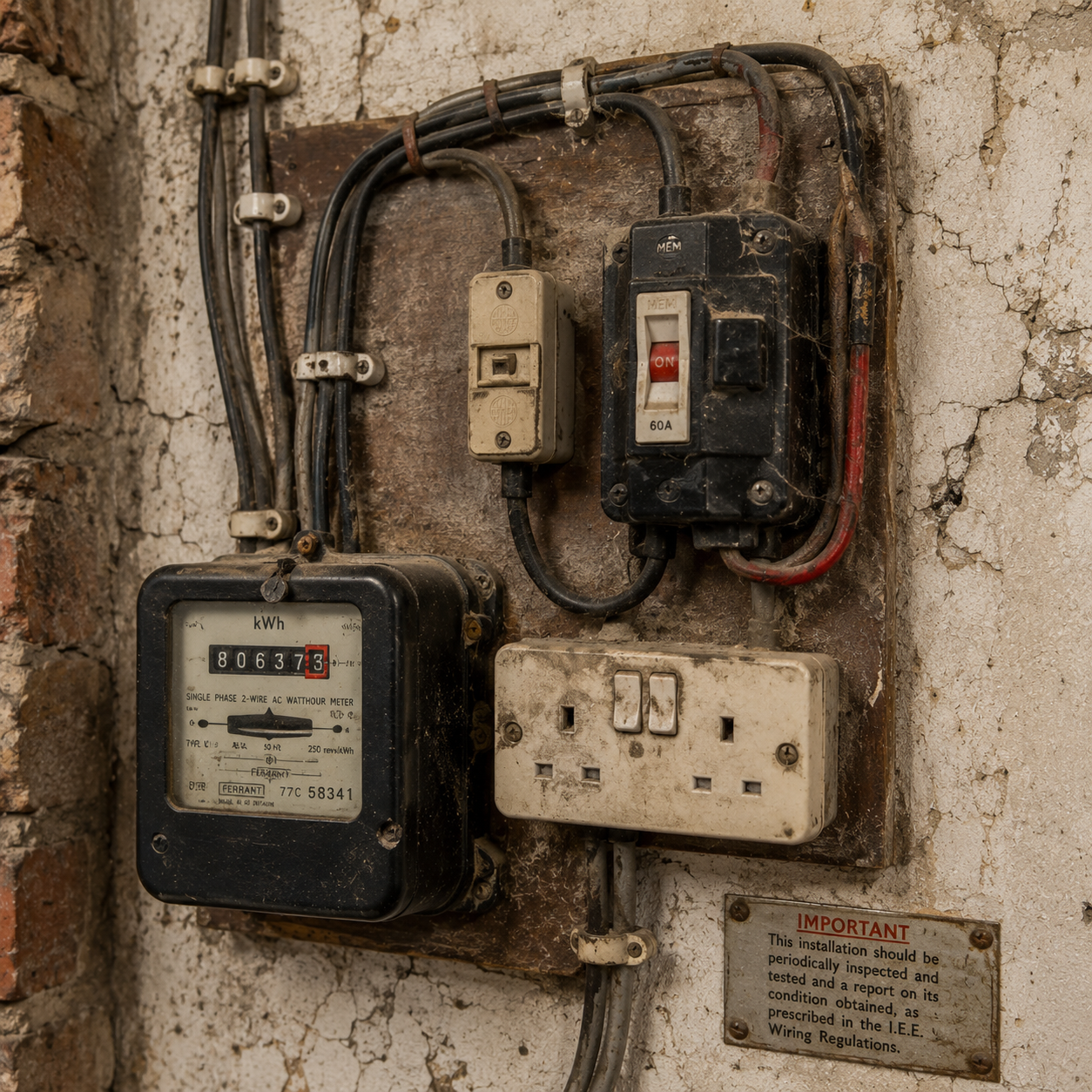
    Old fuse boxes are less safe than modern consumer units. They often lack RCD protection, which is designed to prevent electric shocks and fires.

    Upgrading to a modern system improves safety and reduces risks significantly in older UK homes.


    How dangerous are overloaded sockets in UK homes?

    Overloaded sockets are one of the leading causes of electrical fires in the UK. They happen when too many devices are connected to a single socket.

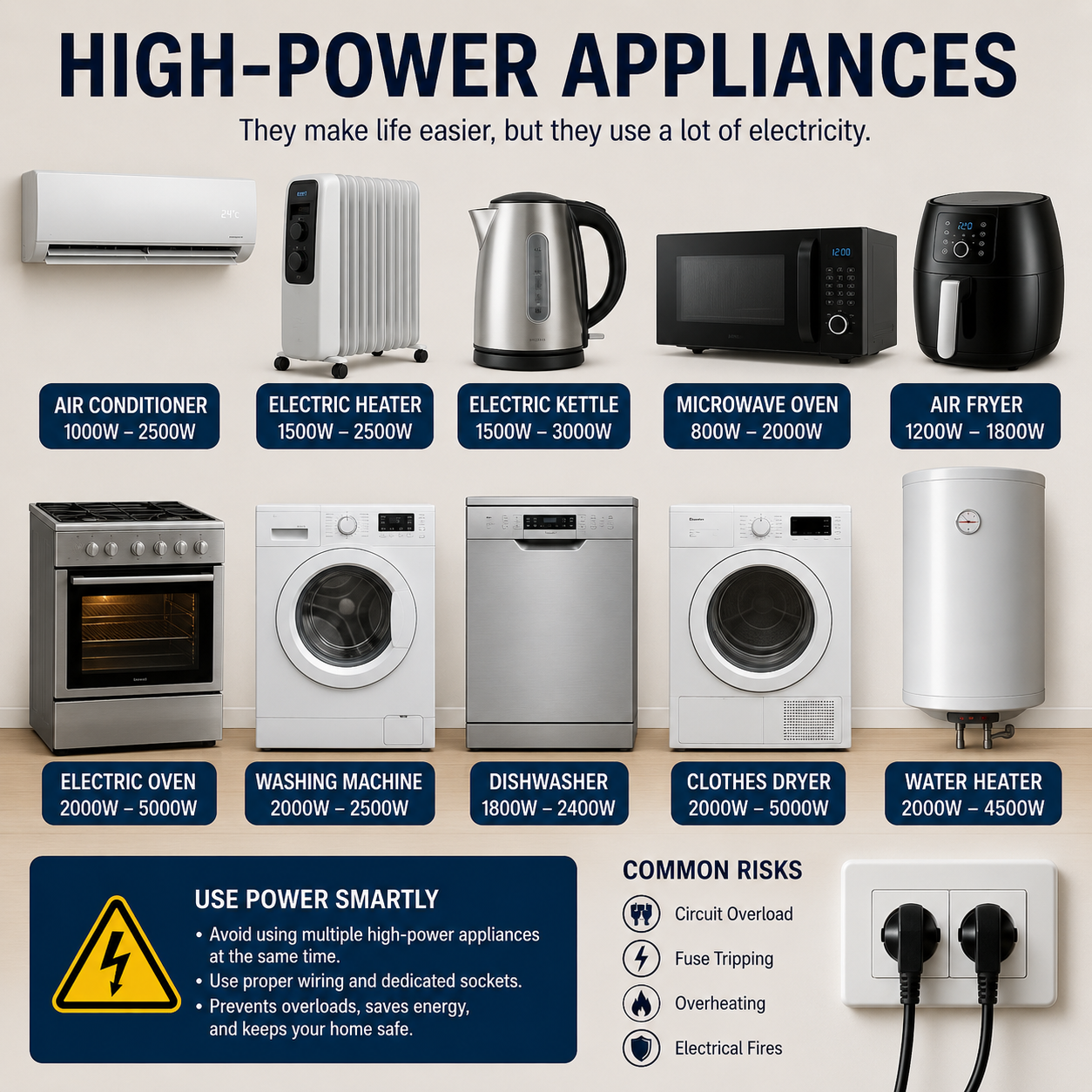
    High-power appliances like kettles and heaters should always be used in separate sockets. Overloading increases heat buildup and fire risk.


    What UK regulations apply to DIY electrical work?

    DIY electrical work is limited in the UK. Minor tasks may be allowed, but major installations must be completed by qualified electricians.

    Notifiable work must follow Building Regulations and often requires certification. Poor DIY work can lead to serious safety hazards.


    When should a UK homeowner call a qualified electrician?

    A qualified electrician should be called if:

    • You notice burning smells
    • Sockets spark or feel hot
    • Breakers trip frequently
    • Lights flicker regularly

    Professional help is always safer than attempting repairs yourself.


    What are the risks of using non-compliant electrical appliances in the UK?

    Non-compliant appliances may not meet UK safety standards. This increases risks such as:

    • Electric shock
    • Fire hazards
    • Appliance failure

    Always purchase appliances from trusted UK retailers.


    How can water increase electrical hazards in UK bathrooms and kitchens?

    Water conducts electricity, making it extremely dangerous near electrical systems. Wet hands, leaks, or spills can increase shock risk.

    Bathrooms and kitchens must have safety features like RCD protection to reduce danger.


    What is the UK standard for electrical safety certificates?

    Electrical safety certificates confirm that installations meet UK standards. They are issued after inspections or new electrical work.

    These certificates are important for landlords to prove compliance with safety laws.


    How do RCDs improve electrical safety in UK homes?

    Residual Current Devices (RCDs) automatically cut power when a fault is detected. They react quickly to reduce the risk of shocks and fires.

    RCDs are now a standard safety requirement in modern UK electrical systems.


    What are the dangers of damaged electrical cables in UK properties?

    Damaged cables expose live wires, which can cause electric shocks or fires. Cables may be damaged by wear, pressure, or pets.

    Any damaged cable should be replaced immediately by a qualified electrician.


    Are extension leads safe for long-term use in UK households?

    Extension leads are designed for temporary use only. Long-term use can cause overheating and increase fire risk.

    If extension leads are constantly needed, additional sockets should be installed.


    What electrical safety rules apply to UK workplaces?

    UK workplaces must follow strict safety laws, including the Electricity at Work Regulations 1989. Employers must ensure safe systems and regular inspections.

    Portable Appliance Testing (PAT) is commonly used to maintain safety standards.


    How can landlords ensure electrical safety in UK rental homes?

    Landlords must:

    • Arrange regular inspections
    • Fix electrical faults
    • Maintain safe wiring systems

    Hiring qualified electricians ensures compliance with UK laws and tenant safety.


    What are the penalties for ignoring electrical safety regulations in the UK?

    Ignoring electrical safety laws can result in:

    • Heavy fines
    • Legal action
    • Imprisonment in severe cases

    Landlords may also lose rental rights and insurance coverage.


    How do you identify an electrical overload in UK circuits?

    Signs of overload include:

    • Flickering lights
    • Warm sockets
    • Frequent breaker trips

    Reducing electrical load helps prevent these issues.


    What should UK residents do during an electrical emergency?

    In an emergency:

    • Switch off the main power if safe
    • Avoid touching damaged wires
    • Call emergency services if fire or danger occurs

    Are portable heaters a fire risk in UK homes?

    Yes, portable heaters can be risky if misused. They can overheat, overload sockets, or ignite nearby materials.

    They should always be used carefully and never left unattended.


    What are the most common causes of Electrical Hazards in the UK?

    The most common causes include:

    • Faulty wiring
    • Overloaded sockets
    • Damaged appliances
    • Poor maintenance

    Regular inspections and safe usage significantly reduce risks.

    What does Electrical Hazards Awareness mean and how does it help prevent risks?

    Electrical Hazards Awareness is the understanding of dangers linked to electricity in homes, workplaces, and public buildings. It helps people recognize unsafe conditions such as damaged wiring, overloaded sockets, and faulty appliances before they cause harm. Good Electrical Hazards Awareness reduces accidents, prevents fires, and improves overall safety in daily life.

    In the UK, improving Electrical Hazards Awareness is especially important because many homes still contain older electrical systems that may not meet modern safety demands. By increasing Electrical Hazards Awareness, individuals can identify risks early, follow safety regulations, and take action such as contacting a qualified electrician when needed.

    Final Thoughts on Electrical Hazards Awareness

    Improving Electrical Hazards Awareness is essential for preventing accidents in UK homes and workplaces. Most electrical dangers are avoidable with proper maintenance, safe usage, and regular inspections.

    By following UK safety regulations and acting on early warning signs, homeowners and landlords can significantly reduce risks and protect lives and property.
  • Smart Appliance Sync Error: Complete Troubleshooting Guide for Connectivity Issues

    Smart Appliance Sync Error: Complete Troubleshooting Guide for Connectivity Issues

    smart appliance sync error :Smart homes are becoming more common in modern households, but along with convenience comes frustration. One of the most reported problems users face today is the smart appliance sync error, where devices fail to connect, disconnect frequently, or stop communicating with apps and cloud services.

    From smart washing machines to Wi-Fi enabled ovens and refrigerators, these appliances depend heavily on stable internet, proper router settings, and software compatibility. When something goes wrong, the entire experience breaks down.

    This guide explains the most common smart appliance connectivity problems in a simple, user-friendly way. Each section answers a frequently asked question so you can quickly understand the cause and fix the issue without technical confusion.


    Why does my smart appliance keep disconnecting from Wi-Fi?

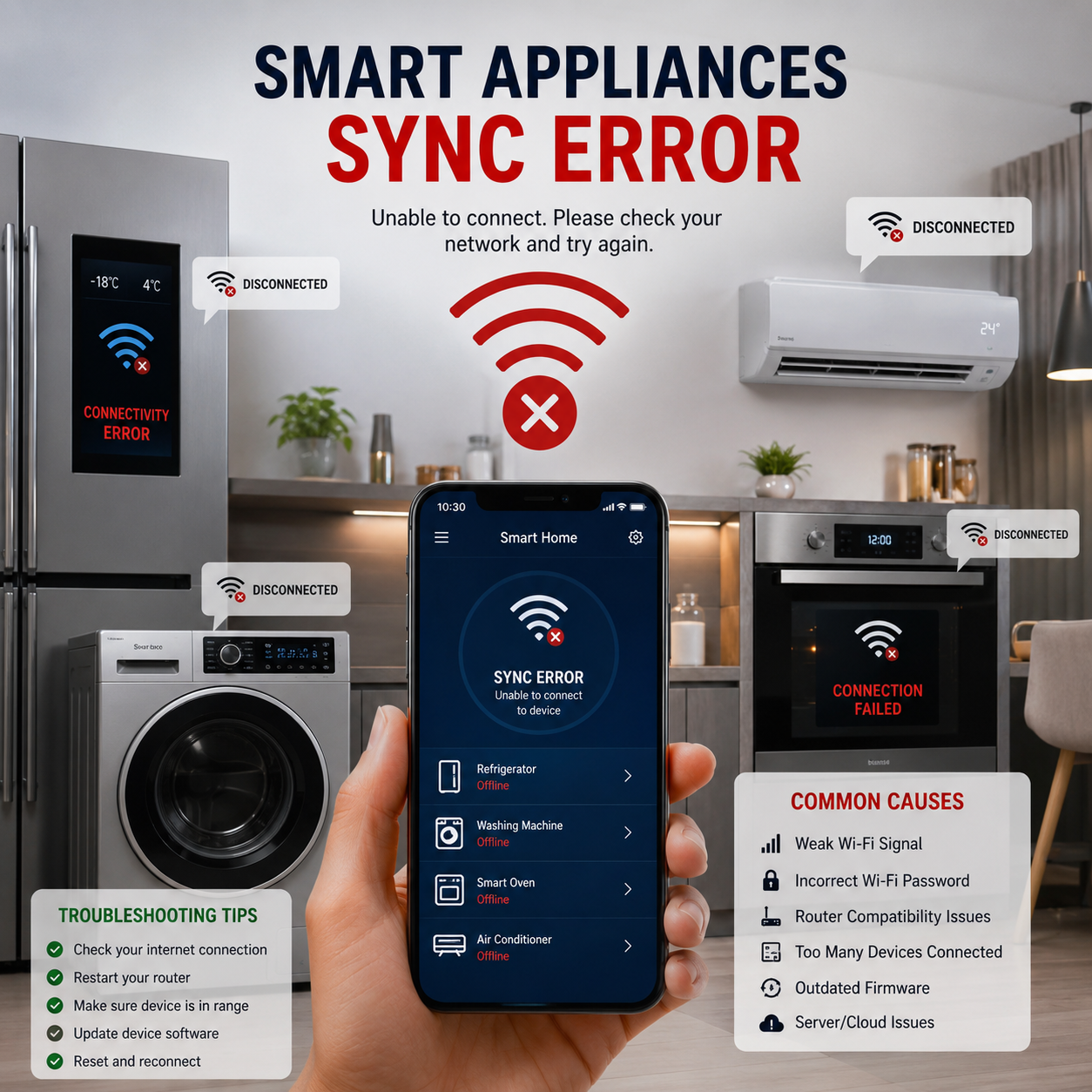
    Frequent Wi-Fi disconnections are one of the most common signs of a smart appliance sync error. This usually happens due to weak signal strength, router overload, or interference from other devices.

    Smart appliances often stay connected to 2.4GHz networks, which are more stable but slower. If your router is far away or blocked by walls, the signal drops easily.

    Another reason is network congestion. If many devices are connected at the same time, the router may struggle to maintain stable connections for all devices.

    To fix this:

    • Move router closer to the appliance
    • Reduce number of connected devices
    • Restart router regularly
    • Use a Wi-Fi extender if needed

    Why can’t my smart appliance find my Wi-Fi network?

    If your appliance cannot detect Wi-Fi, it may be due to hidden SSID settings, incompatible frequency bands, or outdated firmware.

    Many smart devices only support 2.4GHz networks, not 5GHz. If your router is set to broadcast only 5GHz, the appliance won’t detect it.

    Another common issue is router security settings like WPA3, which older smart appliances may not support.

    Solutions include:

    • Enable 2.4GHz band on router
    • Rename Wi-Fi network for easy detection
    • Update appliance firmware
    • Disable hidden network mode

    This type of issue is often misinterpreted as a smart appliance sync error, but it is usually a compatibility mismatch.


    Why does my smart washing machine fail to connect during setup?

    Smart washing machines often fail during setup due to unstable pairing between the app and device. This is a classic early-stage smart appliance sync error.

    During setup, the machine needs:

    • Stable Wi-Fi signal
    • Bluetooth activation (in many models)
    • Correct app permissions

    If any step fails, the setup process breaks.

    Common fixes:

    • Reset appliance network settings
    • Keep phone close to appliance
    • Disable mobile data during setup
    • Reinstall manufacturer app

    Why does my smart fridge lose internet connection frequently?

    Smart refrigerators stay connected 24/7, so even small interruptions cause disconnections.

    Common causes include:

    • Weak Wi-Fi signal in kitchen area
    • Interference from microwave ovens
    • Router overheating or overload

    Because fridges are stationary, they are often placed far from routers, making signal stability poor.

    To improve connection:

    • Use mesh Wi-Fi system
    • Avoid placing router behind walls
    • Keep firmware updated

    Frequent drops often appear as a smart appliance sync error in apps.


    Why is my smart appliance app not detecting my device its a smart appliance sync error?

    yes its a smart appliance sync error :When the app cannot detect your appliance, the issue is usually communication failure between phone and device.

    This may happen due to:

    • Bluetooth disabled
    • App not updated
    • Phone connected to wrong network

    Sometimes, background restrictions on smartphones block device discovery.

    Fix steps:

    • Enable Bluetooth and location services
    • Ensure both devices use same Wi-Fi
    • Restart app and appliance
    • Clear app cache

    Why does my smart appliance only connect to 2.4GHz but not 5GHz Wi-Fi?

    Most smart appliances are designed to support only 2.4GHz Wi-Fi because it has better range and wall penetration.

    5GHz offers speed but lower range, making it unsuitable for many appliances.

    If your router combines both bands under one name (band steering), the appliance may fail to connect correctly.

    Solutions:

    • Separate 2.4GHz and 5GHz networks
    • Connect appliance to 2.4GHz only
    • Check manufacturer compatibility list

    This limitation often leads to a recurring smart appliance sync error in dual-band routers.


    Why does my smart device fail to reconnect after a power cut?

    After a power outage, smart devices may not reconnect automatically due to router reboot delays or network mismatch.

    When power returns:

    • Router may take time to stabilize
    • Device may try old network session

    Fix:

    • Restart router and appliance
    • Reconnect using app
    • Check DHCP settings

    This issue is often temporary but feels like a serious smart appliance sync error to users.


    Why does my smart appliance show β€œoffline” even when Wi-Fi is working?

    This happens when the device is connected to Wi-Fi but not connected to the cloud server.

    Reasons include:

    • Server downtime
    • Firewall blocking communication
    • Expired session tokens

    Even if Wi-Fi is active, cloud sync failure causes offline status.

    Fix:

    • Restart router
    • Update firmware
    • Check manufacturer server status

    Why is my smart oven not pairing with my phone?

    Smart ovens require precise pairing steps. Failure usually happens due to skipped setup stages.

    Common issues:

    • Bluetooth pairing not enabled
    • App permissions denied
    • Outdated app version

    Fix:

    • Reset oven network settings
    • Keep phone within 1–2 meters
    • Follow pairing sequence carefully

    Why does my smart appliance disconnect when the router is far away?

    Distance is one of the biggest causes of connectivity issues.

    Wi-Fi signals weaken through:

    • Thick walls
    • Floors
    • Metal appliances

    Solution:

    • Use Wi-Fi extender or mesh system
    • Move router centrally
    • Avoid placing router near electrical appliances

    This is one of the most physical causes of smart appliance sync error.


    Why does my smart appliance stop working after a router change?

    When you change routers, the network name and password usually change too.

    Smart devices still try to connect to old credentials, causing failure.

    Fix:

    • Reset device network settings
    • Reconnect via app
    • Update saved Wi-Fi credentials

    Why is my smart appliance not compatible with my new Wi-Fi router?

    New routers may use advanced security protocols or settings that older appliances don’t support.

    Common issues:

    • WPA3 security mode
    • Disabled 2.4GHz band
    • IPv6-only settings

    To fix:

    • Switch security to WPA2
    • Enable legacy mode if available
    • Check compatibility guide

    You can also consult safety and installation guidance from organizations like NAPIT Official Site for proper electrical and smart device installation standards.


    Why does my smart device fail to update firmware due to connectivity issues?

    Firmware updates require stable internet. If connection drops, updates fail midway.

    This is often a hidden smart appliance sync error.

    Fix:

    • Use strong Wi-Fi signal
    • Avoid peak usage time
    • Keep device plugged in during update

    Why does my smart appliance app keep crashing during setup?

    App crashes usually come from:

    • Low phone storage
    • Outdated software
    • Buggy app versions

    Fix:

    • Update app
    • Restart phone
    • Clear cache

    Why does my smart appliance require Bluetooth and Wi-Fi at the same time?

    Bluetooth is used for initial pairing, while Wi-Fi is used for cloud control.

    Both are required during setup in many devices.

    If either fails, setup breaks and leads to a smart appliance sync error.


    Why is my smart appliance not connecting after a software update?

    Updates can reset network settings or introduce bugs.

    Fix:

    • Restart appliance
    • Reconnect Wi-Fi
    • Check update logs

    Why does my smart device fail to pair with multiple smartphones?

    Most smart appliances allow only one primary device connection for security.

    Fix:

    • Remove previous pairings
    • Reset device
    • Reconnect new phone

    Why does my smart appliance show connection error even with strong signal?

    Strong signal does not always mean stable internet.

    Possible causes:

    • DNS issues
    • Router firewall restrictions
    • Cloud server failure

    Why is my smart appliance not responding to remote commands?

    This happens when cloud sync fails.

    Fix:

    • Check internet connection
    • Restart app
    • Re-login to account

    Why does my smart appliance disconnect when too many devices are connected to Wi-Fi?

    Routers have limits on connected devices.

    Fix:

    • Upgrade router
    • Reduce connected devices
    • Use mesh network

    Why does my smart appliance fail to connect in dual-band routers?

    Dual-band routers sometimes confuse devices using band steering.

    Fix:

    • Separate SSIDs
    • Force 2.4GHz connection

    Why is my smart appliance stuck on β€œconnecting” status?

    This is a classic smart appliance sync error caused by incomplete handshake between app and device.

    Fix:

    • Restart both devices
    • Reset network settings
    • Try setup again

    Why does my smart device require resetting again and again for Wi-Fi setup?

    Repeated resets indicate:

    • Firmware instability
    • Weak router signal
    • App misconfiguration

    Fix:

    • Update firmware
    • Improve signal strength

    Why does my smart appliance lose connection when switching networks?

    smart appliance sync error is a common issue its happening because of

    Devices do not automatically switch networks unless reconfigured.

    Fix:

    • Forget old network
    • Reconnect manually

    Why is my smart appliance not syncing with cloud services?

    Cloud sync failures happen due to:

    • Server downtime
    • Internet restrictions
    • Outdated firmware

    Fix:

    • Check server status
    • Update device software
    • Restart router

    Final Thoughts

    Most smart home problems are not hardware failures but connectivity and configuration issues. The smart appliance sync error is often triggered by simple causes like weak Wi-Fi, router settings, or outdated firmware.

    By understanding how smart appliances communicate through Wi-Fi, Bluetooth, and cloud services, users can fix most problems without technical help. However, for persistent electrical or installation-related issues, always follow certified guidelines and consult trusted resources like NAPIT Official Site for safe and compliant installation practices.

    With the right setup and maintenance, smart appliances can deliver smooth, reliable performance and truly make modern living more convenient.

    https://commercial-electrician-manchester.co.uk

  • Consumer Unit Fault: Complete UK Homeowner Guide (2026)

    Consumer Unit Fault: Complete UK Homeowner Guide (2026)

    Electrical problems in the home can be confusing, especially when they involve the main power system. One of the most common issues in UK houses is a consumer unit fault. This guide explains everything in simple language so any homeowner can understand what is happening, why it happens, and what to do next.


    What is a Consumer Unit Fault?

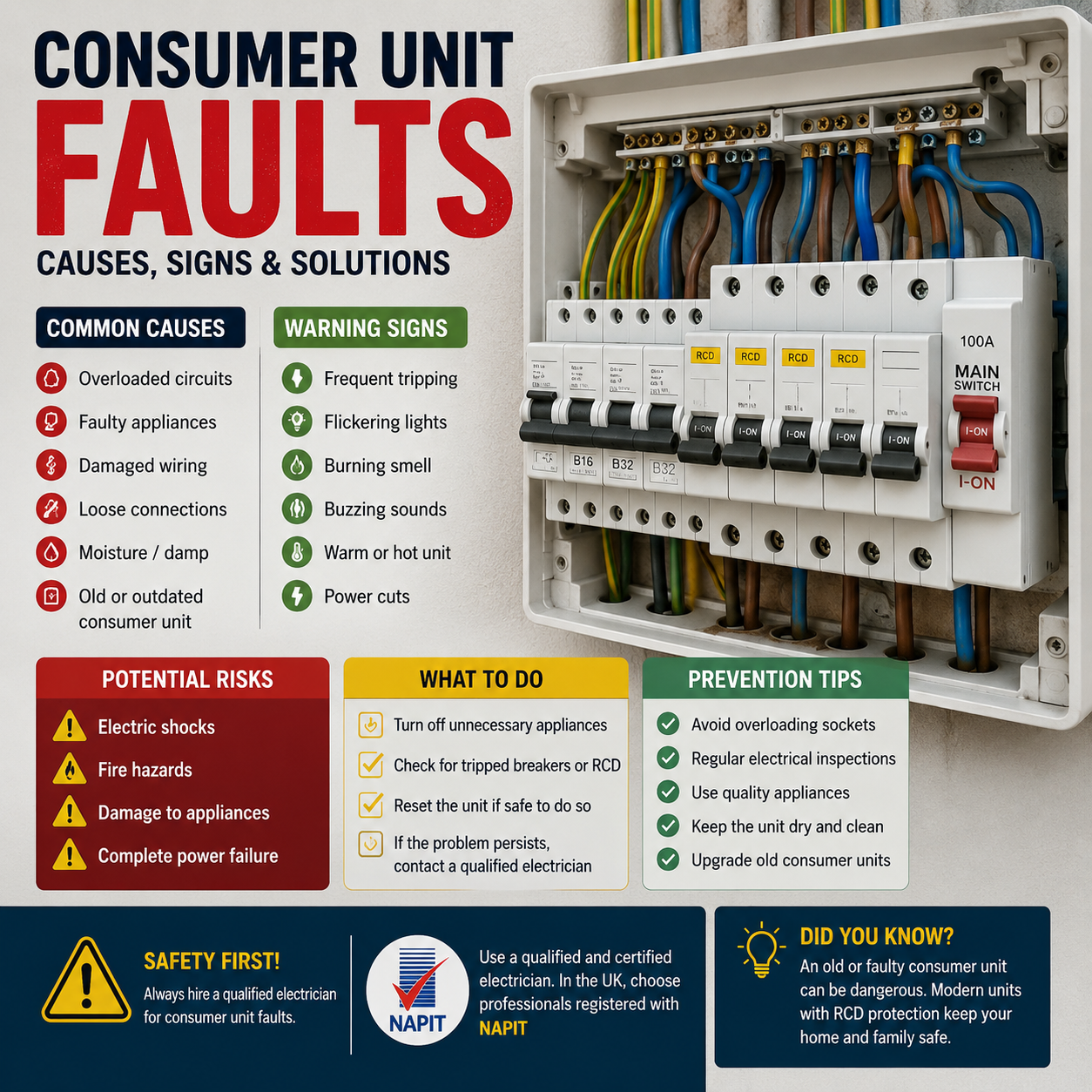
    A consumer unit (also known as a fuse box) is the main electrical control point in your home. It sends electricity to lights, sockets, and appliances while also protecting your home from electrical hazards.

    A consumer unit fault occurs when the system detects something unsafe in the electrical network. This could be due to overload, wiring issues, faulty appliances, or leakage of current. When this happens, the system automatically shuts off electricity to protect people and property.

    This is not always a major breakdown. Sometimes it is simply a warning that something in your home electrical system is not working safely.


    What is a Fuse Box and How Does It Work?

    A fuse box (modern name: consumer unit) has three main protective devices:

    • MCB (Miniature Circuit Breaker) – protects against overload and short circuits
    • RCD (Residual Current Device) – protects against electric shocks
    • Main switch – controls overall power supply

    Electricity flows through these devices before reaching your home circuits. If any unsafe condition is detected, the system shuts down. This is how a consumer unit fault is often first noticed by homeowners.


    Why Does Electricity Keep Tripping?

    One of the most common complaints is frequent tripping of power. This happens because the system is designed to protect you.

    Main reasons include:

    • Too many appliances running at once
    • Faulty kettle, washing machine, or heater
    • Damaged wiring inside walls
    • Moisture in outdoor sockets
    • Overloaded extension leads

    When this happens repeatedly, it usually indicates a developing consumer unit fault that should not be ignored.


    What Are the Signs of Electrical Faults at Home?

    Homeowners often miss early warning signs. Here are the most common ones:

    • Lights flicker or dim randomly
    • Power cuts in one room only
    • Burning smell near fuse box
    • Buzzing or humming sound
    • Breakers switching off frequently
    • Sockets feel warm or discolored

    These symptoms usually point to an electrical issue, and in many cases, a consumer unit fault is the root cause.


    Is an Old Fuse Box Safe?

    Older fuse boxes are still found in many UK homes. However, they are not as safe as modern systems.

    Problems with old units:

    • No RCD protection (shock protection missing)
    • Slow response to faults
    • Outdated wiring compatibility
    • Higher fire risk

    If your home still uses an old fuse box, it is strongly recommended to upgrade, especially if you are experiencing repeated electrical issues.


    When Should You Replace Your Electrical Panel?

    A replacement is usually needed if:

    • The system is more than 20–25 years old
    • Breakers fail often
    • You experience repeated tripping
    • You are renovating your home
    • Your insurance requires modern safety standards

    Many homeowners only discover a consumer unit fault after upgrading their system and noticing long-term hidden issues.


    Why Do Lights Flicker in My Home?

    Flickering lights can be caused by:

    • Loose wiring connections
    • Faulty light bulbs or fittings
    • Voltage fluctuations
    • Overloaded circuits

    In some cases, flickering is an early sign of a deeper electrical issue linked to a consumer unit fault.


    Can Appliances Cause Electrical Tripping?

    Yes. Faulty appliances are one of the biggest causes of tripping in UK homes.

    Common culprits include:

    • Washing machines
    • Kettles
    • Microwaves
    • Electric heaters

    When an appliance has internal damage, it can trigger safety systems and lead to a consumer unit fault response.


    Difference Between Old and Modern Fuse Boxes

    Modern consumer units are much safer and more advanced.

    Feature Old Fuse Box Modern Consumer Unit
    Safety Basic Advanced RCD protection
    Speed Slow reaction Fast disconnection
    Risk level Higher Lower
    Fault detection Limited Accurate

    Modern systems greatly reduce the risk of a consumer unit fault turning into a dangerous situation.


    Why Does the Breaker Keep Switching Off?

    Breakers switch off when they detect unsafe conditions such as:

    • Electrical overload
    • Short circuit
    • Faulty wiring
    • Appliance failure

    This automatic shutdown is the system protecting your home from damage or fire.


    What Does RCD Tripping Mean?

    RCD tripping means the system has detected electricity leaking somewhere it should not go.

    This can happen due to:

    • Water in sockets
    • Damaged cables
    • Faulty appliances
    • Insulation failure

    RCD protection is one of the most important safety features in preventing a serious consumer unit fault.


    Is Buzzing from Fuse Box Dangerous?

    Yes, it can be a warning sign.

    Buzzing may indicate:

    • Loose wiring connections
    • Overheating components
    • Internal electrical stress

    If ignored, it can lead to serious electrical failure.


    What Causes Burning Smell Near Electrical Panel?

    A burning smell is a serious warning sign and should never be ignored.

    Possible causes:

    • Overheating wires
    • Loose electrical connections
    • Overloaded circuits
    • Internal damage

    This is often linked with a developing consumer unit fault and requires immediate inspection.


    Can Overloaded Sockets Cause Problems?

    Yes. Overloading sockets is very common in UK homes.

    It can lead to:

    • Tripping power
    • Damaged wiring
    • Fire risk
    • Appliance failure

    Using too many high-power devices on one socket increases the risk significantly.


    How Do I Reset a Tripped System Safely?

    Follow these steps:

    1. Switch off all appliances
    2. Find the tripped switch in the consumer unit
    3. Reset the switch
    4. Turn appliances back on one by one

    If it trips again immediately, it indicates a deeper consumer unit fault.


    Is It Safe to Keep Resetting the Breaker?

    No. Repeated resetting without fixing the cause is unsafe.

    It may hide:

    • Wiring damage
    • Appliance faults
    • Overheating circuits

    Continuous tripping is a warning, not a normal condition.


    Can Electrical Faults Cause Shocks?

    Yes. Faulty wiring or damaged insulation can cause electric shocks.

    That is why RCD protection is very important in modern homes.


    What is the Cost of Replacing a Fuse Box in the UK?

    Typical costs:

    • Small repair: Β£60–£150
    • Fault diagnosis: Β£80–£120
    • Full replacement: Β£350–£800+

    Cost depends on home size and wiring condition.


    Do I Need an Electrician for Repairs?

    Yes. Electrical systems should only be handled by qualified professionals.

    In the UK, electricians registered with bodies like NAPIT ensure safe work and compliance with regulations.

    Official reference:
    NAPIT Official WebsiteNAPIT certified


    How Long Does a Consumer Unit Last?

    A typical consumer unit lasts:

    • Around 20–30 years
    • Longer if well maintained
    • Shorter if overloaded or poorly installed

    Older systems are more likely to develop a consumer unit fault over time.


    Why Power Cuts in Specific Rooms?

    This usually happens due to:

    • Faulty wiring in that circuit
    • Overloaded sockets in one area
    • Tripped breaker for that zone

    Each room is connected to a separate circuit, so faults can be isolated.


    Final Conclusion

    A consumer unit fault is not something to ignore. It may start with small issues like flickering lights or occasional tripping, but it can become dangerous if left untreated.

    Understanding the signs early helps homeowners avoid electrical fires, shocks, and costly repairs. Regular inspections and proper maintenance are the best ways to keep your home safe.

    If problems continue, always contact a qualified electrician rather than trying repeated resets or DIY fixes.

  • Appliance Failure: Causes, Risks, and Easy Ways to Protect Your Home Devices

    Appliance Failure: Causes, Risks, and Easy Ways to Protect Your Home Devices

    Introduction

    In today’s modern homes, we rely heavily on electrical appliances such as refrigerators, washing machines, TVs, microwaves, and air conditioners. When these devices stop working suddenly, it can be frustrating and expensive. One of the most common reasons behind this is appliance failure caused by electrical problems.

    Electrical issues are not always visible, but they can silently damage your home devices over time. Problems like voltage fluctuations, faulty wiring, poor earthing, and power surges can reduce the life of appliances or even cause sudden breakdowns.

    This article explains all the major causes of appliance damage in simple language so that anyone can understand and protect their home effectively.


    What is Appliance Failure?

    Appliance failure means when a home electrical device stops working properly or completely breaks down due to internal or external issues. In most cases, electrical faults are the hidden reason behind this problem.

    This can include:

    • Sudden stopping of devices
    • Partial malfunction
    • Burning of internal circuits
    • Overheating or short circuits

    Understanding the cause is the first step to prevention.


    Appliance Failure Due to Electrical Faults

    One of the biggest reasons for appliance failure is electrical faults in the home wiring system. When electricity does not flow properly, it creates stress on appliances.

    Common electrical faults include:

    • Loose wiring connections
    • Damaged insulation
    • Faulty sockets or switches
    • Poor installation work

    These issues can slowly damage devices over time or cause sudden breakdowns.

    For proper safety standards and certified guidance, homeowners can refer to NAPIT, which provides trusted information about electrical installation and inspection in the UK.


    Voltage Fluctuations and Power Supply Issues

    Voltage fluctuations are one of the most dangerous causes of appliance damage. When electricity supply is not stable, appliances receive too much or too little power.

    Effects include:

    • Burnt circuits
    • Reduced appliance life
    • Sudden shutdowns
    • Internal damage to motors and boards

    Sensitive devices like TVs, computers, and refrigerators are especially affected.


    Sudden Appliance Shutdown Without Warning

    Many people experience devices stopping suddenly without any warning. This is often due to hidden electrical issues such as:

    • Internal short circuits
    • Overheating protection triggers
    • Faulty wiring connections
    • Power supply instability

    These problems can appear randomly, making them hard to predict without inspection.


    Faulty Wiring and Hidden Risks

    Faulty wiring is one of the main reasons behind appliance failure in homes. Over time, wires can become weak, loose, or damaged.

    This leads to:

    • Interrupted power supply
    • Sparks inside sockets
    • Damage to appliance circuits
    • Fire hazards in extreme cases

    Older homes are more at risk because wiring systems may not support modern electrical loads.


    Power Surges and Electrical Damage

    A power surge is a sudden increase in voltage that can destroy electronic devices instantly.

    Common causes include:

    • Lightning strikes
    • Grid switching
    • Sudden power restoration after outages

    Appliances affected by surges may stop working permanently or require expensive repairs.


    Poor Earthing and Grounding Problems

    Earthing is a safety system that directs excess electricity safely into the ground. When earthing is weak or missing, appliances become vulnerable.

    Problems caused include:

    • Electric shocks
    • Leakage current
    • Internal damage to circuits
    • Frequent breakdowns

    Proper grounding is essential for safe electrical operation.


    Overloaded Sockets and Extension Leads

    Using too many appliances on one socket is a common mistake in households. This leads to overheating and system stress.

    Risks include:

    • Melting wires
    • Socket damage
    • Sudden shutdown of devices
    • Increased risk of fire

    Extension leads should always be used carefully and never overloaded.


    Refrigerator and Washing Machine Failures

    Large appliances like refrigerators and washing machines are highly sensitive to electrical issues.

    Refrigerators may stop working due to:

    • Voltage fluctuations
    • Compressor damage
    • Wiring faults

    Washing machines may fail due to:

    • Motor overload
    • Moisture and wiring issues
    • Control board damage

    These appliances require stable electricity to function properly.


    Kitchen Appliance Problems in Older Homes

    In older houses, kitchen appliances often fail more frequently due to outdated wiring systems.

    Common issues include:

    • Weak electrical supply
    • Poor socket quality
    • Overloaded circuits
    • Aging electrical infrastructure

    Modern appliances need stronger and safer wiring systems.


    Extension Leads and Appliance Damage

    Extension leads are widely used but can be risky if not used properly.

    They may cause:

    • Overheating
    • Voltage drop
    • Appliance malfunction
    • Socket burnout

    Low-quality extension boards increase the chances of appliance failure significantly.


    Power Cuts and Appliance Burnout

    Sudden power cuts followed by restoration can damage appliances. This happens due to electrical surges when power returns.

    Effects include:

    • Burned circuits
    • Damaged capacitors
    • Reset system failures

    Using surge protectors can reduce this risk.


    Unstable Electricity Supply Risks

    In many areas, electricity supply is not stable. This creates constant stress on appliances.

    Problems include:

    • Flickering devices
    • Reduced efficiency
    • Shorter appliance lifespan
    • Frequent repairs

    Stable voltage is essential for safe operation.


    Damaged Plugs and Connectors

    Even small issues like damaged plugs can lead to serious appliance problems.

    This includes:

    • Loose connections
    • Sparks during usage
    • Overheating plugs
    • Intermittent power supply

    Regular inspection of plugs is important for safety.


    TV and Electronics Failure

    Televisions, laptops, and other electronics are highly sensitive to electrical faults.

    They may stop working due to:

    • Sudden voltage spikes
    • Internal board damage
    • Power supply unit failure

    These devices often require professional repair after electrical damage.


    Short Circuits and Appliance Damage

    Short circuits occur when electricity flows in an unintended path. This is one of the most dangerous causes of appliance failure.

    It can:

    • Destroy internal circuits instantly
    • Cause sparks or smoke
    • Lead to complete device shutdown

    Immediate attention is required when short circuits occur.


    Overheating Due to Electrical Issues

    Appliances may overheat when electrical supply is unstable or wiring is faulty.

    This can damage:

    • Motors
    • Internal chips
    • Plastic components

    Overheating is a major warning sign of electrical problems.


    Electrical Storms and Appliance Malfunction

    Thunderstorms can affect home electrical systems through lightning surges or unstable grid supply.

    This can lead to:

    • Sudden appliance shutdown
    • Permanent damage
    • System resets

    Unplugging devices during storms is a safe practice.


    Multiple Appliance Failures at Once

    Sometimes, several appliances stop working at the same time. This usually indicates a serious electrical system problem.

    Possible causes:

    • Main wiring fault
    • Power surge event
    • Circuit overload
    • Distribution board failure

    This situation requires immediate professional inspection.


    Electrical Leakage and Hidden Damage

    Electrical leakage happens when current escapes from its intended path. It is often unnoticed but dangerous over time.

    Effects include:

    • Mild shocks
    • Energy loss
    • Appliance wear and tear
    • Internal damage

    This is one of the silent causes of appliance failure.


    FAQs Explained in Simple Terms for Appliance failure

    Appliance failure

    Home appliances often break down due to electrical faults because unstable electricity damages internal components over time.

    Voltage fluctuations are harmful because appliances are designed to work within a specific voltage range.

    Sudden appliance stoppage usually happens due to internal faults or unstable power supply.

    Faulty wiring is a major cause because it interrupts proper electricity flow.

    Power surges can instantly burn sensitive electronic parts.

    Poor earthing increases risk by allowing electricity to flow incorrectly.

    Overloaded sockets cause overheating and damage.

    Refrigerators fail due to compressor stress and voltage issues.

    Washing machines fail due to motor and control board damage.

    Kitchen appliances fail more in older homes due to outdated wiring systems.

    Extension leads can damage devices if overloaded.

    Appliances may burn out after power cuts due to sudden voltage spikes.

    Unstable electricity is harmful because it constantly stresses devices.

    Damaged plugs can interrupt safe current flow.

    TVs and electronics are highly sensitive to electrical faults.

    Short circuits can destroy appliances instantly.

    Overheating is caused by poor electrical flow or wiring issues.

    Fluctuating voltage reduces appliance life.

    Poor wiring maintenance leads to long-term damage.

    Electrical storms can cause sudden power surges.

    Faulty switches can interrupt proper current flow.

    Multiple appliance failures often indicate a main electrical system fault.

    Electrical leakage gradually damages appliances and reduces safety.


    Prevention Tips for Home Safety

    To reduce appliance failure, follow these simple steps:

    • Install proper earthing
    • Avoid overloading sockets
    • Use surge protectors
    • Check wiring regularly
    • Replace damaged plugs
    • Use certified electrical installations

    Conclusion

    Appliance failure is often caused by hidden electrical problems that many people ignore. Issues like voltage fluctuations, faulty wiring, and poor earthing can slowly damage your home devices.

    By understanding the causes and taking preventive steps, you can extend the life of your appliances and keep your home safe.

    For professional safety standards and guidance, always refer to NAPIT and ensure your electrical system is properly installed and maintained.

    A safe electrical system means fewer breakdowns, lower repair costs, and peace of mind for your family.

  • Electric tingling from Home Appliances: Causes, Safety Signs, and Easy Solutions

    Electric tingling from Home Appliances: Causes, Safety Signs, and Easy Solutions

    Introduction

    Many people experience a strange sensation when touching home appliances such as refrigerators, washing machines, or metal switches. This feeling is often described as a mild shock, buzzing, or Electric tingling in the fingers or hands. While it may seem harmless, it can sometimes indicate electrical leakage or grounding problems in the home.

    In modern households, electrical systems are used heavily every day. With multiple appliances running at the same time, even small faults in wiring or insulation can lead to noticeable sensations. Understanding why this happens is important for safety, prevention, and peace of mind.

    This guide explains the causes, risks, and solutions in simple language so that anyone can understand and apply them easily.


    Understanding Electric tingling in Simple Terms

    Electric tingling happens when a very small amount of electrical current passes through the body when touching an appliance. This current is usually very low, but the human body is sensitive enough to feel it.

    People often describe it as:

    • A light buzzing feeling in fingers

    • A quick shock when touching metal surfaces

    • A pins-and-needles sensation

    • A mild vibration or twitch in the hand

    In most cases, this does not mean immediate danger. However, it is a warning sign that something in the electrical system may not be working properly.


    Why Electric tingling Happens in Homes

    There are several reasons why this sensation occurs. Most of them are related to electrical safety issues inside the home wiring system or appliances.

    Faulty or Damaged Wiring

    One of the most common causes is damaged wiring. Over time, wires inside walls or appliances can become weak, cracked, or exposed. When insulation breaks down, electricity may leak into metal parts of appliances, leading to mild shock sensations.

    Many people who experience this issue in older homes often find that rewiring solves the problem completely.


    Poor Earthing or Grounding

    Earthing is a safety system that directs extra electrical current safely into the ground. When earthing is missing or poorly installed, appliances may build up small amounts of electricity on their surface.

    This is one of the main reasons people feel Electric tingling when touching washing machines, refrigerators, or geysers.

    Proper earthing ensures that any leakage current is safely released instead of passing through the user.


    Moisture and Water Exposure

    Water is a strong conductor of electricity. In kitchens, bathrooms, and outdoor areas, moisture can increase the chance of electrical leakage.

    This is why many people feel a shock when:

    • Touching appliances with wet hands

    • Using devices near sinks

    • Operating machines in humid environments

    Even a small amount of moisture can increase conductivity and make the sensation more noticeable.


    Leakage Current from Appliances

    All electrical appliances naturally produce a very small amount of leakage current. Normally, this is so low that it cannot be felt.

    However, when combined with poor grounding or insulation issues, this leakage becomes noticeable as Electric tingling.

    Appliances like washing machines, refrigerators, and ovens are more likely to show this because they have metal bodies.


    Why Metal Appliances Give More Shock Sensation

    Metal conducts electricity very easily. That is why appliances with metal bodies often feel more β€œshock-like” compared to plastic ones.

    Common examples include:

    • Washing machines

    • Refrigerators

    • Microwave ovens

    • Electric ovens

    If grounding is weak, these metal surfaces may carry a small electrical charge, leading to a noticeable sensation when touched.


    Washing Machine and Refrigerator Sensations

    Many users report mild shock when using washing machines or refrigerators. This is one of the most common household complaints.

    In washing machines, water and electricity are both involved, increasing the risk of leakage if insulation is weak.

    In refrigerators, constant power supply and metal body structure make them sensitive to grounding issues.

    If these appliances cause repeated sensations, it usually indicates a need for inspection by a qualified electrician.

    For safety standards and certified electrical practices, you can refer to NAPIT, which provides guidance on safe electrical installation and inspection.


    Why the Problem Happens Only Sometimes

    One confusing aspect is that the sensation does not always occur. It may happen occasionally or under specific conditions.

    This inconsistency happens because:

    • Humidity levels change throughout the day

    • Appliance load varies

    • Loose connections shift slightly

    • Floors may be dry or wet at different times

    • Extension usage changes electrical distribution

    Because of this, many people ignore the issue, thinking it is temporary.


    Role of Extension Boards and Overloading

    Extension boards are widely used in modern homes, but they can also contribute to electrical issues when overloaded.

    When too many devices are connected:

    • Heat builds up

    • Current distribution becomes uneven

    • Small leakage currents may increase

    Low-quality extension boards may also lack proper grounding, increasing the chance of Electric tingling.

    Using certified and high-quality boards significantly reduces this risk.


    Old Wiring and Outdated Electrical Systems

    Older homes often have wiring systems that were not designed for modern electrical loads. With today’s heavy use of appliances, these systems may become overloaded.

    Common issues in old wiring include:

    • Weak insulation

    • Loose joints

    • Outdated fuse systems

    • Poor grounding setup

    These conditions can easily lead to mild shocks or tingling sensations when touching appliances.


    Socket and Switch Problems

    Faulty sockets and switches are another frequent cause of electric leakage sensations.

    This may happen due to:

    • Loose wiring behind sockets

    • Burnt or worn-out components

    • Poor installation quality

    • Aging electrical fittings

    If only one socket causes the issue, it is likely the problem is localized and not system-wide.


    Barefoot Contact and Electric tingling

    People often feel Electric tingling when standing barefoot. This is because the human body becomes more grounded with the floor.

    When electricity finds an easier path through the body, the sensation becomes more noticeable.

    Using footwear can sometimes reduce the feeling, but it does not solve the root cause.


    Electric tingling When Switching Appliances On or Off

    Some people notice a Electric tingling when turning appliances on or off. This can happen due to:

    • Sudden power surge

    • Faulty switch contacts

    • Internal appliance switching circuits

    While usually minor, repeated occurrence should be checked by an electrician.


    Insulation Damage Inside Appliances

    Insulation protects electrical wires from touching each other or metal parts. When insulation breaks down, electricity may leak.

    This is one of the most serious causes of Electric tingling and should not be ignored.

    Signs include:

    • Burning smell

    • Discoloration near wires

    • Frequent shocks from same appliance


    Current Leakage Explained Simply

    Current leakage is a small flow of electricity that escapes from its intended path.

    In simple terms:

    • Electricity should flow inside wires

    • If insulation is weak, it β€œleaks” out

    • Metal parts may carry this small charge

    • Touching them causes mild sensation

    This is usually not dangerous at low levels but indicates a fault in the system.


    Is Electric tingling Dangerous?

    Electric tingling In most cases, the sensation is mild and not immediately harmful. However, it should always be treated as a warning sign.

    It becomes risky when:

    • Shock becomes strong or painful

    • Multiple appliances show the same issue

    • Circuit breakers trip frequently

    • Burning smell or sparks appear

    Ignoring these signs may lead to serious electrical hazards.


    When You Should Take Action for Electric tingling

    You should not ignore the issue if:

    • You feel repeated sensations from multiple appliances

    • The same appliance always gives a shock

    • Electrical devices feel warm or unstable

    • Lights flicker when appliances run

    In such cases, professional inspection is strongly recommended.


    Prevention and Safety Measures for Electric tingling

    Preventing electrical tingling sensations is possible with simple steps:

    Regular Electrical Inspection

    Have your home wiring checked periodically by a qualified electrician.

    Proper Earthing System

    Ensure your home has a proper grounding system installed.

    Avoid Overloading Circuits

    Do not plug too many appliances into one socket or extension board.

    Replace Old Appliances

    Old or damaged appliances should be repaired or replaced.

    Keep Electrical Areas Dry

    Avoid using appliances with wet hands or in damp environments.


    Simple Troubleshooting Steps for Electric tingling

    If you experience Electric tingling, follow these steps:

    • Test the appliance in another socket

    • Turn off and restart power supply safely

    • Avoid using extension boards temporarily

    • Check for visible wire damage

    • Observe if the issue spreads to other appliances

    If the problem continues, contact a qualified electrician immediately.


    Integrated FAQ Insights (Explained in Simple Form)

    Electric tingling Many people experience mild shocks when touching appliances due to grounding issues, wiring faults, or leakage currents. This is not always dangerous, but it is a warning sign.

    A slight shock is sometimes normal in older homes but should not be ignored if it happens regularly.

    Washing machines often cause tingling because they use both water and electricity, making grounding very important.

    Faulty wiring is a major cause because damaged insulation allows electricity to escape into appliance surfaces.

    Metal appliances feel more shocks because metal easily conducts electricity compared to plastic materials.

    Earthing problems are one of the most common reasons for household electrical sensations.

    Refrigerators may cause shocks due to continuous power use and grounding faults.

    Damaged power cords expose internal wires, increasing leakage risk.

    Kitchen appliances often show issues due to moisture and heavy usage.

    Moisture increases conductivity, making shocks more noticeable.

    Old wiring increases risk because insulation weakens over time.

    Shocks may happen only sometimes because environmental conditions change.

    Faulty sockets are a common localized cause of electrical leakage.

    Barefoot contact increases sensitivity to electrical current.

    Extension boards can create issues if overloaded or low quality.

    Leakage current is a normal phenomenon but becomes noticeable when safety systems fail.

    Improper grounding is dangerous because it allows current to travel through unintended paths.

    Switching appliances may cause brief surges due to electrical switching behavior.

    Damaged insulation is one of the most serious causes and should be repaired immediately.

    A buzzing sensation usually indicates minor leakage or electrical interference.

    Repeated mild shocks should always be checked professionally.


    Conclusion

    Experiencing Electric tingling in home appliances is a common but important warning sign. While it may not always indicate immediate danger, it often points to hidden electrical issues such as poor grounding, faulty wiring, or appliance leakage.

    Regular maintenance, proper installation, and safe usage habits can significantly reduce the risk. For trusted electrical safety standards and guidance, resources like NAPIT can help homeowners understand proper inspection and certification practices.

    Staying alert and acting early ensures both safety and peace of mind in every home

    For electrical safety guidance and certified installer standards, visit the official resource at NAPIT Electrical Safety Guidance

    https://commercial-electrician-manchester.co.uk

    NAPIT certified

    Commercial Electrician Manchester
  • Electrical Fire Prevention: How to Improve Electrical Safety at Home

    Electrical Fire Prevention: How to Improve Electrical Safety at Home

    Electrical safety is something every homeowner should take seriously. Many house fires in the UK are linked to electrical faults that could have been prevented with simple care and awareness. Understanding electrical fire prevention is not just about following rulesβ€”it’s about protecting your home, family, and belongings in a practical and easy way.

    In this guide, we will answer the most common questions people ask about home electrical safety in a simple and friendly way. Each section is designed to help you understand risks and take action without needing technical knowledge.


    How can I improve electrical safety at home?

    Improving electrical safety at home starts with awareness and regular habits. You should always check your sockets, plugs, and appliances for damage. Avoid plugging too many devices into one socket, and never ignore flickering lights or burning smells.

    A key part of electrical fire prevention is ensuring your home has proper protection devices like RCDs (Residual Current Devices). These automatically shut off electricity if something goes wrong, reducing the risk of fire or shock.

    It is also important to schedule regular inspections by a qualified electrician, especially if your home is older.


    What are the best ways to prevent electrical fires at home?

    The best ways to prevent electrical fires include:

    • Not overloading sockets

    • Replacing damaged wires immediately

    • Keeping electrical appliances away from water

    • Turning off appliances when not in use

    • Using certified electrical equipment

    Good habits are the foundation of electrical fire prevention. Many fires start from careless usage of everyday appliances like heaters, kettles, or chargers left plugged in overnight.


    How often should I check electrical wiring for safety?

    You should have your home wiring checked every 5 to 10 years, depending on the age of your property. Older homes may need more frequent inspections.

    If you notice warning signs like buzzing sounds or frequent tripping circuits, you should not waitβ€”call a qualified electrician immediately.

    Regular checks are a major part of electrical fire prevention and help catch problems before they become dangerous.


    How can I stop overloading electrical sockets at home?

    To avoid overloading sockets:

    • Use only one high-power appliance per socket

    • Avoid daisy-chaining extension leads

    • Spread appliances across different outlets

    • Use power strips with surge protection

    Overloaded sockets generate heat, which is a major fire risk. Smart socket usage is one of the simplest methods of electrical fire prevention.


    What devices help improve home electrical safety?

    Several devices can improve safety:

    • RCDs (Residual Current Devices)

    • RCBOs (combined protection devices)

    • Surge protectors

    • Smart circuit breakers

    • Smoke alarms

    These devices are essential tools in modern electrical fire prevention systems, helping reduce risks automatically when something goes wrong.


    How can I make my home safer from faulty wiring?

    Faulty wiring is one of the leading causes of electrical fires. To stay safe:

    • Get wiring inspected by a professional

    • Replace old or damaged cables

    • Avoid DIY electrical repairs

    • Upgrade outdated fuse boxes

    Proper maintenance and professional checks are core parts of electrical fire prevention.


    How do I know if my home electrical system is unsafe?

    Warning signs include:

    • Frequent power trips

    • Burning smell near sockets

    • Flickering lights

    • Discolored plugs or outlets

    • Sparks when plugging devices

    If you notice any of these, your system may be unsafe. Acting quickly is critical for electrical fire prevention.


    How can I safely use extension leads at home?

    Extension leads should be used carefully:

    • Never overload them

    • Avoid running them under carpets

    • Unplug when not in use

    • Choose certified, high-quality leads

    Misusing extension leads is a common cause of overheating, so proper use is important for electrical fire prevention.


    What are the warning signs of electrical hazards in a house?

    Key warning signs include:

    • Warm or hot sockets

    • Burning or melting smell

    • Flickering lights

    • Frequent fuse blowing

    • Unusual buzzing sounds

    These signs should never be ignored, as they often indicate serious electrical risks requiring immediate attention for electrical fire prevention.


    How can I protect my home from power surges?

    To protect your home:

    • Use surge protectors for electronics

    • Install whole-house surge protection

    • Unplug devices during storms

    • Use quality electrical installations

    Power surges can damage appliances and increase fire risk, making protection an important step in electrical fire prevention.


    How often should electrical appliances be checked for safety?

    Appliances should be checked regularly:

    • Every few months for visible damage

    • Annually for professional inspection in high-use environments

    • Immediately if they show signs of damage

    Faulty appliances are a hidden risk in electrical fire prevention, so routine checks are essential.


    How can I improve socket safety in my home?

    To improve socket safety:

    • Do not force plugs into sockets

    • Replace cracked or loose sockets

    • Install child-proof covers if needed

    • Avoid using damaged outlets

    Safe sockets reduce risks significantly and support long-term electrical fire prevention.


    What is the safest way to use multiple plug adapters?

    The safest approach is:

    • Avoid plugging multiple high-power devices into one adapter

    • Use surge-protected extension blocks

    • Never connect multiple adapters together

    • Replace old adapters regularly

    Improper use of adapters is a common hazard in electrical fire prevention.


    How can I prevent electric shocks at home?

    To prevent electric shocks:

    • Keep water away from electrical devices

    • Use RCD protection

    • Replace damaged cables

    • Never touch appliances with wet hands

    Electric shock prevention is closely connected with electrical fire prevention, as both share similar causes and risks.


    How can RCD protection improve home electrical safety?

    RCDs detect electrical leaks and shut off power instantly. This helps prevent shocks and reduces fire risks significantly.

    They are one of the most effective tools in modern electrical fire prevention systems and are recommended in most UK homes.


    How can I make old houses electrically safer?

    Older homes often need upgrades:

    • Rewiring outdated systems

    • Replacing old fuse boxes

    • Installing RCD protection

    • Conducting regular inspections

    Older properties are at higher risk, so upgrading them is essential for electrical fire prevention.


    What maintenance steps improve electrical safety at home?

    Maintenance steps include:

    • Checking sockets regularly

    • Testing smoke alarms monthly

    • Inspecting cords and plugs

    • Scheduling electrician visits

    Regular maintenance reduces risks and strengthens electrical fire prevention practices.


    How can I ensure child safety around electrical outlets?

    To protect children:

    • Use socket covers

    • Keep cords out of reach

    • Teach children about electrical dangers

    • Avoid loose cables on the floor

    Child safety is an important part of overall electrical fire prevention in homes.


    How can I safely use high-power appliances at home?

    High-power appliances like heaters and irons should be:

    • Plugged directly into wall sockets

    • Used one at a time per socket

    • Turned off after use

    • Kept away from flammable materials

    Correct usage reduces overheating risks and supports electrical fire prevention.


    How can regular inspections improve electrical safety?

    NAPIT certifiedRegular inspections help identify hidden faults before they become dangerous. A qualified electrician can detect wiring issues, overload risks, and outdated systems.

    You can learn more about safety standards and inspections from NAPIT, a trusted UK electrical certification body.

    Inspections are one of the strongest defenses in electrical fire prevention.


    What role does earthing play in home electrical safety?

    Earthing provides a safe path for excess electricity to flow into the ground. This prevents shocks and reduces fire risk.

    Proper earthing is a key technical foundation in electrical fire prevention, especially in modern electrical systems.


    How can I safely manage electrical cables and wires at home?

    To manage cables safely:

    • Keep them organized and untangled

    • Avoid running them under carpets

    • Replace damaged cables immediately

    • Use cable protectors where needed

    Good cable management prevents overheating and plays an important role in electrical fire prevention.


    Final Thoughts

    Improving electrical safety does not require complex knowledgeβ€”just awareness, regular checks, and safe habits. Most electrical hazards in homes can be avoided with simple steps and responsible usage.

    By following these guidelines and focusing on electrical fire prevention, you can significantly reduce risks and create a safer home environment for everyone.

    https://commercial-electrician-manchester.co.uk

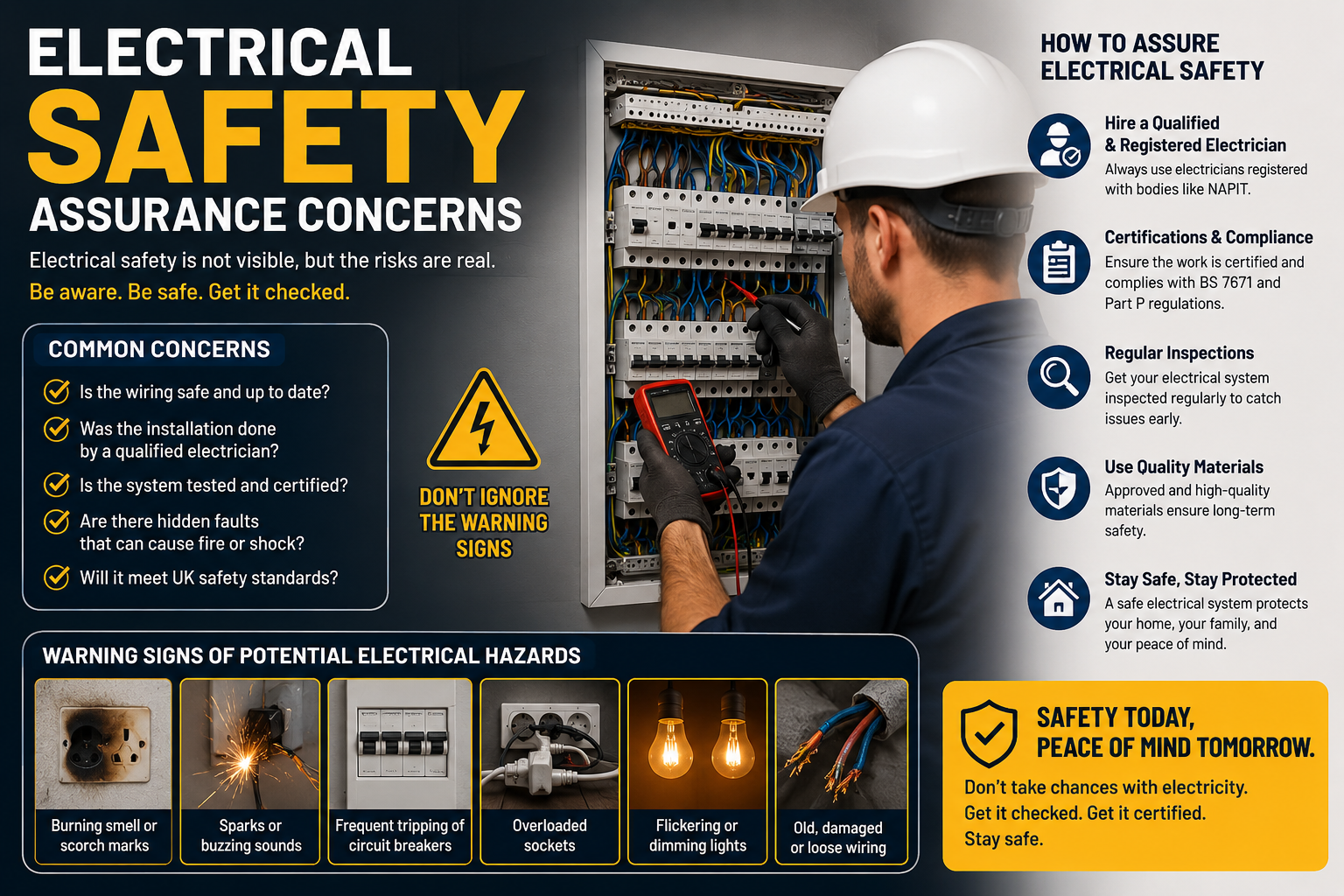
  • Electrical Safety Assurance Concerns

    Electrical Safety Assurance Concerns

    Introduction

    Electrical systems power almost everything in modern UK homes and businesses, from lighting and heating to appliances and safety systems. But because wiring is hidden behind walls and ceilings, many homeowners struggle to understand whether their electrical installation is safe, compliant, and properly tested. These worries are often described as Electrical safety assurance concerns.

    These concerns are becoming more common due to older housing stock, DIY repairs, and the increasing demand on electrical systems from modern devices. When people cannot see or verify the quality of electrical work, uncertainty naturally grows.

    This guide explains everything in simple terms and answers the most common questions people ask about electrical safety in the UK. It also helps you understand how to identify risks, check qualifications, and ensure compliance with UK regulations.

    For trusted guidance and registered electricians, you can refer to NAPIT

    :NAPIT Official Website

    Understanding Electrical Safety Assurance Concerns

    Electrical safety assurance concerns refer to doubts homeowners or landlords have about whether electrical work is:

    • Installed safely and correctly

    • Fully tested after completion

    • Compliant with UK wiring regulations

    • Certified by a qualified electrician

    • Free from hidden faults or risks

    These concerns usually arise when there is no clear documentation or when the installer is unknown or unregistered. Since electrical faults are not always visible, people rely heavily on certification and professional standards.

    Why Electrical Safety Matters in UK Properties

    Electrical safety is extremely important because even small mistakes can lead to serious consequences such as:

    • House fires caused by overheating wires

    • Electric shocks that can be fatal

    • Damage to expensive appliances

    • Sudden power loss in the property

    • Insurance claims being rejected

    One of the biggest problems is that electrical faults often develop slowly over time. A small wiring issue today can become a major hazard months later if not detected.

    This is why understanding Electrical safety assurance concerns is essential for every homeowner and landlord.

    Electrical Safety Assurance Concerns in UK Standards and Regulations

    In the UK, electrical work must follow strict rules to ensure safety. The main regulations include:

    • BS 7671 Wiring Regulations (IET Wiring Regulations)

    • Building Regulations Part P (domestic electrical safety)

    These rules ensure that electrical installations are designed, installed, and tested correctly.

    If an electrician does not follow these standards, the installation may be unsafe or even illegal. That is why choosing a registered electrician is so important.

    Electrical Safety Assurance Concerns and Qualified Electricians

    One of the most effective ways to reduce Electrical safety assurance concerns is to hire a properly registered electrician.

    A qualified electrician should be registered with an approved scheme such as NAPIT or NICEIC. These organisations ensure electricians are regularly assessed and meet safety standards.

    You can verify registered electricians here:
    NAPIT Official Website

    A qualified electrician will:

    • Follow UK wiring regulations

    • Use approved materials

    • Carry out proper testing

    • Provide certification after work

    • Carry insurance for protection

    If someone cannot provide proof of qualification, it is a major warning sign.

    Electrical Safety Assurance Concerns and Warning Signs of Poor Work

    Poor electrical work often shows warning signs. Homeowners should watch out for:

    • Flickering or dimming lights

    • Burning smells near sockets

    • Buzzing sounds from switches

    • Warm or discoloured plug sockets

    • Frequent tripping of breakers

    • Loose or damaged wiring points

    These signs often indicate unsafe wiring or poor installation. Ignoring them can lead to serious safety risks.

    Electrical Safety Assurance Concerns in Old Properties

    Older homes are more likely to have electrical risks because they may still contain:

    • Outdated fuse boxes without RCD protection

    • Old rubber or fabric wiring

    • Weak or missing earthing systems

    • Circuits not designed for modern load demands

    These systems were installed decades ago when electrical usage was much lower. Today’s appliances place much higher demand on wiring systems.

    Regular inspection is essential for older propertieshttps:

    Electrical Testing and Inspection Explained

    Testing is a critical step in ensuring electrical safety. After installation or repair, electricians must perform tests to confirm everything is safe.

    Common tests include:

    • Insulation resistance testing

    • Earth continuity testing

    • Polarity checks

    • RCD testing

    • Circuit load testing

    Without proper testing, hidden faults may remain undetected, increasing safety risks.

    Testing is one of the most important parts of reducing Electrical safety assurance concerns.

    Electrical Certification and Its Importance

    After electrical work is completed, certification is proof that the installation is safe and compliant.

    Common certificates include:

    • Electrical Installation Certificate (EIC)

    • Electrical Installation Condition Report (EICR)

    • Minor Electrical Installation Works Certificate

    These documents confirm:

    • Work has been tested

    • Installation meets UK standards

    • System is safe to use

    Without certification, there is no official proof that the electrical system is safe.

    Electrical Safety Assurance Concerns and DIY Electrical Work

    DIY electrical work is extremely risky. Even small mistakes can cause:

    • Electric shock

    • Fire hazards

    • System damage

    • Insurance invalidation

    In the UK, most electrical work must be carried out or certified by a qualified electrician. DIY work often leads to hidden safety issues that are only discovered later.

    Electrical Safety Assurance Concerns During Renovations

    Renovation projects often involve electrical changes such as rewiring, adding sockets, or upgrading lighting systems.

    Risks during renovation include:

    • Incorrect load calculations

    • Poor circuit design

    • Unsafe temporary wiring

    • Lack of post-installation testing

    To reduce risks:

    • Always plan electrical work early

    • Use registered electricians

    • Ensure full testing and certification

    • Follow UK building regulations

    Electrical Safety Assurance Concerns and Overloaded Circuits

    Overloaded circuits are a common safety issue in modern homes. This happens when too many appliances run on a single circuit.

    Risks include:

    • Overheating wires

    • Tripping breakers

    • Fire hazards

    • Damage to appliances

    Modern homes require properly designed circuits to handle increased electrical demand safely.

    Electrical Safety Assurance Concerns and Inspection Reports

    Electrical inspection reports provide a full overview of system condition. A proper report should include:

    • Condition of wiring and components

    • List of defects or risks

    • Safety grading

    • Test results

    • Repair recommendations

    These reports help homeowners understand whether their system is safe or needs improvement.

    Electrical Safety Assurance Concerns and Approved Materials

    Safe electrical work depends not only on installation but also on materials used.

    Approved materials should:

    • Meet UK safety standards

    • Be sourced from trusted manufacturers

    • Be suitable for the specific installation

    Using cheap or unapproved materials increases long-term risks and failure rates.

    Electrical Safety Assurance Concerns and Final Safety Checks

    After electrical work is completed, final safety checks should always include:

    • Verification of correct wiring

    • Functional testing of sockets and switches

    • Confirmation of RCD operation

    • Inspection for overheating or faults

    • Issuance of certificates

    These checks ensure the system is safe for everyday use.

    Conclusion

    Understanding Electrical safety assurance concerns is essential for every UK homeowner, landlord, or business owner. Since electrical systems are hidden and complex, safety depends heavily on proper installation, testing, certification, and qualified professionals.

    By hiring registered electricians, following UK regulations, and checking documentation carefully, you can significantly reduce risks and ensure long-term safety.

    For trusted standards and registered professionals, organisations like NAPIT provide reliable guidance and certification support:
    NAPIT certifiedNAPIT Official Website

    Safe electrical systems are not just about complianceβ€”they are about protecting lives, property, and peace of mind.

    https://commercial-electrician-manchester.co.uk

  • Burning Smell: Complete Electrical Safety Guide for Homes and Businesses

    Burning Smell: Complete Electrical Safety Guide for Homes and Businesses

    Introduction

    A Burning Smell coming from electrical sockets, switches, or wiring is one of the most important warning signs you should never ignore. It usually indicates overheating, loose connections, or electrical faults that can become dangerous very quickly.

    In many homes, people notice a slight burning smell and assume it is normal or temporary. However, this is often the first sign of a serious electrical issue hidden inside the wall or socket. If not handled in time, a Burning Smell can lead to melted wiring, damaged appliances, or even electrical fires.

    This guide explains the causes, risks, and solutions in simple language so anyone can understand and take the right action.

    Burning Smell from Electrical Sockets: What Causes It?

    A Burning Smell from electrical sockets usually happens when electricity cannot flow properly through the wiring system. This resistance creates heat, which slowly damages the internal components.

    Common causes include loose wiring connections, overloaded sockets, damaged insulation, and aging electrical systems. When heat builds up, plastic parts inside the socket may begin to burn or melt, producing a strong smell.

    Why Does My Plug Socket Smell Like Burning Plastic?

    If your plug socket smells like burning plastic, it usually means the internal insulation is overheating. This is often caused by poor connections or low-quality materials inside the socket.

    When plastic overheats, it begins to soften or melt, releasing a noticeable Burning Smell. This is a serious warning that the socket may fail soon and should be checked immediately.

    Is a Smell from an Electrical Point Dangerous?

    Yes, a Burning Smell from any electrical point is dangerous. It often means that wires or components are overheating, which can quickly lead to fire hazards if ignored.

    Even if everything looks fine externally, the damage is often happening inside the wall where it cannot be seen.

    What Should I Do If I Smell from a Socket?

    If you notice a Burning Smell, you should act immediately. Turn off the main power supply and unplug all devices connected to the socket. Avoid using it again and call a qualified electrician for inspection.

    Never try to repair or open the socket yourself unless you are professionally trained.

    Can a Faulty Appliance Cause a smell from a Socket?

    Yes, a faulty appliance can easily cause a Β Smell. Devices like heaters, irons, kettles, and chargers can overheat if they are damaged or low quality.

    When these appliances draw too much power or have internal faults, they can transfer heat to the socket and cause damage.

    Why Does My Extension Lead Smell Like Burning?

    Extension leads often produce a Smell when they are overloaded or used incorrectly. This usually happens when too many devices are plugged in or when high-power appliances are used together.

    Extension leads are not designed for heavy loads, and using them incorrectly increases the risk of overheating.

    Can Overloaded Sockets Cause a Burning Smell?

    Yes, overloaded sockets are one of the most common causes of a Burning Smell. When too many devices are connected, the socket carries more current than it is designed for, leading to heat buildup and damage.

    Is It Safe to Use a Socket That Smells Burnt?

    No, it is not safe. A socket that produces a Burning may already be damaged inside. Even if it still works, continued use can lead to electrical fires or complete failure of the socket.

    What Are the Early Warning Signs ofΒ  Burning Electrical Point?

    Before a strong Smell develops, you may notice early warning signs such as warm sockets, flickering lights, buzzing sounds, discoloration, or intermittent power loss. These signs indicate that something is wrong inside the system.

    Can Loose Wiring Cause a Smell?

    Yes, loose wiring is a major cause of a Burning Smell. When wires are not tightly connected, electricity struggles to flow smoothly, creating resistance, heat, and sometimes sparks.

    What Is Electrical Arcing in Sockets?

    Electrical arcing happens when electricity jumps across a gap between loose or damaged connections. This creates intense heat and is often responsible for a Burning Smell along with possible sparks or crackling sounds.

    Why Does My Switch Smell Like Burning?

    A switch may produce a Burning Smell due to worn-out internal contacts or overheating caused by frequent use. Poor-quality switches are also more likely to fail and produce heat.

    Can Old Wiring Cause Smell Issues?

    Yes, old wiring is a major cause of electrical faults. Older systems were not designed for modern power usage and may struggle under load, leading to overheating and a Burning Smell.

    Why Does theΒ  Smell Come and Go from a Socket?

    A Burning Smell that comes and goes usually indicates an intermittent fault. This often happens when loose wiring heats up only under certain electrical loads.

    Can Moisture Cause a Smell in Electrical Points?

    Yes, moisture can create short circuits and overheating inside electrical systems. This can produce a Burning Smell, especially in damp environments like kitchens or bathrooms.

    Which Appliances Commonly Cause Socket Overheating?

    High-power appliances often linked with a Burning Smell include electric heaters, microwaves, air conditioners, washing machines, and irons. These devices draw high electrical current and can overload weak circuits.

    Can a Circuit Breaker Prevent Β Smell Problems?

    Problems?

    Circuit breakers help protect against overloads, but they may not always detect early-stage faults that cause a Burning Smell. Some issues develop before the breaker reacts.

    Why Does My Socket Feel Hot and Smells Burnt?

    A hot socket combined with a Burning Smell usually indicates internal resistance or overload. This is a clear sign that the electrical system is under stress.

    Is Burning Smells from Wiring an Emergency?

    Yes, any Smell from wiring should be treated as an emergency. It can quickly escalate into a fire hazard if not addressed immediately.

    Can Damaged Insulation Inside Walls Cause Burning Smell?

    Yes, damaged insulation inside walls can trap heat and create a Β Smell without visible signs. This makes it one of the most dangerous hidden electrical faults.

    Why Does a Burning Smells Happen Only When I Use Certain Devices?

    If a Burning Β appears only with certain devices, it usually means those appliances are drawing more power than the circuit can safely handle.

    Can Cheap or Low-Quality Plugs Cause Burning Smell?

    Yes, low-quality plugs can overheat quickly due to poor materials and weak electrical contact. This can lead to a Burning Smell and damage both plug and socket.

    How Do Electricians Detect Burning Smells Faults Inside Walls?

    Electricians use advanced tools such as thermal imaging cameras, circuit testers, and inspection equipment to locate hidden faults that cause a Β Smell.

    For safety standards and certified guidance, you can refer to NAPIT, a trusted UK electrical safety organization: https://www.napit.org.uk

    Can Repeated Tripping of Power Be Linked toΒ smell?

    Yes, repeated tripping is often linked to underlying electrical faults that also produce a Smell. This may be caused by overloads, short circuits, or damaged wiring.

    Conclusion

    A Burning Smell from electrical points is always a warning sign that something is wrong. Whether it is caused by loose wiring, overloaded sockets, faulty appliances, or old installations, it should never be ignored.

    Early action can prevent serious damage and reduce the risk of electrical fires. Always switch off the power and contact a qualified electrician for inspection and repair. Regular maintenance and safe usage of electrical systems are essential to keeping your home and workplace safe.

    https://commercial-electrician-manchester.co.uk

  • High-Power Appliances: Complete Home Guide to Electrical Load, Safety Risks, and Smart Usage

    High-Power Appliances: Complete Home Guide to Electrical Load, Safety Risks, and Smart Usage

    High-power appliances are a normal part of modern life, but they are also one of the biggest reasons for electrical issues in homes. Devices like heaters, kettles, ovens, washing machines, and air fryers use a large amount of electricity in a short time. When these appliances are used together or on weak electrical systems, they can cause fuse tripping, overheating sockets, and even power outages.

    Most homeowners do not realise how much pressure these devices put on their electrical system. Modern homes rely heavily on electricity, but many properties still have older wiring or limited circuits that were not designed for today’s usage.

    Understanding how high-power appliances work, what risks they create, and how to use them safely is very important for protecting your home and avoiding electrical hazards.

    This guide explains everything in simple, practical language so anyone can understand how to manage electrical load safely in daily life.

    What are high-power appliances?

    High-power appliances are electrical devices that consume a large amount of electricity to operate.

    These appliances typically generate heat or perform heavy mechanical work, which requires more energy than basic devices like lights or phone chargers.

    Common examples include:

    • Electric heaters

    • Kettles

    • Ovens

    • Washing machines

    • Tumble dryers

    • Air conditioners

    • Microwaves

    • Air fryers

    These appliances often draw high current, especially when starting or heating up.

    Which appliances use the most electricity?

    Some appliances use significantly more electricity than others due to their heating or motor functions.

    The highest-consuming household appliances include:

    • Electric showers

    • Space heaters

    • Electric ovens

    • Tumble dryers

    • Washing machines (during heating cycle)

    • Kettles

    • Air conditioners

    These devices can place heavy demand on your electrical system, especially when used at the same time.

    Why do high-power appliances affect my electricity supply?

    High-power appliances affect your electricity supply because they require a large electrical load from a single circuit.

    Every home has a limited electrical capacity per circuit. When too much power is drawn, the system becomes overloaded.

    This can lead to:

    • Voltage drops

    • Flickering lights

    • Fuse tripping

    • Temporary power loss

    Older homes are especially vulnerable because their wiring systems were not designed for modern electrical usage.

    Can high-power appliances cause fuse tripping?

    Yes πŸ˜„ fuse tripping is one of the most common issues caused by heavy electrical appliances.

    When the electrical load becomes too high, the fuse board automatically shuts off power to prevent overheating and fire risks.

    This is a safety feature, not a fault.

    Is it safe to use multiple high-power appliances at once?

    It depends on your electrical system.

    Using multiple high-power appliances at the same time can:

    • Overload circuits

    • Cause fuse tripping

    • Increase heat in wiring

    • Damage appliances

    For example, using a kettle and heater on the same circuit is often unsafe.

    Why do my lights dim when I use appliances?

    Lights dim when large appliances start because they temporarily draw a high amount of electricity.

    This sudden demand causes a voltage drop in the circuit.

    If dimming happens often, it may indicate:

    • Weak wiring

    • Overloaded circuits

    • Old electrical system

    Can kettles overload a circuit?

    Yes πŸ˜„ kettles are one of the most powerful kitchen appliances.

    They use a large burst of electricity to boil water quickly. If combined with other appliances, they can easily overload a circuit.

    Can heaters cause electrical problems?

    Yes, electric heaters are one of the most common causes of electrical issues.

    They:

    • Use continuous high power

    • Overload sockets easily

    • Increase risk of overheating

    Heaters should always be used carefully and never left unattended.

    Do washing machines use a lot of electricity?

    Yes, washing machines can use a significant amount of electricity, especially during heating cycles.

    However, modern machines are more energy efficient compared to older models.

    Can microwaves overload sockets?

    Yes, microwaves use high power while heating food quickly.

    If used with other appliances on the same circuit, they can contribute to overload problems.

    Why do sockets get hot when using appliances?

    Hot sockets are a warning sign of electrical stress.

    Possible causes include:

    • Overloaded circuits

    • Loose wiring

    • Faulty socket

    • High-power appliance usage

    Sockets should never feel hot during normal use.

    Can high-power appliances damage extension leads?

    Yes πŸ˜„ extension leads are often not designed for heavy loads.

    Using heaters, kettles, or microwaves on extension cords can cause:

    • Overheating

    • Melting plugs

    • Fire hazards

    Is it safe to plug heaters into extension cords?

    No, it is strongly not recommended.

    Heaters draw too much power and can quickly overheat extension leads.

    Can high-power appliances increase electricity bills?

    Yes, high-power appliances are one of the biggest contributors to electricity usage.

    Devices that heat or cool air consume the most energy over time.

    Why does my fuse board trip when I use the kettle and heater?

    This happens because both appliances draw very high power at the same time.

    When combined on one circuit, they exceed safe electrical limits and cause the fuse board to trip.

    Can air fryers overload circuits?

    Yes πŸ˜„ air fryers use high heat and can contribute to overload when used with other kitchen appliances.

    Do high-power appliances need dedicated sockets?

    Yes, many high-power appliances should ideally be used on separate sockets or circuits.

    This helps distribute electrical load safely.

    Can multiple chargers overload a circuit?

    Individually no, but many chargers and devices together can contribute to overload, especially on weak circuits.

    Why does my power go off when using appliances in winter?

    Winter increases electricity usage due to:

    • Heating systems

    • Longer appliance usage

    • Higher demand overall

    This increases the chance of overload and fuse tripping.

    Can high-power appliances cause electrical fires?

    Yes πŸ˜„ if circuits are overloaded or wiring is weak, heat buildup can lead to fire hazards.

    How do I safely use high-power appliances?

    To stay safe:

    • Avoid using multiple heavy appliances together

    • Do not overload extension leads

    • Spread appliances across different sockets

    • Replace old wiring when needed

    • Use appliances responsibly

    Can old wiring handle high-power appliances?

    Not always.

    Older wiring systems were not designed for modern electrical loads and may struggle with heavy appliances.

    Why do appliances sometimes restart when power fluctuates?

    Power fluctuations caused by heavy load can reset sensitive electronics like:

    • Computers

    • Routers

    • Smart devices

    Can high-power appliances affect internet routers?

    Yes, unstable electricity can interrupt routers and cause internet disconnection.

    What is load balancing in home electrics?

    Load balancing means distributing electricity usage evenly across different circuits in your home.

    This prevents overload and improves safety.

    When should I call an electrician?

    Call an electrician if you notice:

    • Frequent fuse tripping

    • Hot sockets

    • Burning smells

    • Flickering lights

    • Power cuts during appliance use

    Where can I learn electrical safety advice in the UK?

    You can visit:
    NAPIT Electrical Safety Advice

    NAPIT provides trusted guidance on safe electrical practices and professional standards in the UK.

    Final Thoughts

    High-power appliances are essential in modern homes, but they must be used carefully. These devices place heavy demand on electrical systems and can cause serious problems if the wiring is old or circuits are overloaded.

    Understanding how appliances interact with your electrical system helps you prevent issues like fuse tripping, overheating sockets, and power outages. Small changes in daily usage habits can significantly improve safety and reduce risks.

    If you experience frequent electrical problems, it is always best to consult a qualified electrician to ensure your home remains safe, efficient, and compliant with UK electrical standards.https://commercial-electrician-manchester.co.uk

  • Old Wiring: Complete Homeowner Guide to Safety Risks, Warning Signs, and Electrical Solutions

    Old Wiring: Complete Homeowner Guide to Safety Risks, Warning Signs, and Electrical Solutions

    Electrical systems are one of the most important parts of every home. They power lighting, appliances, heating systems, internet devices, and many everyday essentials. However, many homeowners do not realise that older electrical wiring can become a serious safety issue over time.

    In many UK homes, electrical systems were installed decades ago when households used far fewer appliances. Modern lifestyles place much higher demand on electrical circuits, and outdated systems may struggle to handle today’s power usage safely.

    Old wiring can lead to frequent fuse board tripping, flickering lights, overheating sockets, damaged appliances, and even electrical fires. Understanding the warning signs and risks associated with aging electrical systems can help homeowners avoid dangerous situations and expensive repairs.

    This guide explains everything in simple language so homeowners can better understand the dangers of old wiring, how to identify problems, and when professional electrical work may be necessary.

    What is old wiring?

    Old wiring refers to outdated electrical cables and systems that may no longer meet modern electrical safety standards.

    Electrical wiring naturally deteriorates over time due to:

    • Heat exposure
    • Wear and tear
    • Aging insulation
    • Moisture damage
    • Loose connections

    Many older homes still contain wiring systems installed decades ago. While some old wiring may still function, it may not safely support modern electrical demands.

    Older systems often lack the safety features found in modern electrical installations.

    Why is old wiring dangerous?

    Old wiring can become dangerous because electrical cables weaken as they age.

    Over time, insulation around the wires may crack or deteriorate. This exposes electrical conductors and increases the risk of:

    • Electrical fires
    • Electric shocks
    • Overheating
    • Power failures

    Loose connections inside aging electrical systems can also generate heat and sparks.

    Another major issue is that many older properties were designed before modern appliances became common. Today’s homes use far more electricity, placing additional stress on outdated circuits.

    According to NAPIT Electrical Safety Advice, aging electrical systems should be inspected regularly to ensure they remain safe and compliant with UK electrical standards.

    How do I know if my house has old wiring?

    There are several warning signs that may indicate an older electrical system.

    Common indicators include:

    • Fabric-covered cables
    • Old-style fuse boards
    • Limited number of sockets
    • Frequent fuse tripping
    • Flickering lights
    • Buzzing sockets
    • Burning smells

    Homes built many decades ago are more likely to contain outdated wiring unless the electrical system has been upgraded previously.

    If you are unsure, a qualified electrician can inspect the property safely.

    Can old wiring cause electrical fires?

    Yes, old wiring is one of the leading causes of electrical fires in homes.

    As cables age, insulation becomes weaker and more vulnerable to heat damage. Loose connections inside walls, sockets, and junction boxes can create overheating and electrical arcing.

    Electrical fires may start silently behind walls without obvious warning signs.

    Common fire risks associated with aging wiring include:

    • Overheated cables
    • Damaged insulation
    • Loose terminals
    • Overloaded circuits

    This is why electrical inspections are extremely important in older homes.

    Can old wiring affect appliance performance?

    Yes, older electrical systems can affect the performance of household appliances.

    Unstable electricity supply caused by weak wiring may result in:

    • Appliances running inefficiently
    • Devices shutting off unexpectedly
    • Power interruptions
    • Reduced appliance lifespan

    Sensitive electronics such as computers, televisions, internet routers, and gaming systems are especially vulnerable to unstable electrical supply.

    Why do my lights flicker in an older home?

    Flickering lights are one of the most common warning signs of electrical problems in older properties.

    Possible causes include:

    • Loose wiring connections
    • Overloaded circuits
    • Aging electrical cables
    • Faulty light fittings
    • Weak electrical supply

    Occasional flickering may seem harmless, but repeated flickering should never be ignored because it may indicate serious wiring issues inside the property.

    Can old wiring cause power outages?

    Yes, outdated electrical systems often contribute to local power outages inside homes.

    Weak or damaged wiring may struggle to handle modern electricity usage. When circuits become overloaded, fuse boards trip automatically to protect the property.

    Homeowners may notice:

    • Certain rooms losing power
    • Repeated breaker trips
    • Sudden electrical interruptions

    Frequent power problems should always be professionally inspected.

    Is old wiring common in UK homes?

    Yes, old wiring is still very common in many UK homes.

    Large numbers of British properties were built decades ago and may still contain aging electrical systems. Some homes have had partial upgrades over the years, while others still rely on older circuits and fuse boards.

    Older homes often require electrical improvements to meet modern safety standards and power demands.

    How long does electrical wiring last?

    Electrical wiring can last many decades, but its lifespan depends on:

    • Installation quality
    • Usage levels
    • Environmental conditions
    • Maintenance

    Although some wiring may physically survive for many years, that does not always mean it remains safe.

    Older systems should be inspected regularly to ensure insulation, connections, and circuits remain in good condition.

    Can old wiring fail electrical inspections?

    Yes, outdated electrical systems may fail an electrical inspection if safety issues are identified.

    Common reasons include:

    • Unsafe fuse boards
    • Damaged insulation
    • Lack of grounding
    • Overloaded circuits
    • Poor connections

    An Electrical Installation Condition Report (EICR) helps identify safety concerns and necessary upgrades.

    What are warning signs of old wiring?

    There are many warning signs homeowners should watch for.

    Common signs include:

    • Burning smells
    • Warm sockets
    • Buzzing sounds
    • Flickering lights
    • Frequent fuse trips
    • Sparking outlets
    • Discoloured switches

    These warning signs may indicate overheating or internal electrical faults.

    Can old wiring increase electricity bills?

    Yes, damaged or inefficient wiring may increase electricity usage.

    Older electrical systems can lose efficiency due to:

    • Loose connections
    • Electrical resistance
    • Heat buildup
    • Worn insulation

    Although old wiring is not always the direct cause of high bills, inefficient systems may contribute to unnecessary energy waste.

    Should old wiring be replaced?

    In many cases, yes.

    If wiring is unsafe, damaged, or unable to handle modern electrical demand, replacement is usually recommended.

    Replacing old wiring improves:

    • Electrical safety
    • System reliability
    • Appliance performance
    • Property value

    Modern wiring systems also include updated safety features designed to reduce electrical hazards.

    Can old wiring affect internet and electronics?

    Yes, unstable electrical systems may affect sensitive electronics.

    Power fluctuations caused by faulty wiring can:

    • Restart internet routers
    • Damage internal components
    • Interrupt online connections
    • Shorten device lifespan

    Electronics require stable electrical supply for proper operation.

    Why do sockets feel warm in older homes?

    Warm sockets are a common sign of electrical stress.

    Possible causes include:

    • Loose wiring
    • Overloaded circuits
    • Aging connections
    • Damaged sockets

    Sockets should never become excessively hot during normal use.

    If warmth continues, electrical inspection is recommended immediately.

    Can old wiring handle modern appliances?

    Many older systems were not designed for modern electrical usage.

    Today’s homes commonly use:

    • Washing machines
    • Air fryers
    • Dishwashers
    • Electric showers
    • Gaming systems
    • Smart home devices

    These appliances place much greater demand on electrical circuits than homes originally experienced decades ago.

    Outdated wiring may struggle to handle these loads safely.

    Is rewiring a house expensive?

    The cost of rewiring depends on:

    • Property size
    • Number of rooms
    • Wiring condition
    • Accessibility

    Although rewiring can seem expensive, it is an important long-term investment in safety and reliability.

    Ignoring dangerous wiring problems may eventually lead to even more costly repairs.

    Can old wiring cause fuse board tripping?

    Yes, aging wiring frequently contributes to fuse board tripping.

    Weak or damaged wiring creates electrical resistance and instability. When the system detects unsafe conditions, breakers trip automatically to prevent overheating.

    Repeated tripping often indicates an underlying electrical problem.

    Can old wiring create buzzing sounds?

    Yes, buzzing sounds often indicate loose or damaged electrical connections.

    Electrical buzzing should never be ignored because it may suggest:

    • Electrical arcing
    • Loose terminals
    • Overheating
    • Internal damage

    Buzzing sockets or switches require immediate professional attention.

    Should I buy a house with old wiring?

    Buying a home with older wiring is not always a problem, but it is important to arrange a professional inspection before purchasing.

    An electrical inspection can help identify:

    • Safety risks
    • Necessary upgrades
    • Rewiring requirements
    • Fuse board issues

    Understanding the condition of the electrical system helps buyers avoid unexpected repair costs later.

    How often should wiring be inspected?

    Electrical systems should be inspected periodically, especially in older properties.

    Regular inspections help identify:

    • Hidden faults
    • Unsafe wiring
    • Overloaded circuits
    • Deteriorating insulation

    Landlords and homeowners should follow recommended inspection schedules for safety compliance.

    Can rodents damage old wiring?

    Yes, rodents can seriously damage electrical wiring.

    Mice and rats sometimes chew electrical cables, exposing live wires and creating dangerous faults.

    Rodent damage may lead to:

    • Short circuits
    • Power outages
    • Electrical fires

    Properties with pest problems should have wiring inspected carefully.

    Can moisture damage old wiring?

    Yes, moisture is extremely dangerous for electrical systems.

    Water exposure may cause:

    • Corrosion
    • Short circuits
    • Electrical arcing
    • Fuse board tripping

    Bathrooms, kitchens, basements, and outdoor areas are particularly vulnerable to moisture-related electrical issues.

    What is a full house rewire?

    A full house rewire involves replacing outdated electrical wiring throughout the property.

    This often includes:

    • New electrical cables
    • New sockets and switches
    • Updated fuse board
    • Modern safety protection

    Rewiring improves safety and helps homes meet modern electrical standards.

    When should I call an electrician about old wiring?

    You should contact an electrician if you notice:

    • Burning smells
    • Flickering lights
    • Warm sockets
    • Buzzing sounds
    • Frequent fuse trips
    • Power interruptions

    Professional electricians can safely identify hidden electrical faults before they become dangerous.

    Can old wiring reduce property value?

    Yes, outdated electrical systems may affect property value and buyer confidence.

    Many buyers worry about:

    • Safety risks
    • Rewiring costs
    • Electrical reliability

    Modern electrical systems are often seen as a major advantage in property sales.

    Is old wiring covered by home insurance?

    Insurance policies vary depending on provider and property condition.

    Some insurers may:

    • Require electrical inspections
    • Limit coverage for unsafe systems
    • Request upgrades for older properties

    Homeowners should always review insurance terms carefully.

    Can DIY repairs fix old wiring safely?

    No, DIY electrical work is dangerous and strongly discouraged.

    Improper electrical repairs may:

    • Increase fire risk
    • Cause electric shock
    • Create hidden faults
    • Violate UK regulations

    Electrical work should always be carried out by qualified professionals.

    Where can I learn electrical safety advice in the UK?

    Homeowners can learn more about electrical safety through:
    NAPIT Official Website

    NAPIT provides guidance about electrical inspections, safety standards, and professional electrical services in the UK.

    Final Thoughts

    Old wiring is one of the most overlooked electrical safety issues in homes. While many aging systems continue working for years, that does not always mean they remain safe.

    Warning signs such as flickering lights, warm sockets, buzzing sounds, and repeated fuse trips should never be ignored. These issues may indicate serious electrical faults hidden behind walls and inside circuits.

    Regular electrical inspections help homeowners identify problems early and improve overall safety. Upgrading outdated wiring not only reduces electrical risks but also improves reliability, energy efficiency, and compatibility with modern appliances.

    If you suspect your property may contain aging electrical wiring, contacting a qualified electrician is always the safest solution.

    https://commercial-electrician-manchester.co.uk

  • Β All about Overloaded Circuits: Complete Homeowner Guide to Causes, Warning Signs, and Safety Solutions

    Β All about Overloaded Circuits: Complete Homeowner Guide to Causes, Warning Signs, and Safety Solutions

    Electrical problems are one of the most common issues homeowners face in the UK. Among them, overloaded circuits are a major cause of power interruptions, fuse board tripping, damaged appliances, and even electrical fires. Many people do not realise that plugging too many devices into one socket or using several high-power appliances together can place dangerous pressure on their electrical system.

    Modern homes use far more electricity than older properties were originally designed for. Today, households rely on televisions, gaming systems, kitchen appliances, internet routers, smart home devices, washing machines, chargers, and heating systems all at the same time. When too much electrical demand is placed on a single circuit, problems begin to appear.

    Understanding the warning signs and causes of overloaded circuits can help you protect your home, avoid expensive repairs, and reduce electrical safety risks. This guide explains everything in simple language so homeowners can understand how electrical overload happens and what steps should be taken to prevent it.

    What is an overloaded circuit?

    An overloaded circuit happens when more electricity flows through a circuit than it was designed to handle safely. Every electrical circuit in a home has a maximum capacity. When too many devices or high-power appliances are connected at the same time, the circuit becomes overloaded.

    Your electrical system includes safety devices such as breakers or fuses designed to protect your home. If the electrical demand becomes too high, the fuse board trips automatically to stop overheating and reduce the risk of fire.

    This protection system is extremely important because overloaded wiring can become dangerously hot if left unchecked.

    What causes overloaded circuits?

    There are several common causes of electrical overload in homes and commercial properties.

    One major reason is connecting too many appliances to a single socket or extension lead. High-power devices such as kettles, heaters, microwaves, and washing machines use large amounts of electricity. Running several of these appliances together on the same circuit can quickly create problems.

    Older electrical systems are another common issue. Many older homes in the UK were not designed for modern electricity usage. Years ago, homes had fewer appliances and lower energy demands. Today, modern households rely heavily on electrical devices throughout the day.

    Faulty wiring can also increase the chance of overload. Loose or damaged wiring creates resistance inside the circuit, making the electrical system work harder than normal.

    Poor-quality extension leads and adapters are another common factor. Cheap extension leads may not safely handle heavy electrical loads for long periods.

    Are overloaded circuits dangerous?

    Yes, overloaded circuits can become extremely dangerous if ignored.

    One of the biggest risks is overheating. When wires carry more electricity than they are designed for, heat builds up inside the cables, sockets, and plugs. Over time, this heat can damage insulation and create fire hazards.

    Electrical overload may also damage expensive appliances and electronics. Sensitive devices such as computers, televisions, internet routers, and gaming systems can suffer from unstable electrical supply.

    Repeated overload can weaken your electrical system and create long-term safety problems inside walls, sockets, and fuse boards.

    According to NAPIT Electrical Safety Advice, recurring electrical faults should always be inspected by qualified electricians to ensure homes remain safe and compliant with UK electrical standards.

    What are signs of an overloaded circuit?

    Recognising early warning signs is very important.

    Common signs include:

    • Frequent fuse board tripping
    • Flickering or dimming lights
    • Warm sockets or plugs
    • Buzzing sounds from outlets
    • Burning smells near electrical points
    • Sparks from sockets
    • Appliances losing power suddenly

    If you notice several of these signs together, your electrical system may already be under dangerous pressure.

    Why does my fuse board trip when I use appliances?

    Fuse boards are designed to protect your home from electrical overload and faults.

    If the fuse board trips every time you use a particular appliance, the issue may be caused by:

    • Too much electrical demand
    • A faulty appliance
    • Damaged wiring
    • A weak circuit

    High-power appliances often place extra stress on older electrical systems.

    Can overloaded circuits cause power outages?

    Yes, overloaded circuits are a common cause of local power outages inside homes.

    When a circuit becomes overloaded, the breaker trips automatically to stop electricity flow. This cuts power to certain rooms or sometimes the entire property.

    Although it may feel inconvenient, this safety feature helps prevent overheating and electrical fires.

    Can extension leads overload a circuit?

    Yes, extension leads are one of the most common causes of overload problems.

    Many people plug several devices into one extension lead without realising how much electricity those appliances are using together.

    Using heaters, kettles, microwaves, or air fryers on one extension lead can become very dangerous.

    Cheap or damaged extension leads increase the risk even further because they may not have proper overload protection.

    What appliances commonly overload circuits?

    Some household appliances use much more electricity than others.

    Common high-power appliances include:

    • Electric heaters
    • Kettles
    • Washing machines
    • Dishwashers
    • Microwaves
    • Air fryers
    • Tumble dryers
    • Electric ovens

    Running several of these devices together on one circuit can easily create overload conditions.

    Can overloaded circuits cause electrical fires?

    Yes, overloaded circuits are one of the leading causes of electrical fires.

    When wiring overheats repeatedly, insulation around the wires can melt or become damaged. This exposes live wires and increases the risk of sparks or fire.

    Warm sockets, burning smells, and buzzing sounds should never be ignored because they may indicate overheating inside the electrical system.

    Why do my lights dim when appliances turn on?

    Lights dimming when appliances start is often a sign of heavy electrical demand.

    Large appliances such as heaters or washing machines require more electricity when they first start operating. If the circuit struggles to handle the demand, lights may temporarily dim.

    Occasional dimming may not always be serious, but repeated dimming can indicate overloaded circuits or wiring problems.

    Can old wiring increase overload risk?

    Yes, old wiring significantly increases the risk of overload problems.

    Many older UK homes were designed decades ago when electricity usage was much lower. Modern homes use far more devices than older electrical systems were built to handle.

    Old wiring may also suffer from:

    • Damaged insulation
    • Loose connections
    • Heat wear
    • Corrosion

    This makes the electrical system less efficient and more vulnerable to overload.

    How do I prevent overloaded circuits?

    Preventing overload problems is easier than many people think.

    Here are some simple safety tips:

    • Avoid plugging too many appliances into one socket
    • Do not overload extension leads
    • Spread appliances across different outlets
    • Replace damaged sockets or plugs
    • Upgrade old wiring systems
    • Have electrical inspections regularly
    • Use high-quality extension leads with protection features

    Good electrical habits can greatly reduce safety risks.

    Can overloaded circuits damage appliances?

    Yes, overloaded circuits can damage household appliances and electronics.

    Unstable electricity flow may shorten the lifespan of devices and cause internal component failure.

    Sensitive electronics are especially vulnerable, including:

    • Internet routers
    • Televisions
    • Gaming consoles
    • Computers
    • Smart home systems

    Repeated power interruptions may permanently damage expensive devices.

    Why does one room keep losing power?

    If only one room loses power repeatedly, the issue may involve a specific circuit.

    Possible causes include:

    • Too many devices on one circuit
    • Faulty sockets
    • Damaged wiring
    • A faulty appliance connected in that room

    An electrician can test the circuit and identify the exact problem safely.

    Should I keep resetting a tripped breaker?

    No, repeatedly resetting a breaker is not recommended.

    Circuit breakers trip for safety reasons. If a breaker keeps tripping, it usually means there is an electrical fault that needs professional attention.

    Repeatedly forcing the breaker back on can:

    • Increase overheating
    • Damage wiring
    • Hide serious faults
    • Increase fire risks

    Always investigate the cause before resetting again.

    Can phone chargers overload circuits?

    A single phone charger uses very little electricity. However, many chargers and devices connected together may contribute to overload, especially on already stressed circuits.

    Cheap or damaged chargers can also create overheating problems.

    Can overloaded circuits affect internet routers and electronics?

    Yes, overload problems can affect electronics and internet equipment.

    Power interruptions and unstable voltage may:

    • Restart devices unexpectedly
    • Damage internal components
    • Reduce lifespan of electronics
    • Cause data loss on computers

    Using surge protection can help protect sensitive devices.

    What does a buzzing socket mean?

    A buzzing socket should never be ignored.

    Buzzing sounds may indicate:

    • Loose wiring
    • Electrical arcing
    • Overheating
    • Internal damage

    If a socket buzzes regularly, stop using it immediately and contact an electrician.

    Can overloaded circuits melt sockets?

    Yes, severe overload can generate enough heat to melt sockets and plugs.

    This happens when electrical current exceeds safe limits for extended periods.

    Melted sockets are extremely dangerous and should be replaced immediately.

    Why are my plugs getting hot?

    Warm plugs often indicate electrical stress.

    Common causes include:

    • Overloaded circuits
    • Loose connections
    • Faulty plugs
    • Damaged sockets
    • High-power appliance usage

    Plugs should never become excessively hot during normal operation.

    Can smart home devices overload circuits?

    Yes, modern smart homes often place additional pressure on electrical systems.

    Smart devices may include:

    • Smart lighting
    • Security systems
    • Smart speakers
    • Cameras
    • Charging stations
    • Smart appliances

    Although individual devices use small amounts of electricity, many connected together increase overall demand.

    How many appliances are too many for one socket?

    There is no exact number because it depends on the total electrical load.

    For example:

    • Two phone chargers may be safe
    • Multiple heaters on one socket are dangerous

    High-power appliances should ideally use separate wall sockets.

    Can overloaded circuits happen at night?

    Yes, overload problems often happen at night because electricity usage increases during evening hours.

    Common night-time electrical demand includes:

    • Heating systems
    • Washing machines
    • Dishwashers
    • Chargers
    • Lighting systems

    Timed appliances starting automatically overnight can also trigger overload.

    Is fuse tripping always caused by overloaded circuits?

    No, fuse tripping can happen for several reasons.

    Possible causes include:

    • Overload
    • Faulty appliances
    • Short circuits
    • Water exposure
    • Damaged wiring

    A qualified electrician can determine the exact reason safely.

    When should I call an electrician for overloaded circuits?

    You should contact an electrician if:

    • Breakers trip repeatedly
    • Sockets feel warm
    • Burning smells appear
    • Lights flicker frequently
    • Power cuts happen often
    • Buzzing sounds are present

    Electrical problems should never be ignored because they can become dangerous quickly.

    Can adding more sockets solve overloaded circuits?

    In some cases, yes.

    If too many devices are connected to one area, installing additional sockets or circuits may help distribute electrical demand more safely.

    However, this should only be done by qualified electricians.

    Do overloaded circuits increase electricity bills?

    Overloaded circuits themselves do not directly increase electricity bills, but inefficient electrical systems may waste energy.

    Faulty appliances, damaged wiring, and overheating systems can reduce efficiency and increase electricity usage over time.

    Can overloaded circuits affect commercial properties?

    Yes, commercial properties often experience overload problems due to heavy equipment usage.

    Businesses commonly use:

    • Computers
    • Air conditioning systems
    • Kitchen equipment
    • Lighting systems
    • Machinery

    Without proper electrical planning, overload becomes more likely.

    Are overloaded circuits common in UK homes?

    Yes, overloaded circuits are very common in UK homes, especially older properties.

    Modern households use far more electrical devices than homes were originally designed to support. As a result, older wiring systems and limited socket availability often struggle with today’s electrical demand.

    Regular electrical inspections help identify overload risks before they become serious safety hazards.

    Where can I learn electrical safety advice in the UK?

    Homeowners can learn more about electrical safety and UK standards through:
    NAPIT Official Website

    NAPIT provides useful guidance about electrical safety, inspections, and qualified electrical work across the UK.

    Final Thoughts

    Overloaded circuits are one of the most common electrical problems in homes and businesses. Although many people ignore early warning signs, overload problems can quickly become serious safety risks if left unresolved.

    Understanding the causes, warning signs, and prevention methods can help homeowners protect their electrical systems and reduce fire hazards.

    Simple steps such as avoiding overloaded sockets, replacing faulty appliances, and upgrading old wiring can make a significant difference in electrical safety.

    If you experience repeated fuse tripping, warm sockets, buzzing sounds, or power interruptions, it is always best to contact a qualified electrician for professional advice and inspection.

  • ⚑ Electrical Outage FAQs: Complete Homeowner Guide (Causes, Safety & Expert Solutions)

    ⚑ Electrical Outage FAQs: Complete Homeowner Guide (Causes, Safety & Expert Solutions)

    An electrical outage can happen suddenly and without warning, leaving your home or business completely without power. Lights turn off, appliances stop working, and daily life is interrupted instantly.

    Sometimes the issue is inside your home, while other times it affects the entire street or area. Understanding the cause is very important because the solution depends on what is actually wrong.

    This guide answers the most common questions people ask about power failures, safety risks, troubleshooting steps, and when to call a qualified electrician.

    What is an electrical outage?

    An electrical outage is a sudden interruption of electricity supply to a building, home, or area.

    When it happens:

    • Lights stop working
    • Electrical appliances shut down
    • Power sockets lose electricity
    • Internet routers and Wi-Fi may turn off

    An outage can last from a few seconds to several hours depending on the cause.

    Types of outages:

    πŸ”Ή Local outage

    Only your property is affected.

    πŸ”Ή Area outage

    Multiple homes or an entire neighborhood loses power.

    What causes an electrical outage?

    There are many possible reasons why electricity suddenly stops.

    Common causes include:

    • Overloaded circuits
    • Faulty electrical appliances
    • Fuse tripping
    • Damaged wiring
    • Severe weather conditions
    • Power grid failure
    • Underground cable damage
    • Maintenance by electricity provider

    In many cases, the issue starts inside the home due to electrical overload or faulty equipment.


    How do I know if it is a local or area outage?

    This is the first and most important check.

    πŸ”Ή Local outage signs:

    • Only your home has no electricity
    • Fuse board may have tripped
    • Some rooms may still have power
    • No reports from neighbors

    πŸ”Ή Area outage signs:

    • Entire street is dark
    • Neighbors also have no power
    • Shops and street lights are off
    • No issue inside your fuse board

    If neighbors are affected, the issue is external.

    Can fuse tripping cause an electrical outage?

    Yes πŸ˜„ β€” fuse tripping is one of the most common causes of a home electrical outage.

    Your fuse board is designed to protect your home. When it detects a fault, it automatically cuts electricity.

    Common causes of fuse tripping:

    • Overloaded sockets
    • Faulty appliances
    • Short circuits
    • Moisture or water exposure
    • Damaged wiring

    This can cause sudden power loss in part or all of your home.

    How long does an electrical outage last?

    The duration depends on the cause.

    ⏱️ Typical timings:

    • Minor fuse trip: seconds to minutes
    • Appliance fault: immediate restoration after unplugging
    • Wiring issue: 1–3 hours or more
    • Area outage: 1–6 hours
    • Severe storm damage: longer repair time

    What should I do during an electrical outage?

    Follow these safe steps:

    βœ” Step 1: Check fuse board

    Look for any tripped switches.

    βœ” Step 2: Unplug appliances

    This prevents damage when power returns.

    βœ” Step 3: Check neighbors

    If they also have no power, it’s an external issue.

    βœ” Step 4: Use safe lighting

    Use torches instead of candles if possible.

    βœ” Step 5: Contact help

    Call electrician or electricity provider depending on situation.

    Can appliances cause an electrical outage?

    Yes, appliances are a major cause of internal power issues.

    Faulty appliances can:

    • Overload circuits
    • Cause fuse tripping
    • Damage wiring
    • Shut down electricity in parts of home

    Common appliances involved:

    • Washing machines
    • Kettles
    • Heaters
    • Air fryers
    • Microwaves

    Is an electrical outage dangerous?

    An outage itself is usually safe because it is a protection system.

    However, the cause behind it may be dangerous.

    Risks include:

    • Electrical fires
    • Damaged wiring
    • Electric shocks
    • Appliance damage

    If outages keep happening, it means there is a hidden electrical fault.

    According to NAPIT Electrical Safety Guidance, recurring electrical faults should always be inspected by qualified electricians.NAPIT certified

    Why does my power keep going off and on?

    This is a very common issue.

    Possible causes:

    • Loose wiring connections
    • Faulty appliances
    • Overloaded circuits
    • Fuse board problems
    • Weather-related faults
    • External supply issues

    Frequent interruptions should always be checked.

    Can weather cause electrical outages?

    Yes, weather is one of the biggest external causes.

    Weather-related issues:

    • Heavy rain damaging cables
    • Lightning strikes
    • Strong winds breaking lines
    • Flooding affecting underground systems
    • Snow or ice causing damage

    Outdoor systems are especially vulnerable.

    Who is responsible for fixing an electrical outage?

    It depends on the cause.

    πŸ”Ή Area outage:

    Electricity company or grid operator

    πŸ”Ή Home issue:

    Qualified electrician

    If neighbors are also affected, always contact the electricity provider first.

    Can old wiring cause power outages?

    Yes, old wiring is a major cause of electrical failure.

    Over time, wiring becomes weak due to:

    • Heat damage
    • Aging insulation
    • Loose connections
    • Wear and tear

    Warning signs:

    • Flickering lights
    • Burning smell
    • Buzzing sockets
    • Frequent fuse tripping

    Old wiring is not designed for modern power usage.

    Should I reset my fuse board during an outage?

    You can check it once safely, but avoid repeated resets.

    Safe approach:

    • Reset once only
    • If it trips again, stop
    • Do not force it repeatedly

    Repeated resets can:

    • Damage system
    • Hide serious faults
    • Increase fire risk

    Why does electrical outage happen only at night?

    Night-time outages can happen due to:

    • Heating systems turning on
    • Timed appliances
    • Outdoor lighting faults
    • Moisture affecting wiring
    • Higher electricity usage in evening

    Cold weather can also trigger weak wiring problems.

    When should I call an electrician?

    Call a professional if:

    • Power keeps cutting repeatedly
    • Fuse board trips again and again
    • Burning smell appears
    • Sparks come from sockets
    • Lights flicker frequently
    • Cause is unknown

    Can a faulty socket cause an electrical outage?

    Yes, a damaged or burnt socket can cause power loss in part of your home. Internal wiring faults inside sockets may trigger fuse tripping and cut electricity.

    Can extension leads cause electrical outages?

    Yes πŸ˜„ overloaded or low-quality extension leads can overheat and cause fuse tripping, leading to sudden power loss.

    Why does only one room lose electricity?

    This usually means:

    • Local circuit fault
    • Tripped breaker for that room
    • Faulty appliance in that area
    • Wiring issue in that circuit

    Can rodents damage wiring and cause outages?

    Yes, rodents can chew cables behind walls or ceilings, leading to short circuits and sudden power loss.

    Can lightning directly cause an outage in my home?

    Yes, lightning can:

    • Damage fuse boards
    • Trip breakers
    • Destroy electrical devices
    • Affect power lines

    Why does power come back and go again?

    This usually indicates:

    • Loose connection
    • Faulty breaker
    • External supply instability
    • Overloaded circuit still active

    Can smart appliances cause electrical outages?

    Yes, faulty smart devices or smart plugs can overload circuits or cause internal electrical faults.

    Can a tripped RCD cause full power outage?

    Yes πŸ˜„ an RCD (safety switch) cuts all power if it detects leakage or fault.

    Can water leaks inside walls cause outages?

    Yes, water entering wiring systems can cause short circuits and repeated fuse tripping.

    Can electric heaters cause outages?

    Yes, heaters consume high power and can overload weak circuits easily.

    Why does power go off after rain?

    Rainwater can enter:

    • Outdoor sockets
    • Junction boxes
    • Garden lighting systems

    This causes fuse tripping.

    Can outdated fuse boards cause outages?

    Yes, old fuse boards cannot handle modern electrical load safely and may trip frequently.

    Should I DIY fix electrical outages?

    No πŸ˜„ electrical systems are dangerous. Always contact a qualified electrician.

    Final Thoughts

    Electrical outages are common but should never be ignored if they happen repeatedly.

    Sometimes the issue is simple, like a tripped fuse or faulty appliance. Other times, it may indicate serious wiring or electrical system problems.

    The most important thing is to identify the cause early and take safe action.

    If outages continue happening, always contact a qualified electrician to ensure your home remains safe and fully powered.

    https://commercial-electrician-manchester.co.uk